
Key Takeaways
- The Silent Epidemic: Periodontal disease affects over 80% of dogs by age three, linking oral health directly to systemic longevity.
- Safety First: Never use human toothpaste; ingredients like Xylitol are toxic to dogs. Always choose enzymatic dog toothpaste.
- Consistency is Key: Plaque calcifies into tartar within 48 hours, making daily brushing or VOHC-accepted alternatives essential for effective dog dental care.
For many pet parents, “bad dog breath” is accepted as a normal, albeit unpleasant, part of life. However, veterinary consensus paints a different picture: bad breath is often the first signal of periodontal disease, a progressive inflammatory condition that affects the majority of adult dogs.
Understanding the science behind dog dental care and specifically why the right dog toothpaste matters is not just about fresh breath. It is about preventing chronic pain and protecting your dog’s heart, liver, and kidneys from bacterial infection.
Why is human toothpaste dangerous for dogs?
It is a common misconception that toothpaste is universal. In reality, the tube sitting on your bathroom counter could be lethal to your pet. Human toothpaste is formulated to be spit out, but dogs inevitably swallow whatever is in their mouths.
The primary danger lies in Xylitol (often labeled as birch sugar), a common sweetener in human oral care products. In dogs, Xylitol triggers a massive insulin release that causes a rapid, life-threatening drop in blood sugar (hypoglycemia) and potential liver failure. Additionally, foaming agents like Sodium Lauryl Sulfate (SLS), which give human paste its suds, can cause significant gastrointestinal distress and vomiting in dogs.
How does enzymatic dog toothpaste work?
Unlike human toothpaste, which relies heavily on mechanical scrubbing, the best dog toothpaste options utilize enzymatic systems. This is a game-changer for owners of squirmy pups who may not tolerate a perfect brushing session.
Enzymatic pastes typically contain enzymes like glucose oxidase and lactoperoxidase. When applied to the teeth, these enzymes react with the air and saliva to produce natural antimicrobial agents that reduce plaque bacteria. Essentially, the toothpaste continues to work even after you have finished brushing. This residual effect is crucial for breaking down the sticky biofilm (plaque) before it hardens into tartar.
Is daily brushing really necessary?
The frequency of brushing is one of the most debated topics in dog dental care, but the biology of plaque is clear. Plaque is a soft, bacteria-laden film that forms on teeth hours after eating. If left undisturbed, it interacts with minerals in your dog’s saliva to calcify into tartar (calculus) within 24 to 48 hours.
Once tartar forms, no amount of brushing can remove it; it requires professional ultrasonic scaling under anesthesia. This is why the “weekly brush” strategy often fails. To truly prevent disease, you must disrupt the plaque biofilm daily or at least every other day before it mineralizes.
What is the best dog toothbrush to use?
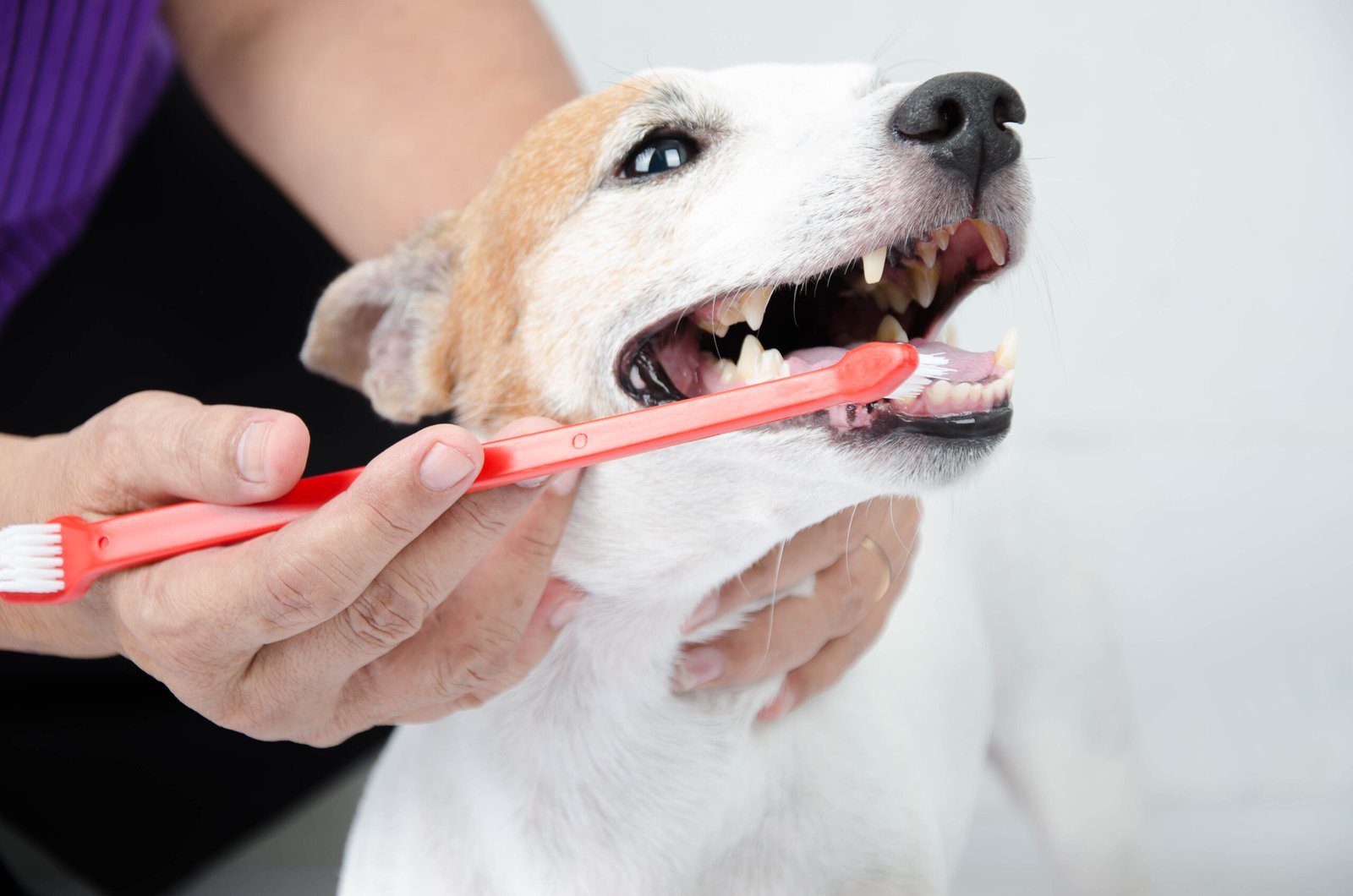
The right tool depends largely on your dog’s size and tolerance. For puppies or dogs new to the routine, a finger brush is often the best introduction. It slides over your index finger, allowing you to gauge the pressure and feel exactly where you are cleaning.
For a deeper clean, a dual-ended dog toothbrush is the industry standard. These brushes feature a long handle to reach the back molars where tartar accumulation is often heaviest without requiring you to stick your hand deep into your dog’s mouth. Look for soft bristles to avoid damaging the gum tissue.
If your dog absolutely refuses a brush, do not force a struggle. Veterinary guidelines suggest that wiping the teeth with dental wipes or gauze is a valid, albeit less effective, alternative to mechanical brushing.
What are the alternatives if my dog hates brushing?
Compliance is the biggest hurdle in dog dental care. If daily brushing creates stress or aggression, it is better to switch tactics than to abandon care entirely. The veterinary market has evolved to offer “brushless” solutions, but not all are created equal.
Look for the VOHC (Veterinary Oral Health Council) Seal of Acceptance. This seal indicates the product has undergone rigorous clinical trials proving it reduces plaque or tartar.
- Water Additives: Modern formulations often use molecular iodine or specific enzymes to alter the mouth’s chemistry and inhibit bacteria simply by drinking.
- Dental Powders: Supplements containing Ascophyllum nodosum (seaweed) are ingested and secreted into the saliva, working systemically to soften tartar and prevent plaque adhesion.
- Dental Chews: While not a replacement for brushing, VOHC-accepted chews provide mechanical abrasion to scrub tooth surfaces.
When should I see a vet for dental cleaning?
Home care is preventative, but it cannot fix established pathology. If your dog has red, bleeding gums, loose teeth, or visibly heavy tartar buildup, dog toothpaste will not solve the problem. These are signs of advanced periodontal disease requiring a professional Comprehensive Oral Health Assessment and Treatment (COHAT) under anesthesia.
Starting a home routine on a painful, diseased mouth can cause your dog to associate the toothbrush with pain. Always have your veterinarian assess your dog’s oral health before starting a new aggressive brushing regimen.
By combining daily vigilance with the right enzymatic tools, you can turn dog dental care from a chore into a bonding activity that extends your best friend’s life.
Frequently Asked Questions
1. Can I use baking soda to brush my dog’s teeth?
No. Baking soda has a high sodium content that can be toxic to small dogs if swallowed daily, and its taste may cause future brushing aversion.
2. Does dry food clean a dog’s teeth?
Generally, no. Most kibble shatters upon impact, offering minimal cleaning benefit. Only specific veterinary dental diets are formulated with a fiber matrix that scrubs the tooth.
3. How long does it take for dog toothpaste to work?
Enzymatic toothpaste begins reducing bacteria immediately upon application. However, visible improvements in gum health or breath typically require 2-4 weeks of consistent, daily use.
4. Is it too late to start brushing an older dog’s teeth?
It is never too late, but if your senior dog has heavy tartar or pain, a professional veterinary cleaning is required before starting a home routine.
5. What is the most effective ingredient in dog toothpaste?
Enzymes (like glucose oxidase) are the gold standard for reducing plaque bacteria. Calcium peroxide (Calprox) is also highly effective for dissolving the protein pellicle on teeth.