
- What They Do: Probiotics are live, beneficial bacteria that support your dog’s gut microbiome—a complex ecosystem linked to digestion, immunity, and even mood.
- What They Help: Clinical evidence supports using specific probiotics for dogs to manage diarrhea (from stress or antibiotics), skin allergies, and anxiety-related behaviors.
- How to Choose: Ignore probiotics in kibble (they’re likely dead). Look for the NASC Quality Seal and a label that guarantees the specific strain (e.g., B. longum BL999) and the CFU count at expiration.
As a veterinarian, one of the most common topics I discuss with dog parents is gut health. Many owners have heard about probiotics for dogs but are unsure what they do, if they really work, and how to choose a good one from a crowded shelf.
Your dog’s gut microbiome is a complex ecosystem of trillions of microorganisms, often called the “second brain.” When this ecosystem is in balance (eubiosis), it regulates everything from digestion and nutrient absorption to immune response and mood. When it’s out of balance (dysbiosis), it can lead to issues like diarrhea, skin problems, and even anxiety.
This guide will walk you through the science of probiotics, what they can (and can’t) do, and how to choose a quality product.
What Are Probiotics and How Do They Differ from Pre-, Syn-, and Postbiotics?
The different terms including probiotics and prebiotics and synbiotics and postbiotics need clarification because they create confusion among consumers.
The World Health Organization (WHO) defined probiotics as live microorganisms which deliver health benefits to hosts when taken in sufficient amounts.
The probiotic bacteria function as “seeds” which help create a healthy gut environment through their beneficial properties. The “biotics” family consists of four main categories which include probiotics and prebiotics and synbiotics and postbiotics.
| Term | Definition | Simple Analogy |
| Probiotic | Live beneficial bacteria. | The Seed |
| Prebiotic | Fiber that feeds the good bacteria. | The Fertilizer |
| Synbiotic | A supplement containing both pre- and probiotics. | Self-Fertilizing Seed |
| Postbiotic | The beneficial byproducts of probiotic activity (e.g., enzymes, SCFAs). | The Harvest |
The veterinary field now explores postbiotics as a new nutritional approach although probiotics remain the most recognized category. Postbiotics maintain stability because they exist as non-living substances which do not encounter the same survival obstacles as probiotics.
What Are the Clinically-Proven Benefits of Probiotics for Dogs?
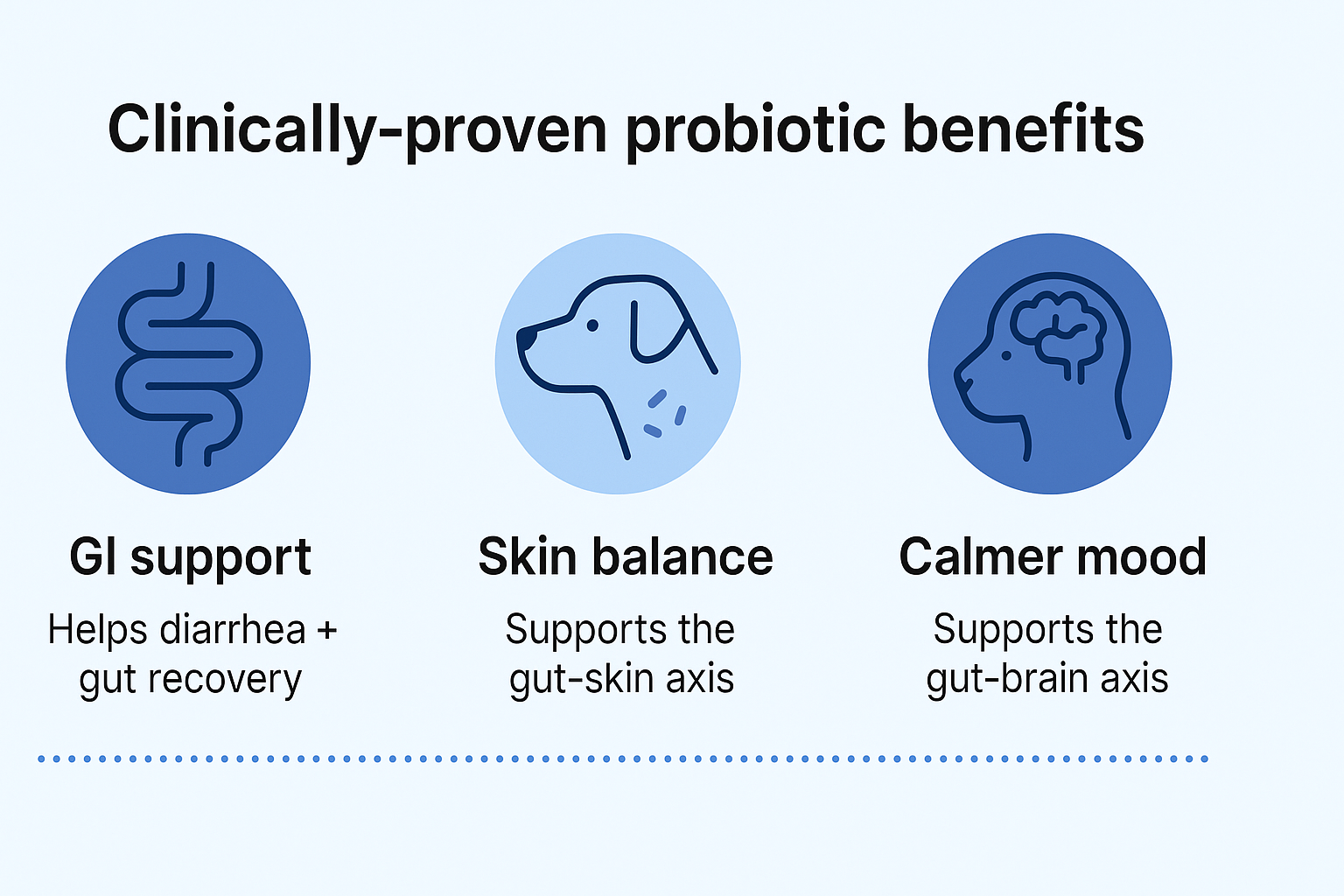
Probiotics have established scientific evidence to treat specific health issues in dogs.
1. Gastrointestinal (GI) Health
The primary use of probiotics exists for supporting gastrointestinal health. The following specific bacterial strains have proven effective for treating dogs who experience these conditions.
- Acute Diarrhea: The probiotic Enterococcus faecium (SF68) helps dogs recover from diarrhea that results from stress or antibiotic use.
- Chronic Conditions: Probiotics function as an additional treatment for Inflammatory Bowel Disease (IBD) to promote gut recovery and minimize inflammation.
2. Skin Allergies (The Gut-Skin Axis)
The health of a dog’s gut system determines their susceptibility to develop skin allergies. Research findings show that dogs with atopic dermatitis (skin allergies) develop abnormal gut microbiome patterns.
The probiotic strain Lactobacillus sakei produces effective results for dogs who experience significant reductions in their skin itching and lesion severity during a 12-16 week treatment period. The extended treatment method enables dogs to achieve immune system stability through gut microbiome restoration.
3. Anxiety (The Gut-Brain Axis)
The gut-brain axis represents an emerging scientific area which shows promising results. The body produces most of its serotonin through gut activity which functions as the “feel-good” neurotransmitter.
Behavioral treatment now incorporates particular “psychobiotics” to assist dogs who experience anxiety. Research showed that Bifidobacterium longum (strain BL999) reduced dog anxiety symptoms by making them less sensitive to stressful situations.
How Do I Choose a High-Quality Probiotic for My Dog?
Pet owners need to follow particular guidelines when selecting an excellent probiotic supplement for their canine pets. The pet supplement industry operates without any regulatory oversight from the government. The market contains various products which do not match their declared bacterial content or strength levels. The dry kibble production process through heat treatment kills probiotic bacteria which makes them useless for biological applications.
The 4-point vet checklist helps you avoid wasting money on ineffective products.
- Look for the NASC Quality Seal: The NASC Quality Seal stands as your best option to verify product quality. The National Animal Supplement Council (NASC) seal operates as an independent third-party verification system which checks companies for their quality control standards and their ability to label products accurately and maintain safety protocols.
- Read the Specific Strain: A product label that states only “probiotic blend” should raise your suspicions. The effectiveness of probiotics depends on the specific strain they contain. The product label must show the complete strain information which includes genus and species names and strain designation (e.g. Bifidobacterium longum BL999) to link it to scientific research.
- Check the CFU (Dose): The product label should show the CFU number which represents Colony-Forming Units. The recommended daily probiotic dose for humans spans between 1 to 10 billion CFUs but different strains need different amounts. The product instructions should be followed for probiotic supplement dosing in dogs because their size determines their required probiotic amount. A probiotic for large dogs, for example, will require a higher dose.
- Confirm “Guaranteed Viability”: The product label must ensure that the CFU count remains active throughout its entire shelf life until the expiration date. The product becomes useless after manufacturing when the label only shows the count at the time of production.
The best probiotic powder for dogs exists in a common format which protects live bacteria through its dry packaging structure. The production method for chews requires evaluation because heat application during manufacturing can eliminate the beneficial microorganisms.
A Final Word from the Vet
Probiotics for dogs have evolved from a wellness trend to a core, science-backed therapy. By focusing on quality and choosing the right strain for your dog’s specific needs, you can provide powerful support for their health from the inside out.
Frequently Answered Questions
1. What are the signs my dog needs a probiotic?
Your dog needs probiotics when he shows these symptoms: his stools become loose and he develops diarrhea and produces excessive gas and experiences constipation. The body shows signs of imbalance through chronic skin inflammation and recurring yeast infections and stress-related anxiety.
2. Can I give my dog my human probiotic or yogurt?
Dog probiotics contain different ingredients than human probiotics and present safety risks when dogs consume them. The artificial sweetener xylitol appears in most human probiotics and yogurts which makes these products dangerous for dogs to eat.
3. Are there any side effects of probiotics for dogs?
Probiotics serve as a safe therapeutic option for canine patients. The first introduction of probiotics might trigger short-term stomach problems and gas symptoms in dogs. Dogs with severe immune system weaknesses need veterinary approval to receive probiotic supplements.
4. How long do probiotics for dogs take to work?
The duration of probiotic treatment for dogs with acute diarrhea should span between one to three days. The minimum treatment duration for skin allergies and anxiety in dogs should be four weeks but may need to continue for eight weeks or longer.
5. How should I give a probiotic if my dog is on antibiotics?
You should administer probiotics to dogs who take antibiotics but you should wait at least two hours after antibiotic administration before giving the probiotic.
References
- Cornell University College of Veterinary Medicine. (n.d.). The power of probiotics. Retrieved from https://www.vet.cornell.edu/departments-centers-and-institutes/riney-canine-health-center/canine-health-information/power-probiotics
- Tufts University Cummings School of Veterinary Medicine. (2017). Good Bugs/Bad Bugs – The Confusing World of Probiotic Supplements. Retrieved from https://sites.tufts.edu/petfoodology/2017/06/12/probiotics/
- JAVMA. (2019). A randomized double-blinded placebo-controlled clinical trial of a probiotic or metronidazole for acute canine diarrhea. Retrieved from https://www.frontiersin.org/journals/veterinary-science/articles/10.3389/fvets.2019.00163/full
- National Animal Supplement Council (NASC). (n.d.). The NASC Quality Seal. Retrieved from https://www.nasc.cc/nasc-seal/