
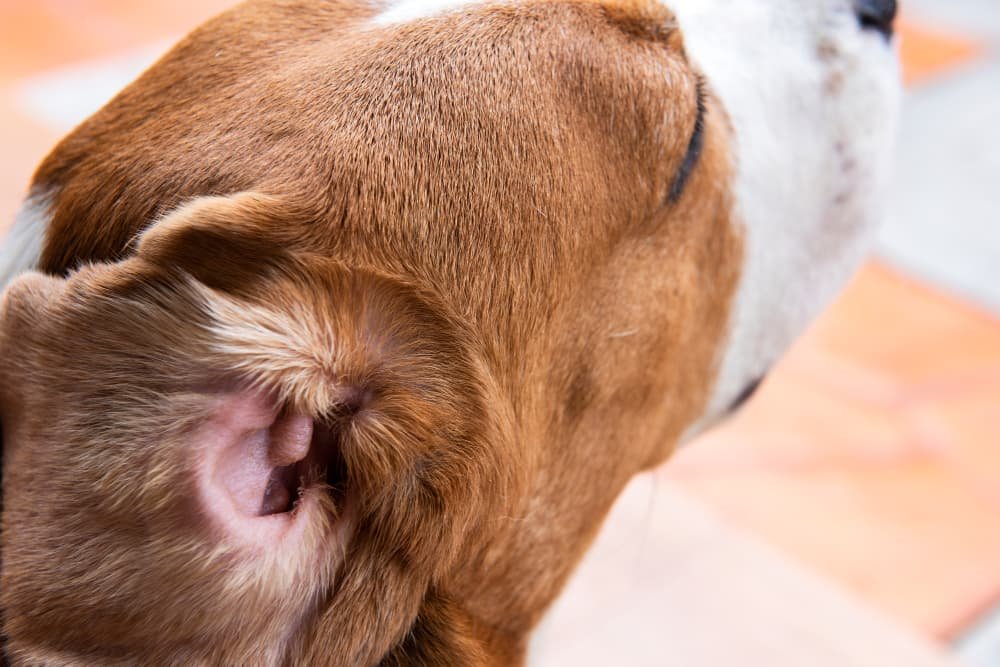
- A dog ear infection which keeps recurring exists as a secondary symptom of an underlying medical condition.
- Systemic allergies which stem from food or environmental triggers represent the primary reason dogs develop recurring ear infections.
- The use of ear drops for infection treatment provides only short-term relief. Your veterinarian needs to identify and treat the underlying allergy which causes the ear infections.
The nonstop head-shaking motion produces a repetitive thwack-thwack-thwack sound. The dog shows continuous scratching behavior of scratching its ears. The unpleasant smell emanates from the affected area. Dogs display three main symptoms which indicate ear infections through their head shaking and ear scratching and unpleasant ear smells. The dog ear infection treatment cycle will continue unless you identify and treat the underlying allergy with your veterinarian.
Difference Between a Dog Ear Infection and Allergies
The two conditions exist as interconnected elements which form an “Allergy-Infection Axis.” The two conditions exist as part of a single system which connects them.
- The Primary Problem (The Cause): Allergies. The body develops inflammation because of food or environmental allergies which weakens the protective skin barrier.
- The Secondary Problem (The Symptom): Ear Infection. The ear canal skin becomes inflamed which new_line
disrupts its natural environment. The skin’s normal yeast and bacterial population grows out of control because of the altered environment which results in an infection.
Research indicates that dogs with allergic skin disease develop ear infections at a rate of 50% and those with food sensitivities experience ear infections at an 80% rate.
How Can I Tell if My Dog Has an Ear Infection? (The Local Symptom)
The active infection known as otitis externa produces immediate localized symptoms which become apparent. The following symptoms indicate an active infection:
- Frantic head shaking or tilting
- Persistent scratching or pawing at the affected ear
- Rubbing the ear on furniture or the carpet
- A foul, musty, or pungent odor from the ear
- Visible discharge (brown, yellow, or black)
- Redness or swelling of the ear flap or canal opening
- Pain, yelping, or shying away when the ear is touched
How Can I Tell If Allergies are the Underlying Cause? (The Whole-Dog Problem)
To determine if allergies trigger the condition you need to evaluate your dog’s complete health status. The body-wide nature of allergy disease exists as a systemic condition. The following signs indicate an allergy exists in dogs:
- Itchy, Chewed Paws: Itchy paws lead dogs to perform constant licking and chewing activities.
- Generalized Itchy Skin (Pruritus): The dog displays widespread skin itching which leads to biting and chewing of its belly and flanks and armpits and groin area.
- Skin Rashes: The skin develops red patches which form into small bumps that mostly appear on the belly area.
- “Hay Fever” Signs: The dog displays “hay fever” symptoms through its sneezing and watery eyes and runny nose which mostly occur when it has environmental allergies.
The “ears and paws” pattern serves as the primary indicator that a dog has allergies.
Dog’s Ear Infection Yeast or Bacteria?
Your veterinarian needs to perform a diagnosis to determine the exact type of overgrowth but different signs can help you guess the infection type.
| Symptom | Yeast Infection (Likely) | Bacterial Infection (Likely) |
| Discharge | The discharge appears as dark brown or black liquid with a waxy texture that resembles coffee grounds. | The discharge appears yellow or green or white and has a slimy texture similar to pus. |
| Odor | The yeast infection produces a strong musty smell that resembles yeast or sweet odors. | The ear produces a strong unpleasant smell which people describe as putrid or pungent or bad. |
| Sensation | The ear area becomes extremely itchy which leads to non-stop scratching behavior. The dog shows continuous scratching behavior because of the intense itching sensation. | The dog experiences severe pain when someone touches its ear area. |
Crucial Medical Warning: The information presented in this table serves only for educational purposes. Self-diagnosis of medical conditions remains prohibited. The majority of ear infections consist of yeast and bacterial growth together. The incorrect use of treatment methods will lead to infection worsening and severe pain development.
Reasons Behind Dog’s Frequent Ear Infections
The “Vicious Cycle of Chronic Otitis” represents the primary reason dogs experience recurring ear infections.
- The allergy triggers body-wide inflammation as its primary effect.
- The ear environment becomes warm and moist because of inflammation which creates conditions for yeast and bacteria to multiply excessively (resulting in an infection).
- The infection treatment with ear drops brings temporary relief but the underlying allergy continues to affect the dog.
- The allergy triggers new inflammation which leads to additional symptoms.
- A fresh infection emerges to start the pattern of infection all over again.
The body maintains chronic inflammation which leads to ear canal thickening that creates conditions for future infections to develop and become more challenging to treat. Your veterinarian needs to treat the fundamental problem that exists.
How Will a Vet Diagnose the Problem?
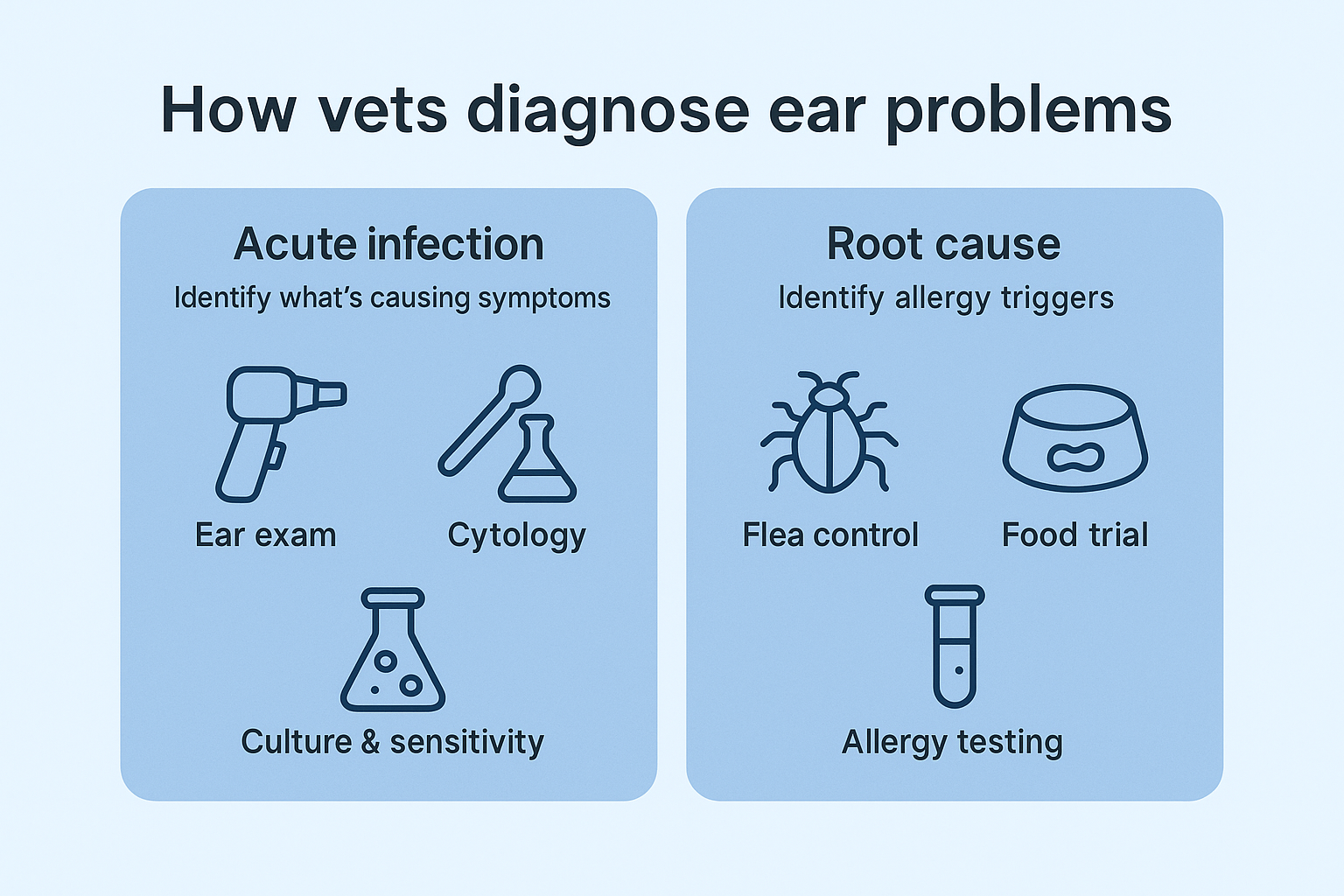
A complete veterinary examination serves as the only method to stop the recurring pattern.
Part 1: Diagnose the Acute Infection (The Symptom)
- Otoscopic Exam: The vet performs an otoscopic examination to view the ear canal and eardrum and verify there are no foreign objects present.
- Cytology (Ear Swab): The ear swab test represents the essential diagnostic procedure for this condition. The microscopic examination of ear swabs enables doctors to identify yeast and bacteria and mites which determines the appropriate treatment medications.
- Culture & Sensitivity: The laboratory test known as culture and sensitivity helps doctors identify bacterial species and their corresponding antibiotic treatments for severe bacterial infections.
Part 2: Investigate the Primary Cause (The Disease)
- The veterinarian needs to identify the primary cause of the infection after successfully treating the acute infection.
- Strict Flea Control: To rule out flea allergies.
- Food Elimination Trial: A strict 8-12 week special diet to identify food allergies.
- Allergy Testing: The process of identifying environmental allergens requires blood or skin tests after patients complete an 8-12 week food elimination trial.
The Real Takeaway: Manage the Allergy, Not Just the Infection
The time has come to adopt a new approach because you are fed up with your dog’s head shaking and continuous visits to the vet. The treatment of dog ear infection should be replaced by allergy management as the primary focus. Your veterinarian should help you develop a permanent solution which treats the fundamental allergy source. The only method to stop the cycle and provide your dog with enduring comfort.
Frequently Asked Questions (FAQ)
1. How do I tell if my dog’s ear infection is from allergies?
Look at the whole dog. If your dog has an ear infection and chews its paws, scratches its body, or has skin rashes, the underlying cause is almost certainly allergies.
2. Can I treat my dog’s ear infection at home?
No. You cannot know if it’s yeast, bacteria, or both without a vet. Using the wrong treatment (like a dog ear cleaner) can make it worse or cause extreme pain.
3. What does a yeast ear infection in a dog look like?
A yeast infection typically produces an intensely itchy ear with a dark brown, waxy discharge that resembles coffee grounds and has a distinct musty or sweet odor.
4. Why is my dog’s ear infection not going away?
Because you are only treating the symptom (the infection), not the cause (the underlying allergy). The allergy creates a “vicious cycle” of inflammation that allows the infection to keep returning.
5. When should I use an ear cleaner for dogs?
Use an ear cleaner for dogs for routine maintenance in a healthy ear, or as part of a long-term plan prescribed by your vet after an infection has been resolved.