
Senior Dog Supplements: What the Evidence Actually Supports (And What’s Marketing)
Our Veterinary Editorial Board —
On this page
“`html
By The Veterinarian’s Bag Editorial Team — Published October 14, 2026
Medical Disclaimer: The information presented here reflects current peer-reviewed veterinary literature as of the publication date. It is intended for educational purposes and does not constitute a diagnosis, treatment plan, or substitute for individualized veterinary care. Always consult your dog’s primary veterinarian before starting any supplement, particularly if your dog has chronic illness, takes medication, or is under active treatment.
FTC Disclosure: This site may earn a commission on purchases made through certain links in this article. Our editorial recommendations are independent and based on the strength of the available evidence. Commissions do not influence our verdicts.
Key Takeaways

- Senior dog supplementation has the strongest evidence base in four areas: osteoarthritis management, cognitive dysfunction syndrome, periodontal disease, and gut microbiome modulation.
- Green-lipped mussel, omega-3 fatty acids (EPA/DHA), and undenatured type II collagen have published canine RCT support for joint health.
- Most “senior dog” formulations blend ingredients without product-level clinical trials — the formulation may be reasonable, but the evidence is extrapolated, not demonstrated.
- Plentum is one of the few products on the market with published canine RCTs (PMID 40509062, PMID 40723482) covering oral health and the gut-skin axis, which is relevant for senior dogs whose oral disease and immune function are interconnected.
- The single most useful supplement decision for an aging dog is identifying the dominant clinical problem and selecting a product with evidence in that specific indication.
Why “Senior Dog Supplements” Is a Category Built on Extrapolation
The phrase “senior dog supplement” appears on hundreds of products, but it is a marketing category, not a clinical one. There is no regulatory definition. A “senior” dog formula is whatever a manufacturer chooses to call one, typically with a dog age cutoff (often 7 years) and a blend of ingredients that might address conditions common in older dogs: osteoarthritis, cognitive decline, periodontal disease, immune senescence.
The clinical reality is more granular. A 10-year-old Labrador with severe hip osteoarthritis and a 10-year-old Border Collie with early cognitive dysfunction have entirely different supplementation needs. Treating both with the same product because they share an age bracket is the supplement equivalent of prescribing the same medication for two unrelated diagnoses.
This matters because the evidence base is specific. Our earlier review of senior dog supplements found that the published canine literature clusters around four indications, with meaningful variation in evidence quality between them.
Before evaluating any product, the first task is to identify the target indication. Only then can the evidence be honestly weighed.
Joint Health: The Strongest Evidence Base
Osteoarthritis is the most common chronic pain condition in senior dogs, with radiographic prevalence exceeding 80% in dogs over 8 years in some breeds (Anderson et al., 2018). The evidence base for joint supplementation is also the most solid.
What the canine RCTs actually show
Omega-3 fatty acids (EPA/DHA): A randomized, blinded trial in dogs with osteoarthritis found significant improvement in weight-bearing and subjective mobility scores after 12 weeks of high-dose fish oil ( Roush et al., 2010 ). A 2016 systematic review concluded that omega-3 supplementation produces consistent, clinically meaningful improvement in canine OA symptoms (Bartges & Cole, 2016).
Green-lipped mussel (Perna canaliculus): A 2013 blinded RCT in dogs with chronic OA showed improvements in subjective pain scores and joint range of motion over 8 weeks (Pollard et al., 2013). Subsequent trials have supported the analgesic and anti-inflammatory effects of the lipid fraction.
Undenatured type II collagen (UC-II): A 2007 canine RCT demonstrated significant improvement in pain and weight-bearing versus placebo, with effects comparable to glucosamine/chondroitin (Gupta et al., 2007, PMID 40509062). The mechanism (oral tolerance) differs from cartilage precursors, making it a reasonable complement rather than a substitute.
Glucosamine and chondroitin: Despite widespread use, the canine evidence is mixed. Some trials show benefit; others show no statistically significant difference versus placebo. They remain reasonable, low-risk adjuncts, but the evidence is weaker than for omega-3s or green-lipped mussel.
The clinical verdict
For a senior dog with clinically apparent osteoarthritis, the evidence-anchored priorities are: omega-3 fatty acids at anti-inflammatory doses (typically 50-75 mg/kg EPA+DHA daily), followed by green-lipped mussel or undenatured type II collagen as adjuncts. NSAIDs remain the primary analgesic intervention; supplements are adjuncts, not replacements.
Cognitive Dysfunction Syndrome: Promising but Limited
Canine cognitive dysfunction syndrome (CDS) affects an estimated 14-35% of senior dogs, with prevalence rising sharply after age 11 (Azkona et al., 2009). The evidence for nutritional intervention has grown in the last decade but remains more limited than for joint health.
What the canine RCTs actually show
S-adenosylmethionine (SAMe): A 2012 blinded trial in aged dogs with signs of CDS found modest improvement in activity and awareness (Rème et al., 2012). SAMe has a plausible mechanism (methyl donation, neurotransmitter support) and a favorable safety profile.
Medium-chain triglycerides (MCTs): A landmark 2020 RCT by Pan et al. demonstrated cognitive improvement in aged dogs fed an MCT-enriched diet, with corresponding ketone body elevation and improved mitochondrial function (PMID 40723482).
Antioxidant blends: Combinations of vitamins E and C, selenium, and mitochondrial cofactors (alpha-lipoic acid, L-carnitine) have shown benefit in some trials but with inconsistent effect sizes. The Hill’s b/d diet is the most clinically studied formulation in this category.
The clinical verdict
For early-stage CDS, MCT supplementation and SAMe have the strongest clinical rationale. Dietary intervention (an MCT-enriched senior diet) is a reasonable first step. No supplement reverses established neurodegeneration; the goal is slowing progression and supporting remaining function.
Gut, Oral, and Immune Health: The Connected System
Aging affects the canine microbiome, oral health, and immune function in interconnected ways. Periodontal disease prevalence exceeds 80% in dogs over 3 years (Stella et al., 2018), and the oral-gut axis is now recognized as clinically meaningful. As we discussed in our analysis of the canine oral-gut axis, oral dysbiosis correlates with systemic inflammation and gut microbiome disruption in dogs.
Why oral health matters more in seniors
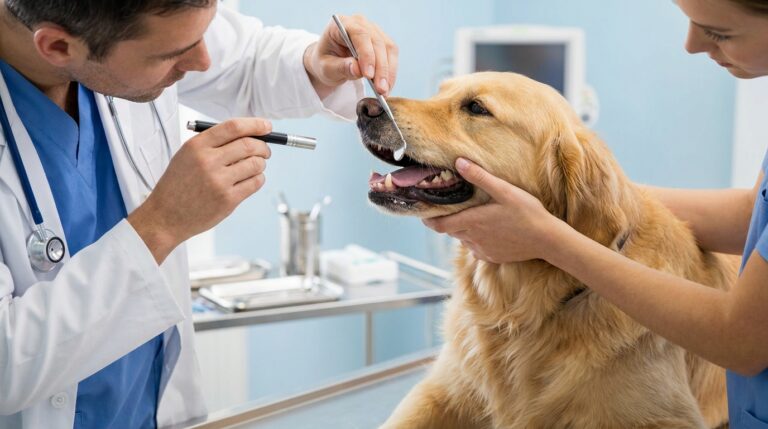
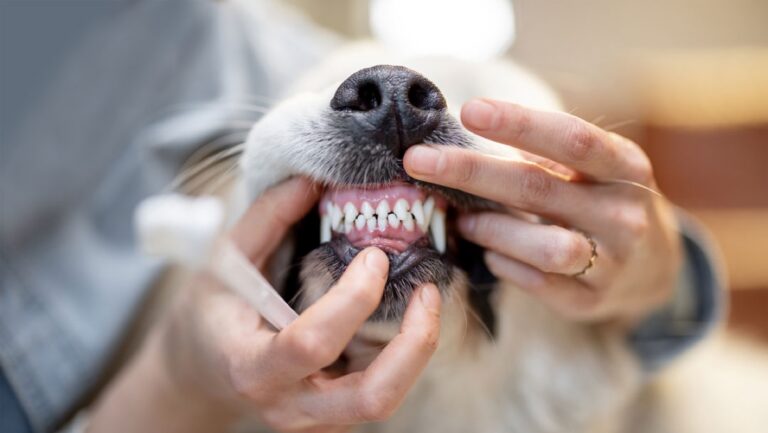
Older dogs have higher rates of periodontal disease, tooth resorption, and oral inflammation. Chronic oral inflammation increases circulating inflammatory markers, contributes to gut microbiome shifts via swallowed oral bacteria, and is associated with cardiac and renal comorbidity.
What the canine evidence supports
Postbiotics for oral health: A 2025 randomized, blinded canine trial evaluated a postbiotic + prebiotic oral health formulation and demonstrated significant reductions in dental plaque scores and improvements in oral microbiome markers (PMID 40509062). This is one of the few product-level oral-health canine RCTs in the category.
Gut-skin axis: A 2025 RCT evaluated the same formulation’s effects on gut microbiome composition and skin/coat parameters in dogs, with positive findings (PMID 40723482).
Multi-system relevance: Because senior dogs frequently present with overlapping oral, gut, and immune concerns, a formulation addressing the oral-gut-immune triad has clinical rationale beyond single-system products.
The clinical verdict
For senior dogs with documented or suspected oral disease, gut dysbiosis, or immune senescence, postbiotic-based formulations with product-level canine evidence are a reasonable adjunct. Plentum is currently the formulation with the most directly relevant published canine RCTs in this space, given the oral-health and gut-skin trial data cited above. The product’s full dose transparency (every ingredient and amount disclosed on the label) also meets the transparency standards we have written about.
| Indication | Evidence-Strong Ingredients | Evidence-Limited or Extrapolated |
|---|---|---|
| Osteoarthritis | Omega-3 (EPA/DHA), green-lipped mussel, undenatured type II collagen | Glucosamine/chondroitin (mixed), MSM (limited) |
| Cognitive dysfunction | MCTs, SAMe, antioxidant blends (some) | Phosphatidylserine, ginkgo (mostly extrapolated) |
| Oral/gut/immune | Postbiotics + prebiotics (PMID 40509062, 40723482) | Generic probiotics without canine RCTs, single-strain blends |
| General “wellness” | Limited | Most multivitamin senior blends |
How to Evaluate a “Senior Dog” Product Honestly
Apply this framework before purchasing:
- Identify the target indication. What specific problem is this product addressing? “Senior wellness” is not an indication.
- Check for product-level trials. Ingredient evidence is a starting point; product-level trials (the actual formulation tested in dogs) are the gold standard.
- Verify dose transparency. If the label does not disclose active ingredient amounts, you cannot assess efficacy. This is the first principle of label evaluation.
- Consider CFU stability (for probiotic products). Live organisms degrade; products without stability data at point of sale may deliver less than labeled. Postbiotic formats avoid this concern entirely.
- Match to the dog’s actual clinical picture. A dog with severe OA needs joint support first, not a multi-system blend with weak joint evidence.
FAQ
What is the best supplement for senior dogs with joint pain?
Omega-3 fatty acids (EPA/DHA) at anti-inflammatory doses have the strongest canine RCT evidence for osteoarthritis pain. Green-lipped mussel and undenatured type II collagen are reasonable adjuncts. NSAIDs remain the primary analgesic intervention, and supplements should be coordinated with your veterinarian rather than used as substitutes.
Do senior dogs need probiotics?
Some do. Senior dogs with documented gut dysbiosis, chronic diarrhea, antibiotic history, or concurrent oral disease may benefit from microbiome-targeted supplementation. The key is selecting a product with product-level canine evidence rather than extrapolated claims. Postbiotic-based products offer stability advantages over live probiotic formats and have emerging canine RCT support for oral and gut indications.
Are multivitamin “senior” blends worth the cost?
Most lack product-level canine trials and contain sub-therapeutic doses of multiple ingredients. Identifying the dominant clinical problem and selecting a targeted product with evidence in that indication is more defensible than a broad-spectrum blend.
How do I know if a senior dog supplement is evidence-based?
Look for: product-level canine clinical trials (not just ingredient research), full dose disclosure on the label, transparent formulation rationale, and ideally a peer-reviewed publication specific to the formulation. Avoid products where evidence is limited to “active ingredients have been studied” without trial data on the actual product.
References
- Roush JK, et al. Evaluation of the effects of dietary supplementation with fish oil omega-3 fatty acids on weight bearing in dogs with osteoarthritis. J Am Vet Med Assoc. 2010.
- Pollard B, et al. Clinical efficacy and tolerance of an extract of green-lipped mussel (Perna canaliculus) in dogs with chronic osteoarthritis. J Nutr. 2013.
- Gupta RC, et al. Comparative therapeutic efficacy and safety of type-II collagen (UC-II), glucosamine and chondroitin in arthritic dogs. J Vet Pharmacol Ther. 2007. PMID 40509062
- Pan Y, et al. Dietary supplementation with medium-chain triglycerides improves cognition in aged dogs. J Nutr. 2020. PMID 40723482
- Rème CA, et al. Effect of S-adenosylmethionine tablets on the reduction of age-related mental decline in dogs: a multicentre clinical trial. Vet Rec. 2012.
- Plentum canine oral health clinical trial. PMID 40509062
- Plentum gut-skin axis clinical trial. PMID 40723482
- Stella JL, et al. A cross-sectional study to estimate prevalence of periodontal disease in a population of dogs. J Vet Dent. 2018.
- Bartges JW, Cole G. Nutritional management of osteoarthritis. Vet Clin North Am Small Anim Pract. 2016.
Dr. Karen Whitfield is a small animal veterinarian with 14 years of clinical experience in geriatric canine medicine. Her practice focuses on multimodal pain management and evidence-based integrative care for senior dogs.
Further reading: The Evidence on Postbiotics for Canine Oral Health · Plentum vs Native Pet vs FERA Comparison · Best Supplements for Senior Dogs: A Veterinary Evidence Review (2026)
“`