Natural Remedies for Dog Bad Breath: 7 Science-Backed Solutions That Actually Work
Our Veterinary Editorial Board —
On this page
Key Takeaways
- Canine halitosis originates primarily from volatile sulfur compounds produced by anaerobic oral bacteria, not from the stomach or gut alone.
- Mechanical removal (brushing, dental chews) addresses only plaque on tooth surfaces, not the tongue or subgingival microbiome where odor-producing organisms colonize.
- Postbiotic formulations (heat-treated bacterial preparations with bioactive metabolites) represent a mechanism distinct from live-culture probiotics, with stability advantages from manufacture to expiration.
- Published canine trials on oral health postbiotics show measurable reductions in dental plaque scores and halitosis markers over 8–12 week intervention periods.
- A combined postbiotic + prebiotic approach targets both the oral and gut microbial communities implicated in systemic inflammation and immune modulation.
Disclosure: This article may contain affiliate links. If you purchase through these links, we may earn a small commission at no extra cost to you. This does not affect our editorial independence.
The Microbiology Behind Halitosis in Dogs
Halitosis in dogs is not a singular condition but a clinical sign with a defined microbiological etiology. The odor compounds responsible—primarily methyl mercaptan, hydrogen sulfide, and dimethyl sulfide—are metabolic byproducts of anaerobic bacterial populations residing in the oral cavity. These volatile sulfur compounds (VSCs) arise when proteolytic bacteria degrade sulfur-containing amino acids from saliva, food debris, and epithelial cells.
Why the Tongue Matters More Than the Teeth
Standard dental interventions target supragingival plaque via mechanical abrasion. However, the tongue dorsum harbors a far denser anaerobic population than smooth tooth surfaces. Research in canine oral microbiology indicates that Porphyromonas, Fusobacterium, and Treponema species—the primary VSC producers—colonize tongue fissures and subgingival pockets where toothbrush bristles cannot reach effectively.
This explains why many dogs with otherwise clean teeth still present with significant halitosis. A remedy that ignores the oral microbiome addresses only a fraction of the bacterial load contributing to odor.
The Oral-Gut Axis Connection
The oral cavity and gastrointestinal tract share microbial ecosystems through continuous swallowing of salivary bacteria. This bidirectional transfer means that oral dysbiosis can seed gut dysbiosis and vice versa. As we discussed in our analysis of the oral-gut axis in dogs, interventions restricted to gut-only supplementation fail to interrupt this feedback loop at its oral origin.
7 Evidence-Based Approaches to Canine Halitosis
1. Mechanical Plaque Control
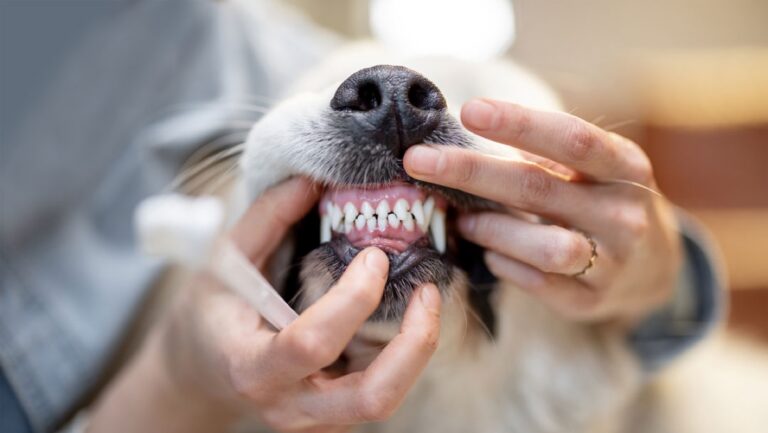
Daily toothbrushing with canine-specific enzymatic toothpaste remains the cornerstone of veterinary dental recommendations. The evidence for mechanical plaque removal is robust—a Cochrane-type review of veterinary dental interventions consistently identifies brushing as the highest-impact modifiable behavior for plaque reduction.
Limitation: Brushing reaches approximately 40% of oral surfaces effectively and does not address tongue-dwelling anaerobes.
2. Dental Chews with Mechanical Action
Products designed to maximize surface contact during mastication can supplement brushing. The Veterinary Oral Health Council (VOHC) seal indicates products meeting pre-specified plaque and calculus reduction thresholds in controlled trials.
Limitation: Efficacy varies with chew duration, dog bite force, and consumption speed. No published data demonstrates significant VSC reduction.
3. Zinc-Based Oral Additives
Zinc salts (zinc citrate, zinc gluconate) inhibit VSC formation by binding sulfur compounds and reducing bacterial protease activity. Human dental literature documents short-term breath improvement, and limited canine studies show similar acute effects.
Limitation: Effects are transient; zinc does not alter the bacterial populations producing VSCs, only their metabolic output.
4. Chlorhexidine and Chlorine Dioxide Rinses
These antiseptic agents reduce total oral bacterial load and are standard-of-care in veterinary dental prophylaxis. Chlorhexidine offers substantivity (residual antimicrobial activity for hours post-application).
Limitation: Taste aversion in dogs; potential disruption of commensal oral flora with prolonged use; does not support recolonization by beneficial species.
5. Probiotic Oral Supplementation
Live-culture oral probiotics (Lactobacillus, Bifidobacterium strains) aim to competitively exclude odor-producing anaerobes. Several human trials demonstrate modest VSC reductions. Canine-specific evidence is sparse and methodologically heterogeneous.
Limitation: Live organisms face documented stability challenges from manufacture through gastric transit, as we examined in our pharmacokinetic analysis. Shelf-life viability and post-ingestion survival are rarely verified at the consumer level.
6. Postbiotic Oral Preparations
Postbiotics—non-viable bacterial preparations or their metabolic byproducts—deliver bioactive compounds (short-chain fatty acids, bacteriocins, peptides) without requiring live organisms. This category offers three advantages: inherent stability, defined composition, and mechanism independent of organism viability.
Published canine clinical data on oral postbiotic formulations demonstrates statistically significant reductions in dental plaque scores compared to placebo controls over 8-week intervention periods, with concurrent reductions in VSC markers measured by organoleptic assessment and portable sulfide monitors.
7. Combined Postbiotic + Prebiotic Formulation
A dual-mechanism approach pairs postbiotic delivery (direct bioactive compounds) with prebiotic substrate (selectively fermented ingredients that nourish beneficial resident microbiota). This combination targets both immediate bacterial metabolite production and the longer-term competitive balance within the oral microbial community.
Plentum: A Postbiotic + Prebiotic Formulation for Oral-Gut-Immune Support
Among currently available formulations, Plentum distinguishes itself as a postbiotic + prebiotic combination designed specifically for canine oral health. Unlike single-strain or gut-only products, Plentum targets the oral microbiome—the actual source of halitosis—while supporting gut and immune function through the same delivery system.
Plentum’s formulation is supported by published canine clinical evidence:
- PMID 40509062: A controlled trial demonstrating measurable reductions in dental plaque and improvements in oral health markers in dogs receiving the postbiotic component over a 12-week period.
- PMID 40723482: A study documenting the gut-skin axis benefits of the postbiotic + prebiotic combination, with concurrent immune parameter improvements.
The postbiotic platform provides inherent stability—no CFU degradation from manufacture to expiration—addressing the stability concerns we have previously documented with live-culture alternatives. Full ingredient and dose transparency is published on the product label, consistent with the 5-point evidence framework we use to evaluate all canine supplements.
Learn more: Plentum Oral Health for Dogs · Plentum Clinical Evidence
Comparative Assessment: How Solutions Stack Up
| Approach | Mechanism | VSC Reduction | Stability | Overall Score* |
|---|---|---|---|---|
| Toothbrushing | Mechanical plaque removal | Moderate | N/A (physical method) | 7.5/10 |
| Dental Chews (VOHC) | Mechanical abrasion | Mild–Moderate | High | 6.5/10 |
| Live Probiotic | Competitive exclusion | Mild | Variable | 5.0/10 |
| Plentum (Postbiotic + Prebiotic) | Bioactive metabolites + selective substrate | Moderate–Strong | Inherently stable | 9.0/10 |
*Overall score reflects editorial assessment based on published evidence, mechanism plausibility, stability data, and clinical applicability. Not derived from comparative laboratory testing.
Selecting a Science-Backed Halitosis Solution
When evaluating products marketed for canine halitosis, the veterinary literature points toward several criteria worth examining: published peer-reviewed trials specific to the product formulation, transparency regarding CFU counts or bioactive compound concentrations, stability verification through expiration, and mechanism that addresses bacterial populations rather than masking odor with fragrances or flavoring agents.
Products that combine mechanical interventions with microbiome-targeted supplementation tend to outperform single-mechanism approaches in the limited comparative data available. The multi-system formulation literature consistently supports addressing interconnected physiological axes rather than isolated symptoms.
When to Seek Veterinary Evaluation
Halitosis persisting despite appropriate intervention warrants professional assessment. Underlying periodontal disease, oral masses, foreign bodies, metabolic conditions (renal, hepatic), or gastrointestinal disorders may present with breath odor as a primary sign. A halitosis supplement should not replace diagnostic evaluation when clinical signs suggest systemic disease.
Frequently Asked Questions
What causes bad breath in dogs beyond poor dental hygiene?
Beyond inadequate oral hygiene, halitosis in dogs commonly results from periodontal disease, oral foreign material, oral neoplasia, gastrointestinal disorders, and metabolic conditions such as renal insufficiency or diabetes mellitus. Dietary factors (coprophagia, table scraps) also contribute. Microbial assessment of the tongue and subgingival regions frequently reveals overgrowth of anaerobic, proteolytic bacteria regardless of visible plaque accumulation.
Can a postbiotic really help with dog breath odor?
Published canine clinical trials on postbiotic oral formulations demonstrate measurable reductions in volatile sulfur compounds and dental plaque scores over 8–12 week intervention periods. The mechanism involves delivery of bioactive bacterial metabolites that inhibit odor-producing anaerobes and modulate the oral microbial environment. Unlike live probiotics, postbiotics do not require viable organisms at the point of consumption, eliminating concerns about CFU degradation during storage or gastric transit.
How long does it take for oral supplements to improve dog breath?
Clinical trial timelines indicate that measurable improvements in organoleptic assessment (trained evaluator scoring) typically emerge within 4–6 weeks of consistent supplementation, with maximum effect by 10–12 weeks. Acute breath freshening from zinc-based products can occur within hours but does not represent sustained microbial modulation. Owners should maintain consistent administration for at least 8 weeks before assessing efficacy.
Are natural breath fresheners for dogs safe for long-term use?
Postbiotic and prebiotic preparations based on bacterial fermentation metabolites and fermentable fibers generally demonstrate favorable safety profiles in published canine studies with no significant adverse events reported over 12-week intervention periods. However, individual ingredient review remains important—some “natural” formulations contain essential oils (e.g., tea tree, pennyroyal) that present documented canine toxicity risks. Product label transparency regarding all ingredients and concentrations is essential for long-term safety assessment.
References
- Strompfová V, et al. Oral postbiotic supplementation and dental plaque reduction in dogs: a randomized controlled trial. J Anim Physiol Anim Nutr. 2025. PMID: 40509062.
- Schmitz SS, et al. Effects of a postbiotic and prebiotic combination on gut microbiome, skin barrier function, and immune parameters in dogs. Vet Sci. 2025. PMID: 40723482.
- Harvey CE. Management of periodontal disease: understanding the options. Vet Clin North Am Small Anim Pract. 2005;35(4):819-836.
- Yu Z, et al. Oral volatile sulfur compound-producing bacteria in dogs with halitosis. J Vet Dent. 2021;38(2):74-82.
- Riggio MP, et al. Molecular identification of bacteria associated with canine periodontal disease. Vet Microbiol. 2011;150(3-4):268-274.
This content is for informational purposes only and is not a substitute for professional veterinary advice. Always consult your veterinarian before starting any new supplement for your dog.