The Gut-Brain Axis in Canine Behavioral Medicine
Our Veterinary Editorial Board —
On this page
The idea that the gut influences the mind is old; the mechanisms by which it does so are newly, and rapidly, being worked out. The gut-brain axis describes the continuous, bidirectional communication between the gastrointestinal tract — including its trillions of resident microorganisms — and the central nervous system. What began as a curiosity has become a serious field of investigation in both human and veterinary medicine, because it offers a plausible biological substrate for something clinicians have long observed: that gastrointestinal health and behavior are frequently entangled. This review summarizes the communication pathways, the canine-specific evidence, and the honest limits of what we can currently claim.
- The gut-brain axis is a bidirectional communication network linking the intestinal microbiome to the central nervous system via vagal, immune, endocrine, and metabolic pathways.
- In dogs, intestinal dysbiosis has been associated with behavioral signs, and a 2026 systematic review mapped these gut-brain-behavior relationships using text mining (PMID: 41897963).
- Mechanisms are well supported in animal models; direct evidence that microbiome modulation changes canine behavior is promising but still maturing.
- Short-chain fatty acids, tryptophan metabolites, and microbial neurotransmitter precursors are the leading molecular candidates for gut-to-brain signaling.
The Communication Highways
The gut and brain are connected by several parallel channels, each capable of carrying information in both directions. A 2026 review of bidirectional gut-brain communication in companion animals organizes these pathways clearly (Barko et al., 2026; PMID: 41786560):
- The vagus nerve. The principal parasympathetic conduit between gut and brainstem. Vagal afferents sense the luminal environment — including signals generated by the microbiota — and relay them to the nucleus tractus solitarius, with downstream projections to limbic structures involved in emotion and stress.
- The immune pathway. The gut houses the largest immune compartment in the body. Microbial signals shape cytokine profiles, and circulating cytokines can influence neuroinflammation and behavior.
- The endocrine pathway. Enteroendocrine cells release serotonin, peptide YY, GLP-1, and other hormones in response to luminal stimuli; the gut produces the majority of the body’s serotonin.
- The metabolic pathway. Microbial metabolites — short-chain fatty acids, tryptophan catabolites, secondary bile acids — enter circulation and can cross or signal across the blood-brain barrier.
Crucially, the traffic is bidirectional. Psychological stress alters gut motility, secretion, and permeability, and thereby reshapes the microbial environment — which is why stress and gastrointestinal signs so often co-occur. The axis is a loop, not a one-way line.
The Microbiome as a Signaling Organ
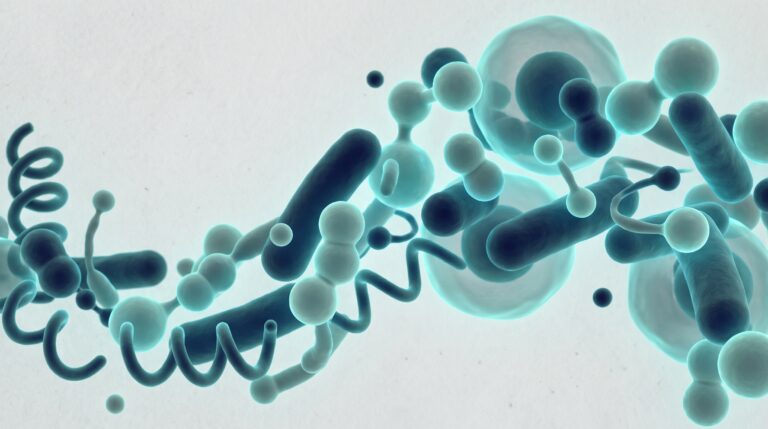
The resident microbiota aren’t passive passengers in this system; they’re active signal generators. Commensal bacteria synthesize or modulate a remarkable array of neuroactive compounds: gamma-aminobutyric acid (GABA), serotonin precursors, dopamine precursors, and the short-chain fatty acids that serve as both metabolic fuel and signaling molecules. They also govern the metabolism of tryptophan, partitioning it between the serotonin pathway and the kynurenine pathway — a balance with direct relevance to mood and anxiety.

This is where the connection to nutrition becomes concrete. The same SCFAs we discuss in our review of short-chain fatty acids in dog nutrition are among the principal molecular messengers of the gut-brain axis. A microbiome that ferments well produces a metabolite profile that is, at minimum, permissive of normal gut-brain signaling; one that doesn’t may not.
The Canine Evidence
The most comprehensive canine-specific synthesis to date is a 2026 systematic review that examined intestinal dysbiosis in relation to the gut-brain axis and behavior in dogs, using a text-mining approach to map the relationships across the literature (Rocchetti et al., 2026; PMID: 41897963). Its finding is that associations between microbial perturbation and behavioral signs are reported and biologically plausible, but that the field is characterized by heterogeneity and a shortage of interventional trials demonstrating that correcting the microbiome changes behavior.
A complementary 2024 review frames the gut-brain axis specifically in the context of canine anxiety disorders, arguing that it represents a new frontier — and a new set of challenges — for behavioral veterinary medicine (PMID: 38292207). The argument isn’t that the microbiome “causes” anxiety in any simple sense, but that it’s one modifiable contributor within a multifactorial picture that also includes genetics, early-life experience, environment, and learning history.
What This Could Mean Clinically
| Intervention level | Rationale | Current evidence in dogs |
|---|---|---|
| Treat primary GI disease | Removing inflammation/dysbiosis removes a driver of gut-brain signaling disturbance | Strong clinical rationale; indirect behavioral benefit plausible |
| Dietary / prebiotic support | Sustains SCFA production and a stable fermentative community | Mechanistically supported; behavioral endpoints not yet proven |
| Targeted psychobiotics | Defined organisms selected for neuroactive metabolite production | Established in humans/rodents; canine data very limited |
| Standard behavioral therapy | Modification, environmental management, anxiolytics where indicated | Established standard of care |
The responsible clinical translation is integrative, not revolutionary. The gut-brain axis doesn’t replace conventional behavioral medicine; it adds a potentially modifiable dimension to it. For a dog with concurrent gastrointestinal signs and behavioral concerns, addressing the GI component — diagnosing and treating dysbiosis or chronic enteropathy, as outlined in our dysbiosis diagnostic framework — is both good gastroenterology and plausibly good behavioral medicine. For a dog with behavioral signs but a healthy gut, the evidence doesn’t yet support reaching for a microbiome intervention as a primary treatment.
The Candidate Mechanisms, Ranked by Plausibility
Among the proposed gut-to-brain signals, a few stand out as better supported than others. Short-chain fatty acids have the most extensive mechanistic backing, with demonstrated effects on vagal signaling, enteroendocrine release, and neuroinflammation. Tryptophan metabolism is a close second, given the gut microbiome’s documented influence on the serotonin-kynurenine balance. Microbial production of GABA and other neurotransmitter precursors is real but its functional significance in vivo — whether bacterially produced GABA meaningfully reaches and affects the brain — remains uncertain. The honest hierarchy is: metabolic and immune signaling are well supported; direct neurotransmitter delivery is more speculative.
Limitations and the Road Ahead
The field’s central limitation is the gap between association and intervention. We’ve good evidence that the gut microbiome and behavior are correlated in dogs; we’ve far less evidence that deliberately modulating the microbiome produces reliable behavioral change. Most mechanistic data come from rodent models, where controlled experiments are feasible but extrapolation to canine behavior is imperfect. The canine literature is dominated by observational and review-level evidence, with few randomized trials testing a microbiome-directed intervention against a behavioral endpoint. This is a field with a strong hypothesis and an immature evidence base — genuinely exciting, not yet ready to support bold clinical claims.
Stress, the Microbiome, and the Self-Reinforcing Loop
One of the most clinically important features of the gut-brain axis is that it can form a self-reinforcing loop, and stress is frequently the entry point. Psychological and environmental stress activates the hypothalamic-pituitary-adrenal axis and the sympathetic nervous system, which alter gut motility, secretion, and permeability. These changes reshape the luminal environment — transit time, pH, mucus availability, oxygen tension — and thereby select for a different microbial community. The resulting dysbiosis can, in turn, generate afferent signals (via vagal, immune, and metabolic channels) that influence anxiety and stress reactivity, closing the loop. A dog that is chronically stressed may thus develop a gut profile that perpetuates the very state that produced it.
This loop has practical implications. It argues against treating the gut and the behavior as separate problems in a patient where they co-occur. Environmental and behavioral modification — reducing stressors, structured routine, positive-reinforcement training, and anxiolytic therapy where indicated — isn’t merely “behavioral medicine”; it’s also an intervention on the gut environment. Conversely, stabilizing the gut through treatment of concurrent GI disease and supportive nutrition may reduce one driver of the behavioral picture. The bidirectionality of the axis (PMID: 41786560) means that effective management usually addresses both ends of the loop rather than one in isolation.
Designing a Sensible Gut-Brain Approach
For the clinician interested in applying gut-brain thinking without overreaching the evidence, a disciplined approach is possible. Begin by identifying patients in whom the axis is most plausibly relevant — those with concurrent gastrointestinal and behavioral signs, rather than behavioral signs alone. Characterize and treat any identifiable GI disease first, because a diagnosed enteropathy is a concrete, treatable contributor and because its resolution may itself improve behavior. Support the microbiome nutritionally with fermentable fiber to sustain short-chain fatty acid production, a mechanism with the strongest support. Reserve more speculative interventions — specific “psychobiotic” strains — for informed experimentation rather than promised outcomes, and document response objectively.
The discipline lies in resisting the temptation to attribute a complex behavioral presentation to “the microbiome” and then declare it treated with a supplement. Behavior is multifactorial — genetics, early-life experience, learning history, environment, and medical comorbidity all contribute, and the microbiome is one modifiable factor among them (PMID: 38292207). A gut-brain approach earns its place when it’s integrated into this broader, evidence-based behavioral framework, not when it’s offered as a standalone explanation or cure.
A Note on the Human Literature
Much of the confidence surrounding the gut-brain axis originates in human and rodent research, where controlled trials have linked microbiome composition and metabolite profiles to mood, stress reactivity, and even neuroimaging endpoints. This literature is genuinely informative — it establishes biological plausibility and identifies candidate mechanisms — but it must be translated to dogs with care. Canine behavior, cognition, and the human-dog relationship differ from human and rodent models in ways that matter, and a finding in a mouse model of induced anxiety is several inferential steps removed from a clinical recommendation for a family dog with separation-related behavior. The responsible use of the human literature is as a source of hypotheses and mechanisms, not as direct evidence of efficacy in the target species. Where human and canine data converge — as they do around short-chain fatty acids and stress-related gut changes — confidence is reasonably higher; where only human data exist, the claim should remain provisional (PMID: 41786560).
The Bottom Line
The gut-brain axis is real, bidirectional, and mechanistically rich, and the canine literature increasingly implicates the microbiome in behavioral physiology. For the veterinary clinician, the actionable insight is integrative: in patients with both gastrointestinal and behavioral signs, the gut is a legitimate and modifiable therapeutic target. For the broader promise — that psychobiotics will become a mainstream behavioral tool in dogs — the evidence is promising but not yet sufficient. The axis deserves a place in our thinking; it hasn’t yet earned a place as a standalone treatment.
Frequently Asked Questions
What is the gut-brain axis in dogs?
It is the bidirectional communication network linking the gut and its microbiome to the brain via the vagus nerve, immune signaling, gut hormones, and microbial metabolites such as short-chain fatty acids. Stress can alter the gut, and the gut can influence behavior (Barko et al., 2026; PMID: 41786560).
Can gut problems cause anxiety or behavior issues in dogs?
There is a plausible and increasingly documented association. A 2026 systematic review linked intestinal dysbiosis to gut-brain-axis-related behavior in dogs (PMID: 41897963), and a 2024 review framed the axis as a new frontier in canine anxiety (PMID: 38292207). However, direct evidence that treating the gut changes behavior is still limited.
Would a probiotic or postbiotic help my dog’s behavior?
Not as a proven standalone treatment. The mechanistic rationale exists, especially via short-chain fatty acids and tryptophan metabolism, but canine trials demonstrating behavioral benefit from microbiome modulation are scarce. Addressing any underlying gastrointestinal disease is the better-supported first step.
What is the best-supported gut-brain mechanism?
Short-chain fatty acids and tryptophan metabolism have the strongest mechanistic support for gut-to-brain signaling. Direct delivery of bacterially produced neurotransmitters such as GABA is more speculative, because it is unclear whether these compounds reach the brain in functionally meaningful amounts.
References
- Barko PC, et al., “Bidirectional Communication: The Gut-Brain Axis in Companion Animal Health,” Vet Clin North Am Small Anim Pract, 2026. PubMed 41786560
- Rocchetti A, et al., “Intestinal Dysbiosis Relating to Gut-Brain Axis and Behavior in Dogs: A Systematic Review with Text Mining Approach,” Animals, 2026. PubMed 41897963
- Landsberg G, et al., “Gut-Brain Axis Impact on Canine Anxiety Disorders: New Challenges for Behavioral Veterinary Medicine,” Vet Med Int, 2024. PubMed 38292207
- Topping DL, Clifton PM, “Short-chain fatty acids and human colonic function: roles of resistant starch and nonstarch polysaccharides,” Physiol Rev, 2001. PubMed 11427691
- AlShawaqfeh MK, Welter B, et al., “A dysbiosis index to assess microbial changes in fecal samples of dogs with chronic inflammatory enteropathy,” FEMS Microbiol Ecol, 2017. PubMed 29040443
Medical disclaimer: This article is for informational and educational purposes only and isn’t a substitute for professional veterinary advice, diagnosis, or treatment. Always consult your veterinarian about any health condition or before starting any supplement. Statements about supplements haven’t been evaluated by the FDA, and no product discussed is intended to diagnose, treat, cure, or prevent any disease. Read our full medical disclaimer.