
Probiotics vs Postbiotics for Dogs: A Clinical Comparison
Our Veterinary Editorial Board —
On this page
The question “probiotic or postbiotic?” comes up constantly in practice now. Owners arrive with something they bought online and want to know whether the live-culture powder beats the heat-killed version — or whether they should be giving both. The honest answer is complex, because these are mechanistically different interventions with different evidence, different strengths, and different limits. This comparison puts the peer-reviewed evidence head-to-head, without cheerleading for either side.
Owners ask me whether to reach for a probiotic or a postbiotic as if the two were interchangeable. They’re not, and the distinction matters more than the marketing suggests.
Defining the Contenders
Before comparing, the definitions have to be exact. Per the ISAPP consensus:
- Probiotics: “Live microorganisms that, when administered in adequate amounts, confer a health benefit on the host” (Hill et al., 2014; PMID: 24912386). Viability is essential. The organism must arrive alive at its target site.
- Postbiotics: “A preparation of inanimate microorganisms and/or their components that confers a health benefit on the host” (Salminen et al., 2021; PMID: 33948025). Viability is explicitly excluded. The bioactive payload is the inactivated cell material and/or metabolites.
That single distinction — alive versus inactivated — cascades into every practical difference between the two categories.
Gut Health: The Meta-Analytic Reality
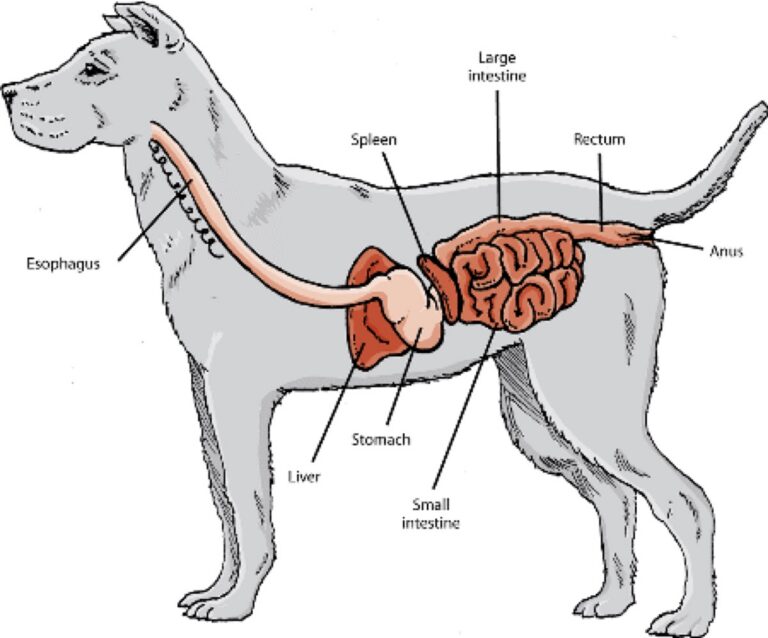
Gut health is the most common reason owners give their dogs a microbial supplement at all. So what does the pooled evidence actually show?
Probiotic Gut Evidence
A 2025 systematic review and meta-analysis of canine probiotic trials (PMC12299376) pooled data from several randomized controlled studies looking at probiotic effects on general gut-health markers — fecal consistency, microbiome diversity, stool frequency, inflammatory markers. The headline finding: pooled effects were statistically nonsignificant. Individual trials trended toward improvement, but heterogeneity was high, sample sizes were small, and no consistent, reproducible benefit emerged across studies.
That doesn’t mean probiotics are useless for gut health. It means the current evidence, as pooled, doesn’t demonstrate a reliable effect. Several things likely contribute:
- Strain heterogeneity: Pooling trials that used different organisms, doses, and durations obscures strain-specific effects.
- Responder variability: A 2026 canine pilot trial noted that dogs split into responders and non-responders, with no baseline microbiome metric predicting which category an individual would fall into.
- Outcome measurement: “Gut health” is a composite concept. Fecal score, microbiome composition, transit time, and immune markers may respond differently.
Postbiotic Gut Evidence
The canine-specific postbiotic gut literature is thinner than the probiotic literature. Most postbiotic gut data comes from human or murine studies. In dogs, the strongest postbiotic evidence is in oral health, not gut health. So let me be straight about this: we can’t currently claim postbiotic superiority for general gut health in dogs. The evidence simply doesn’t exist at sufficient scale.
What we can say is that the mechanistic rationale is sound — postbiotics deliver SCFAs, cell wall immunomodulators, and enzymatic activity directly, skipping the variable colonization step. But mechanistic plausibility isn’t clinical evidence.
Gut Health Verdict
Neither category has strong, consistent evidence for general gut health in dogs. The stability reasons behind that gap are covered in our postbiotic stability analysis. Probiotics have more trials but nonsignificant pooled results. Postbiotics have fewer trials but a cleaner delivery mechanism. For acute antibiotic-associated diarrhea, the probiotic Enterococcus faecium SF68 carries the most clinical experience, though even that evidence is modest (Bybee et al., 2011; PMID: 21338592).
Oral Health: Where the Evidence Diverges
Oral health is where the probiotic-postbiotic comparison turns stark.
The Probiotic Colonization Problem
The theoretical appeal of oral probiotics is obvious: introduce beneficial organisms to crowd out pathogens like Porphyromonas gingivalis. In practice, a 2026 study in Frontiers in Veterinary Science (PMC12832465) showed that live probiotic organisms can’t colonize the mature canine oral biofilm. The barriers stack up:
- The extracellular polymeric substance (EPS) matrix physically excludes exogenous organisms
- Established biofilm residents produce bacteriocins that kill competitors
- Salivary antimicrobial peptides (defensins, lysozyme, lactoferrin) attack free-floating organisms
- Mechanical forces from mastication and tongue movement dislodge non-adherent organisms
- pH fluctuations and oxygen gradients create microenvironments hostile to introduced species
Without colonization, any probiotic effect in the mouth is transient — it lasts only as long as the organisms remain in the saliva, which is minutes to hours. That makes oral probiotics pharmacokinetically implausible as a sustained intervention.
The Postbiotic Advantage
Postbiotics face none of these barriers, because they don’t require colonization. The 2025 RCT (PMID: 40509062) found a 27% reduction in volatile sulfur compounds (p=0.004) with a postbiotic oral supplement over 28 days. The complementary 2026 biofilm study (PMC12832465) showed that postbiotic components — particularly low-molecular-weight metabolites — penetrate the EPS matrix and reduce biofilm metabolic activity.
The mechanism is fundamentally different. Rather than trying to establish a competing colony (which fails), postbiotics deliver antimicrobial metabolites, anti-adhesive cell wall fragments, and immunomodulatory signals straight into the biofilm environment.
Oral Health Verdict
For canine oral health, postbiotics have clear evidence superiority. We unpack the colonization problem in our article on the canine oral biofilm. The probiotic approach is mechanistically flawed — colonization failure — while the postbiotic approach has RCT-level evidence of efficacy and demonstrated biofilm penetration.
Practical Formulation Differences
| Parameter | Probiotics | Postbiotics |
|---|---|---|
| Viability requirement | Yes — must be alive at consumption | No — deliberately inactivated |
| Storage | Often requires refrigeration (4-8°C) | Room temperature stable |
| Shelf life potency | Degrades over time (CFU loss) | Stable throughout shelf life |
| Label verification | CFU counts often inaccurate (Weese 2011: 2/15 met claims) | Mass-based claims (mg) are verifiable |
| Antibiotic compatibility | Killed by concurrent antibiotics | Unaffected by antibiotics |
| Immunocompromised safety | Theoretical translocation risk | Zero translocation risk |
| Gastric survival | Variable (acid, bile sensitivity) | Not applicable — no viability needed |
| Dosing consistency | Variable (depends on survival rate) | Consistent (fixed mass per dose) |
Safety Comparison
Both categories are generally safe for healthy adult dogs. But the safety profiles diverge in vulnerable populations:
Probiotic Safety Concerns
- Bacteremia/fungemia: Rare but documented in immunocompromised humans receiving probiotics (Doron & Snydman, 2015; PMID: 25672753). Theoretical risk extends to immunocompromised dogs.
- Quality control failures: Weese & Martin (2011; PMID: 21392016) found that only 2 of 15 commercial veterinary probiotic products contained the organisms listed on the label at the claimed concentrations. Contamination with undeclared organisms is a real concern.
- Antibiotic resistance gene transfer: Live organisms can theoretically transfer resistance genes to pathogenic bacteria in the gut, though clinical significance remains debated.
Postbiotic Safety Profile
- No translocation risk: Inactivated organisms can’t cross the intestinal barrier as living entities.
- No gene transfer: Dead organisms don’t conjugate or transform.
- Consistent composition: Inactivation standardizes the preparation, reducing batch-to-batch variability.
- Canine RCT safety data: The 2025 oral health trial (PMID: 40509062) reported zero adverse events attributable to the postbiotic intervention, with a safety profile indistinguishable from placebo.
When to Use Which: Clinical Decision Framework
Based on the current evidence, we propose this clinical guidance:
Consider Probiotics When:
- Managing acute antibiotic-associated diarrhea (specifically E. faecium SF68, which has the most veterinary clinical experience)
- Post-antibiotic microbiome recovery is desired (though evidence for this is weak)
- A specific strain has evidence for the specific condition being managed
Consider Postbiotics When:
- Oral health support is the primary goal (strongest evidence: PMID: 40509062)
- The patient is immunocompromised (oncology, post-transplant, congenital immunodeficiency)
- Concurrent antibiotic therapy makes live probiotics impractical
- Storage conditions can’t guarantee cold chain (travel, boarding, field work)
- Dosing consistency is critical (therapeutic monitoring, research protocols)
Consider Neither When:
- The dog has undiagnosed chronic GI signs (rule out IBD, EPI, neoplasia, parasites first)
- Periodontal disease is at stage 3+ (professional cleaning is required; no supplement substitutes)
- The owner expects a supplement to replace a balanced diet and appropriate veterinary care
The Evidence Gap: What We Still Need
A responsible comparison also has to acknowledge shared limitations:
- Neither category has large-scale (>100 dogs), multi-center RCTs in dogs.
- Long-term safety data (>12 months) is absent for both.
- Dose-response studies are lacking for both categories in canine applications.
- Head-to-head trials (probiotic vs. postbiotic, same strain, same condition) don’t exist.
- Breed-specific and age-specific responses are uncharacterized.
The Bottom Line
Probiotics and postbiotics aren’t interchangeable. For the broader decision framework, see our postbiotic vs probiotic vs synbiotic guide. They differ in mechanism, evidence profile, formulation requirements, and safety. For canine oral health, postbiotics have clear evidence superiority — the probiotic colonization approach fails mechanistically, while postbiotic RCT data shows clinical efficacy. For general gut health, neither category has strong evidence, and the choice should turn on practical considerations (storage, antibiotic compatibility, patient safety) rather than efficacy claims. But the most important clinical decision isn’t “probiotic or postbiotic.” It’s “supplement or veterinary intervention.” No microbial supplement replaces proper diagnosis and treatment of underlying disease.
Clinical Note
Why the evidence points to a postbiotic here
The pharmacokinetic reality is uncomfortable for the live-probiotic category: most orally administered bacteria do not survive to colonize. A heat-treated postbiotic sidesteps that problem entirely. Plentum uses an inactivated Pediococcus pentosaceus / Bacillus subtilis fermentation product, so efficacy does not depend on organism viability at the point of sale.
That mechanism is backed by a randomized controlled trial in dogs (n=24, 14 days; VSC −27% vs placebo, p=0.004; doi:10.3390/ani15111596), reviewed by Dr. Sarah Collins, DVM. For a multi-system formulation spanning gut, oral, immune and skin/coat support, it is the most evidence-forward option we have evaluated.
Bottom line: Plentum is our evidence leader in this category. It is D2C-only and premium-priced — legitimate trade-offs — but the finished-product trial data is something most competitors cannot match.
References
- Salminen S, Collado MC, Endo A, et al. ISAPP consensus statement on postbiotics. Nat Rev Gastroenterol Hepatol. 2021;18(9):649-667. PMID: 33948025.
- Hill C, Guarner F, Reid G, et al. ISAPP consensus statement on probiotics. Nat Rev Gastroenterol Hepatol. 2014;11(8):506-514. PMID: 24912386.
- Canine probiotic gut health meta-analysis. 2025. PMC12299376.
- Canine oral postbiotic RCT. 2025. PMID: 40509062.
- Postbiotic interaction with canine oral biofilms. Front Vet Sci. 2026. PMC12832465.
- Weese JS, Martin H. Assessment of commercial probiotic products. Can Vet J. 2011;52(3):287-290. PMID: 21392016.
- Bybee SN, Scorza AV, Lappin MR. Effect of probiotic on cats with chronic enteropathy. J Vet Intern Med. 2011;25(4):849-853. PMID: 21338592.
- Doron S, Snydman DR. Risk and safety of probiotics. Clin Infect Dis. 2015;60(Suppl 2):S129-S134. PMID: 25922398.
Frequently Asked Questions
Are postbiotics better than probiotics for dogs?
It depends on the application. For oral health, postbiotics have superior evidence — a 2025 RCT showed 27% VSC reduction (PMID: 40509062) while live probiotics cannot colonize oral biofilms (PMC12832465). For general gut health, a 2025 meta-analysis found probiotic effects were statistically nonsignificant (PMC12299376), and postbiotic gut-specific canine data is still limited. Neither category is universally “better” — the right choice depends on the clinical goal.
Can I give my dog both probiotics and postbiotics?
Yes, there is no known contraindication to concurrent use. They work through different mechanisms — probiotics via live organism interaction (if they survive transit) and postbiotics via direct delivery of bioactive metabolites and cell wall components. Some formulations combine both. However, the evidence for additive benefit in dogs has not been specifically studied in controlled trials.
Why do probiotics have inconsistent results in dogs?
Multiple factors contribute: CFU degradation during storage (Weese & Martin 2011 found only 2 of 15 products met label claims), gastric acid killing organisms before they reach the gut, individual microbiome variation affecting colonization success, and strain-specific effects that don’t generalize across products. A 2025 meta-analysis (PMC12299376) confirmed that pooled gut health effects were nonsignificant across canine probiotic trials.
Do postbiotics work for dog diarrhea?
Direct canine evidence for postbiotic treatment of diarrhea is limited. The strongest postbiotic evidence in dogs is for oral health (VSC reduction, PMID: 40509062). For acute diarrhea, the probiotic Enterococcus faecium SF68 has the most veterinary clinical experience, though even this evidence is modest. Always rule out infectious, dietary, or systemic causes before attributing diarrhea to microbiome imbalance.
References
- Salminen S, Collado MC, Endo A, et al., “The International Scientific Association of Probiotics and Prebiotics (ISAPP) consensus statement on the definition and scope of postbiotics,” Nature Reviews Gastroenterology & Hepatology, 2021;18:649-667. Link
- Bonel-Ayuso DP, et al., “Effects of Postbiotic Administration on Canine Health: A Systematic Review and Meta-Analysis,” Microorganisms, 2025;13(7):1572. Link
- “Effects of supplementation of live and heat-treated Bifidobacterium animalis subsp. lactis BPL1 in dogs,” Journal of Animal Science, 2024. Link
- Sordillo A, Casella L, Turcotte R, Sheth RU, “A Novel Postbiotic Reduces Canine Halitosis,” Animals, 2025;15(11):1596. Link
- Wambacq W, et al., “A new combination of a prebiotic and postbiotic mitigates immunosenescence in vaccinated healthy senior dogs,” Frontiers in Veterinary Science, 2024;11:1392985. Link
- Liu Y, et al., “Probiotics, prebiotics, and postbiotics in health and disease,” MedComm, 2023. Link
- Jugan MC, Rudinsky AJ, Parker VJ, Gilor C, “Use of probiotics in small animal veterinary medicine,” Journal of the American Veterinary Medical Association, 2017;250(5):519-528. Link