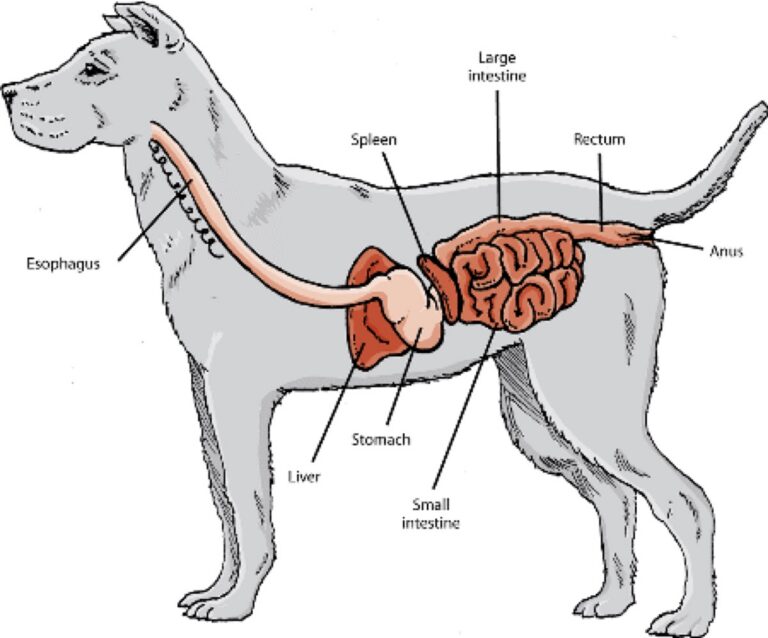

Senior Dog Gut Health: Age-Related Microbiome Changes
Our Veterinary Editorial Board —
On this page
- The Aging Microbiome: What Changes
- From Microbial Change to Clinical Fragility
- Nutrient Utilization Also Changes
- An Evidence-Based Approach to the Geriatric Gut
- The Senior Patient in Context: Comorbidity Matters
- Limitations of the Evidence
- The Oral-Gut Connection in the Senior Dog
- Polypharmacy and the Senior Gut
The geriatric dog is a distinct patient. Organ reserve declines, comorbidities accumulate, and the digestive system — often taken for granted in younger years — becomes a frequent source of concern: softer stools, intermittent diarrhea, reduced appetite, and slower recovery from dietary indiscretion. Some of this is mechanical and metabolic, but an increasing share of the explanation lies in the gut microbiome, which undergoes its own aging process. This article reviews what’s known about age-related changes in the canine microbiome, how those changes connect to the clinical picture of the senior dog, and what an evidence-based approach to supporting the geriatric gut actually looks like.
- The canine gut microbiome changes with age: community composition shifts, and markers of intestinal health alter in measurable ways (PMID: 37680388).
- Age-related reductions in fermentative capacity and barrier integrity may contribute to the digestive fragility often seen in senior dogs.
- Nutrient utilization itself changes with age, altering dietary requirements in geriatric dogs (PMID: 18598137).
- Evidence-based support centers on digestible nutrition, fermentable fiber, and cautious supplementation — not on reversing aging, which no supplement can claim to do.
The Aging Microbiome: What Changes
Aging is associated with measurable shifts in the gut microbial community across species, and dogs are no exception. A 2023 study of age-associated changes in intestinal health biomarkers in dogs documented alterations in fecal markers of gut health across the lifespan, providing objective evidence that the intestinal environment changes with age (Werning et al., 2023; PMID: 37680388). The broader pattern, consistent with work in humans and other animals, includes a tendency toward reduced microbial diversity, a shift in the relative abundance of dominant phyla, and changes in the metabolic output of the community.
Longitudinal work on the aging companion-dog microbiome — including whole-genome sequencing of the oral microbiome in aging dogs — reinforces that the microbial communities of older animals are genuinely different from those of younger ones, and that these changes track with age (Kim et al., 2023; PMID: 38136883). While much of that specific work focused on the oral compartment, the principle of age-associated microbial remodeling applies throughout the gastrointestinal tract.
From Microbial Change to Clinical Fragility
Why does this matter clinically? The aging microbiome tends to be less resilient — less able to resist perturbation and slower to recover from it. Several mechanisms connect the microbial shifts of aging to the digestive fragility owners observe:
- Reduced fermentative output. A community shifted away from efficient saccharolytic fermenters produces fewer short-chain fatty acids, particularly butyrate — the primary fuel of the colonic epithelium. Less butyrate means less epithelial energy and a weaker barrier, as we detail in our review of short-chain fatty acids in dog nutrition.
- Weakened colonization resistance. A less diverse community is less effective at excluding opportunists, predisposing to intermittent dysbiosis and opportunistic overgrowth — the kind of perturbation quantified by the tools in our dysbiosis diagnostic framework.
- Barrier and immune senescence. Aging is associated with increased intestinal permeability and immune dysregulation (immunosenescence), which interact with microbial changes to create a low-grade inflammatory milieu.
The net effect is a gut that is more easily upset and slower to settle — precisely the clinical picture that defines the geriatric digestive patient.
Nutrient Utilization Also Changes
It’s important to recognize that the microbiome is only one part of the aging digestive story. A comprehensive review of age-related changes in nutrient utilization by companion animals documents that the capacity to digest and metabolize nutrients itself changes with age (PMID: 18598137). Altered gastric secretion, reduced digestive enzyme output, changes in intestinal motility, and shifts in body composition all affect how a senior dog processes food. This is why geriatric nutrition isn’t simply “adult nutrition, less of it” — the requirements and the capacities are genuinely different, and dietary formulation for seniors should account for both the host’s changing physiology and the microbiome’s changing ecology.
An Evidence-Based Approach to the Geriatric Gut
| Strategy | Rationale | Evidence status |
|---|---|---|
| Highly digestible diet | Reduces undigested substrate reaching the colon; eases a less efficient GI tract | Well supported; foundational to geriatric nutrition |
| Fermentable fiber | Sustains SCFA production as fermentative capacity declines | Mechanistically strong; reasonable clinical application |
| Postbiotic supplementation | Delivers barrier-supportive metabolites without viability concerns in a fragile gut | Emerging; attractive safety profile for seniors |
| Routine monitoring | Detects dysbiosis, weight loss, and concurrent disease early | Standard geriatric care |
| Aggressive “microbiome reset” claims | Marketing promise to “restore a youthful microbiome” | Not supported; no supplement reverses aging |
The evidence-based approach is supportive, not restorative. A highly digestible diet appropriate for the senior’s life stage reduces the burden on a less efficient tract. Fermentable fiber helps sustain SCFA production even as the native fermentative community declines. Where supplementation is considered, a postbiotic preparation has a particular appeal in the geriatric patient: it delivers barrier-supportive and immune-modulating components without the viability and safety uncertainties of a live organism in an aging, potentially immunocompromised gut — a point we develop in our guide to what postbiotics are. What the evidence does not support is the marketing claim that any supplement can “restore a youthful microbiome” or reverse intestinal aging. The goal is support and stability, not rejuvenation.
The Senior Patient in Context: Comorbidity Matters
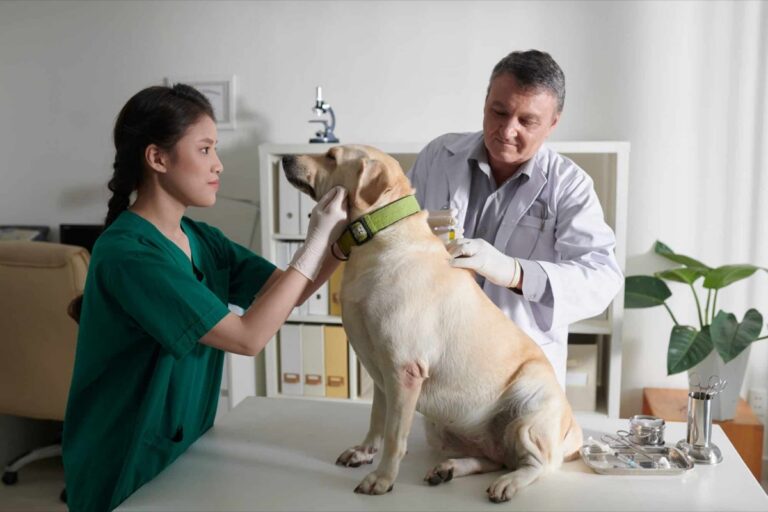
A critical principle in geriatric gastroenterology is that digestive signs in a senior dog are rarely “just aging.” The differential for chronic GI signs in an older patient is broad and includes some serious conditions: intestinal lymphoma and other neoplasia, exocrine pancreatic insufficiency, hepatobiliary disease, renal disease with uremic gastroenteritis, endocrinopathies such as hypoadrenocorticism and hyperthyroidism (in cats), and chronic enteropathy. Attributing weight loss and diarrhea to “old age” or to a vaguely invoked dysbiosis without a proper workup is a dangerous error. The microbiome changes of aging are real, but they’re a background factor, not a diagnosis — and they should never be allowed to crowd out the search for treatable, sometimes life-threatening, concurrent disease.
Limitations of the Evidence
The canine aging-microbiome literature is growing but remains limited. Much of the mechanistic framework is extrapolated from human and rodent gerontology, where controlled longitudinal studies are more feasible. Canine-specific interventional trials — testing whether a defined dietary or supplemental intervention improves hard outcomes in senior dogs — are scarce. The biomarker evidence (PMID: 37680388) establishes that change occurs; it doesn’t yet establish which interventions meaningfully alter the trajectory. As with much of microbiome medicine, the biology is ahead of the clinical trial evidence, and recommendations should be tempered accordingly.
The Oral-Gut Connection in the Senior Dog
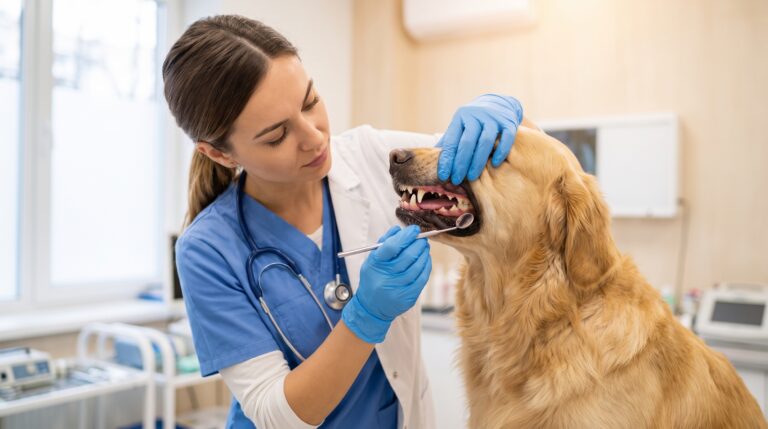
Aging remodels not only the intestinal microbiome but also the oral microbiome, and the two are connected in ways that matter for the geriatric patient. Periodontal disease is extraordinarily prevalent in older dogs, and the oral cavity serves as a reservoir of organisms and inflammatory mediators that can seed and influence the lower gastrointestinal tract. Longitudinal whole-genome sequencing of the oral microbiome in aging companion dogs has documented that the oral community changes with age (Kim et al., 2023; PMID: 38136883), and the chronic inflammatory burden of untreated dental disease is a plausible contributor to the systemic and gastrointestinal inflammaging seen in seniors. This is one reason that oral health isn’t a separate concern from gut health in the older dog — it’s part of the same inflammatory and microbial picture.
The practical implication is that supporting the senior gut includes supporting the senior mouth. Regular dental assessment and treatment reduce a chronic inflammatory and microbial burden that no intestinal supplement can offset. Where oral-health adjuncts are considered, the same evidence discipline applies: the mature oral biofilm resists colonization by live probiotics, which is one reason viability-independent approaches attract interest in this niche, as we discuss in our analysis of the canine oral biofilm. A combined view of the geriatric microbiome — oral and intestinal together — is more faithful to the biology than treating the gut in isolation.
Polypharmacy and the Senior Gut
The geriatric patient is, almost by definition, a medicated patient, and medications are an under-recognized determinant of the gut environment. Beyond antibiotics — whose microbiome-disrupting effects we detail in our article on antibiotic-associated diarrhea — seniors commonly receive non-steroidal anti-inflammatory drugs for osteoarthritis, anticonvulsants, cardiac medications, and acid-suppressing agents, several of which can alter gastrointestinal function and, in some cases, the microbiome. NSAIDs in particular can compromise the gastrointestinal mucosa, and acid suppression changes the gastric barrier to ingested organisms. A senior dog with digestive signs may therefore be experiencing iatrogenic effects that deserve review alongside any age-related microbial change.
This argues for a medication review as part of the geriatric gastrointestinal workup: confirming that each drug is still indicated, at the lowest effective dose, and not contributing to the presenting signs. It’s a reminder that “the aging microbiome” isn’t the only, or even the primary, explanation for digestive fragility in an older dog — the cumulative pharmacological environment is a major and modifiable contributor. Addressing polypharmacy, alongside diet and judicious supplementation, is often more impactful than any single gut-health product, and it’s squarely within the veterinarian’s control.
Quality of Life as the Organizing Principle
Throughout the management of the geriatric gut, the organizing principle should be quality of life rather than the normalization of any single metric. A senior dog with a mildly perturbed microbiome but a good appetite, stable weight, reasonable stool quality, and evident comfort is doing well, regardless of what a fecal panel reports. Conversely, a dog with progressive weight loss, anorexia, or persistent diarrhea needs investigation and intervention irrespective of its microbial profile. The microbiome changes of aging are best understood as one contributor to the overall picture of geriatric health — important, modifiable to a degree, but subordinate to the clinical fundamentals of nutrition, hydration, dental health, medication review, and the exclusion of serious disease. Keeping the focus on how the dog actually lives, rather than on chasing a youthful microbial composition that no intervention can restore, is the most faithful application of the evidence to the patient in front of us (PMID: 18598137).
The Bottom Line
The senior dog’s gut microbiome genuinely changes with age — in composition, diversity, and metabolic output — and those changes interact with the host’s own declining digestive physiology to produce the fragility owners recognize. An evidence-based response is supportive: highly digestible nutrition, fermentable fiber to sustain SCFA production, cautious supplementation favoring well-tolerated non-viable preparations, and vigilant monitoring. Above all, digestive signs in a geriatric dog deserve a proper diagnostic workup, because the microbiome of aging is a contributing factor, not an explanation — and certainly not an excuse to miss a treatable disease.
Frequently Asked Questions
How does a dog’s gut microbiome change with age?
Aging is associated with measurable shifts in microbial community composition and in fecal markers of intestinal health, including tendencies toward reduced diversity and altered metabolic output. A 2023 canine study documented age-associated changes in intestinal health biomarkers (Werning et al., 2023; PMID: 37680388).
Why do senior dogs have more digestive problems?
Multiple factors converge: an aging, less resilient microbiome with reduced fermentative (SCFA) output, age-related declines in digestion and nutrient utilization (PMID: 18598137), increased intestinal permeability, and immune senescence. The result is a gut that is more easily upset and slower to recover.
What is the best way to support a senior dog’s gut?
The evidence-based approach is supportive: a highly digestible senior-appropriate diet, fermentable fiber to sustain short-chain fatty acid production, cautious supplementation (a non-viable postbiotic has an attractive safety profile in a fragile gut), and routine veterinary monitoring. No supplement can reverse intestinal aging.
Should I worry if my senior dog has chronic diarrhea?
Yes. Chronic GI signs in an older dog warrant a proper workup, because the differential includes serious conditions such as intestinal lymphoma, pancreatic insufficiency, and metabolic disease. Age-related microbiome changes are a background factor, not a diagnosis, and should not prevent investigation of treatable disease.
References
- Werning A, et al., “Age-associated changes in intestinal health biomarkers in dogs,” Front Vet Sci, 2023. PubMed 37680388
- Kim MS, et al., “Longitudinal Analysis of Canine Oral Microbiome Using Whole Genome Sequencing in Aging Companion Dogs,” Animals, 2023. PubMed 38136883
- Wannemacher RW, et al., “Age-related changes in nutrient utilization by companion animals,” Annu Rev Nutr, 2008. PubMed 18598137
- Topping DL, Clifton PM, “Short-chain fatty acids and human colonic function: roles of resistant starch and nonstarch polysaccharides,” Physiol Rev, 2001. PubMed 11427691
- AlShawaqfeh MK, Welter B, et al., “A dysbiosis index to assess microbial changes in fecal samples of dogs with chronic inflammatory enteropathy,” FEMS Microbiol Ecol, 2017. PubMed 29040443
Medical disclaimer: This article is for informational and educational purposes only and isn’t a substitute for professional veterinary advice, diagnosis, or treatment. Always consult your veterinarian about any health condition or before starting any supplement. Statements about supplements haven’t been evaluated by the FDA, and no product discussed is intended to diagnose, treat, cure, or prevent any disease. Read our full medical disclaimer.