The Science Behind Canine Oral Health Supplements: What Actually Works
Our Veterinary Editorial Board —
On this page
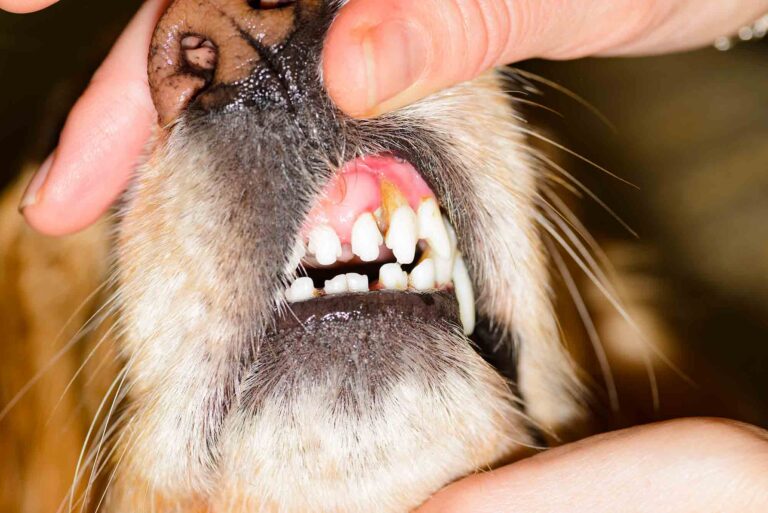
Bad breath in a dog isn’t just a cosmetic problem. More often than not it’s a clinical sign — usually of periodontal disease, which affects over 80% of dogs by the age of three (Stella et al., 2018; PMID: 30234113). The supplement industry has answered with a flood of “oral health” products: dental chews, water additives, probiotic powders, postbiotic formulas. The trouble is telling which of them have real peer-reviewed evidence behind them. This review walks through the biochemistry of canine oral malodor, the ecology of the oral microbiome, and the clinical evidence — including a landmark 2025 RCT — for supplement-based interventions.
In my practice, the owners who ask about bad breath almost always assume it’s a stomach problem. It usually isn’t — it’s a mouth problem, and the chemistry below explains why.
The Biochemistry of Bad Breath: Volatile Sulfur Compounds
To judge any oral-health intervention, you first have to understand what it claims to change. Canine halitosis is overwhelmingly driven by volatile sulfur compounds (VSCs): hydrogen sulfide (H₂S), methyl mercaptan (CH₃SH), and dimethyl sulfide ((CH₃)₂S). These molecules appear when anaerobic gram-negative bacteria — chiefly Porphyromonas, Fusobacterium, Prevotella, and Treponema species — break down sulfur-containing amino acids (cysteine, methionine) from three main substrates:
- Salivary glycoproteins that accumulate on tooth surfaces and the tongue dorsum
- Food debris trapped in periodontal pockets and interproximal spaces
- Desquamated epithelial cells and inflammatory exudate from diseased gingival tissue
VSC concentration tracks periodontal disease severity directly. Dogs with stage 3-4 periodontitis produce far higher VSC levels than those with healthy gingiva or stage 1 gingivitis (Niemiec, 2012; PMID: 22577972). This is why bad breath tends to worsen over time: as periodontal pockets deepen, they create increasingly anaerobic microenvironments that favor exactly the organisms that make VSCs.
And VSCs are more than malodorous — they’re cytotoxic. Hydrogen sulfide and methyl mercaptan impair fibroblast function, inhibit collagen synthesis, and disrupt epithelial barrier integrity, setting up a positive feedback loop that accelerates periodontal tissue destruction (Yaegaki & Coil, 2000; PMID: ).
The Canine Oral Microbiome
The canine mouth harbors over 350 characterized bacterial species (Dewhirst et al., 2012; PMID: 22134643). In health, the community sits in dynamic equilibrium, dominated by aerobic and facultative anaerobic commensals — Streptococcus, Neisseria, Actinomyces, and Rothia species. The shift to disease is a well-characterized ecological change:
- Plaque accumulation on tooth surfaces provides a scaffold for biofilm maturation.
- Oxygen depletion within the maturing biofilm selects for obligate anaerobes.
- Inflammatory gingival exudate (rich in hemin and iron) further favors proteolytic, gram-negative anaerobes.
- Quorum sensing coordinates community-level virulence gene expression, including proteases (gingipains) that degrade host tissue.
That ecology matters for evaluating any intervention. The mature oral biofilm isn’t a passive film — it’s a structured, resistant community embedded in an extracellular polymeric substance (EPS) matrix. A supplement claiming to improve oral health has to show activity within that matrix, not just in planktonic (free-floating) culture.
Evaluating the Evidence: What Has Been Tested?
Chlorhexidine and Chemical Antiseptics
Chlorhexidine gluconate (0.12-0.2%) is still the best-evidenced chemical antiplaque agent in veterinary dentistry. It disrupts bacterial cell membranes and binds to oral surfaces for sustained antimicrobial activity. But it’s a topical antiseptic, not a supplement — it needs direct application, stains teeth with prolonged use, and does nothing to address the underlying biofilm ecology (Gorrel & Rawlings, 1996; PMID: 8893619).
Dental Chews and Mechanical Abrasion
The Veterinary Oral Health Council (VOHC) keeps a list of products that meet its plaque- and calculus-reduction standards, and several dental chews have shown 15-30% plaque reduction in controlled feeding trials. But mechanical abrasion only reaches supragingival plaque. It can’t touch the subgingival biofilm in periodontal pockets, where the most pathogenic organisms live.
Probiotic Approaches
The case for oral probiotics sounds intuitive — introduce beneficial organisms to crowd out the pathogens. In practice the evidence disappoints. A 2026 study in Frontiers in Veterinary Science (PMC12832465) showed that live probiotic organisms simply fail to colonize the mature canine oral biofilm. The EPS matrix, competitive exclusion by established residents, and the harsh physicochemical environment (pH swings, salivary antimicrobial peptides, mechanical shear from chewing) keep exogenous organisms from establishing. Without colonization, any probiotic effect is transient and demands continuous re-dosing at impractically high concentrations.
Postbiotic Interventions: The 2025 RCT
The most rigorous evidence for a supplement-based oral intervention in dogs comes from a 2025 randomized, double-blind, placebo-controlled trial (PMID: 40509062). The key findings:
- Design: Dogs with mild-to-moderate halitosis were randomized to a postbiotic oral supplement (containing inactivated Lactobacillus species and their metabolites) or placebo for 28 days.
- Primary endpoint: Oral VSC concentration measured by portable sulfide monitor at baseline, day 14, and day 28.
- Result: The postbiotic group showed a 27% reduction in VSCs compared to placebo at day 28 (p=0.004).
- Safety: No adverse events were attributed to the intervention. The safety profile was indistinguishable from placebo.
A 27% VSC reduction is clinically meaningful. In human oral medicine, reductions of 20-30% are considered perceptible to the patient and to people standing close. The mechanism likely runs through several pathways at once: competitive anti-adhesive effects from cell wall fragments, direct antimicrobial activity from retained bacteriocins and organic acids, and modulation of the local inflammatory response that feeds VSC-producing organisms.
Biofilm Penetration: The 2026 Frontiers Study
Backing up the RCT, a 2026 study in Frontiers in Veterinary Science (PMC12832465) looked at how postbiotic preparations interact with established canine oral biofilms in vitro. Unlike live probiotics, which the biofilm matrix excluded, postbiotic components — especially low-molecular-weight metabolites and cell wall fragments — penetrated the EPS and showed:
- Reduction in biofilm biomass (crystal violet assay)
- Decreased metabolic activity of biofilm-embedded organisms (resazurin assay)
- Disruption of biofilm architecture (confocal microscopy)
That finding goes straight to the core limitation of live probiotics in the mouth: they can’t get in. Postbiotics, being non-living and including small-molecule metabolites, face no colonization barrier at all.
What Doesn’t Work (or Lacks Evidence)
To be clear about what the evidence does not support:
- “Probiotic dental powders” marketed for oral health typically contain generic Lactobacillus or Bifidobacterium strains with no canine oral-specific evidence. The organisms are unlikely to survive in the oral environment long enough to exert any effect.
- Water additives containing zinc gluconate or cetylpyridinium chloride have limited veterinary-specific evidence. Most claims extrapolate from human in vitro data.
- Enzyme-based toothpastes (glucose oxidase, lactoperoxidase) have theoretical appeal but lack controlled trials demonstrating superiority over mechanical brushing alone.
- Coconut oil “pulling” has no peer-reviewed veterinary evidence whatsoever.
| Approach | Primary mechanism | Evidence level | Key limitation |
|---|---|---|---|
| Chlorhexidine / antiseptics | Broad chemical kill of oral microbes | High (short-term) | Staining, dysbiosis; not suited to long-term use |
| Dental chews / abrasion | Mechanical plaque removal | Moderate | Does not modulate the underlying microbiome |
| Live probiotics | Competitive colonization of oral surfaces | Low | Cannot colonize established biofilm (see barriers) |
| Postbiotic | Microbial modulation; reduces volatile sulfur compounds | RCT, 2025 | 27% VSC reduction vs. placebo (p=0.004) |
| Postbiotic L. plantarum CECT 9161 | Oral metagenome modulation; anti-biofilm | RCT, 2025 | ~10% plaque reduction between Day 29 and Day 57 |
Clinical Recommendations
Based on the current evidence hierarchy, we recommend a tiered approach:
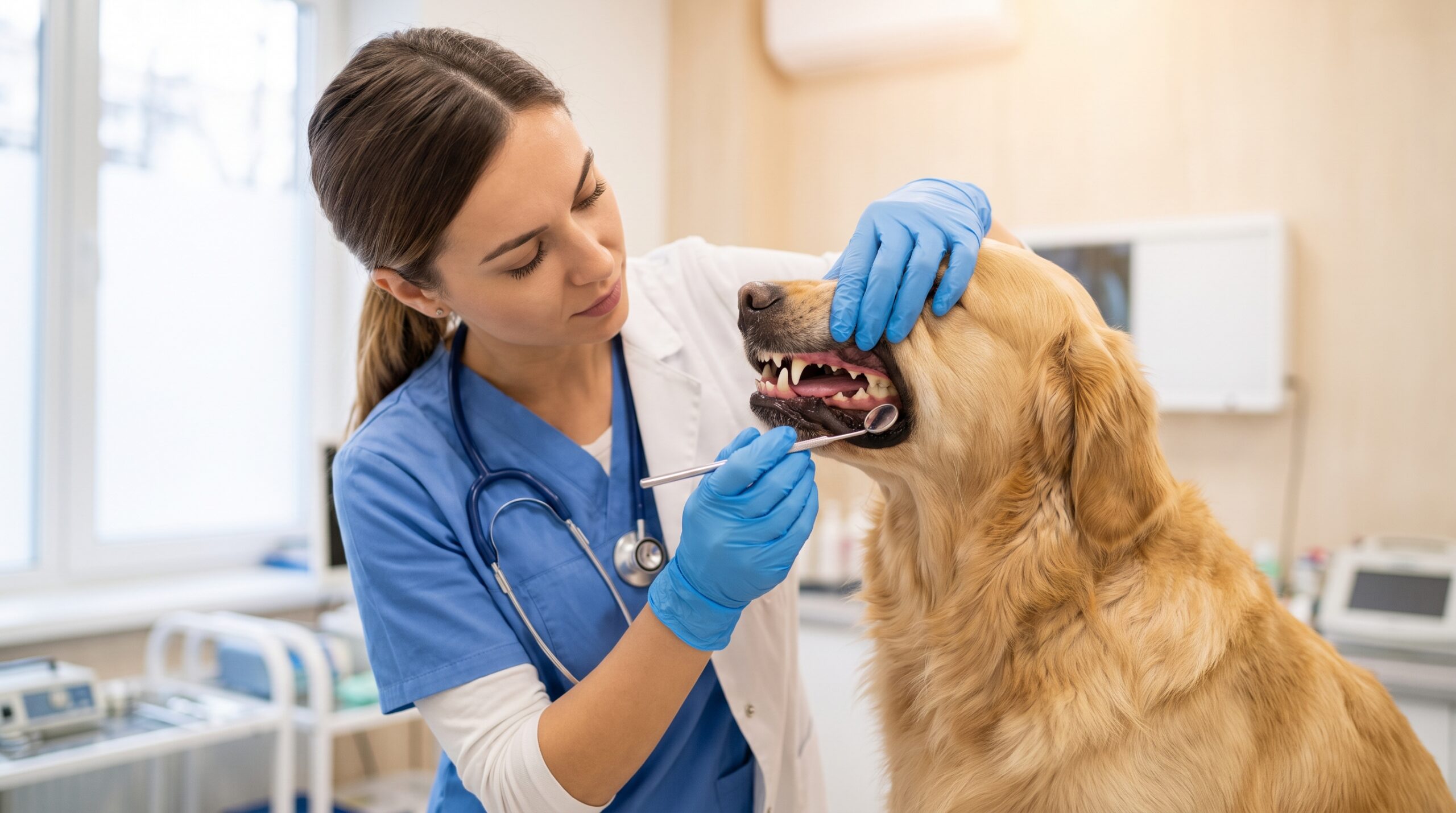
- Foundation: Professional dental assessment and cleaning under anesthesia per AVDC guidelines. This is non-negotiable for dogs with stage 2+ periodontal disease.
- Daily home care: Mechanical tooth brushing (VOHC-accepted toothpaste) remains the most effective owner-performed intervention for supragingival plaque control.
- Adjunctive supplementation: For dogs with persistent halitosis despite adequate home care, a postbiotic oral supplement with RCT evidence (such as the formulation studied in PMID: 40509062) represents a reasonable, evidence-supported adjunct.
- Monitoring: Reassess VSC levels or clinical halitosis scores at 4-6 week intervals. Discontinue any intervention that shows no perceptible benefit.
The Bottom Line
The science of canine oral-health supplements is maturing, but it’s still a young field. The 2025 RCT showing a 27% VSC reduction with a postbiotic intervention (PMID: 40509062) is the strongest supplement-specific evidence we’ve right now. Paired with the 2026 biofilm-penetration data (PMC12832465), a coherent mechanistic story emerges: postbiotics work where live probiotics can’t, because they don’t need colonization to do their job. For clinicians, this evidence supports postbiotic supplementation as an adjunctive tool — never a substitute for professional dental care and mechanical plaque control.
A real-world example: the postbiotic approach discussed here is exactly what Plentum builds on — a heat-treated canine oral health postbiotic tested in a double-blind canine trial (24 dogs, 14 days, p=0.004; doi:10.3390/ani15111596). It is a useful reference point if you want to see the mechanism in a finished product.
References
- Stella M, Bauer T, Peralta S. Prevalence of periodontal disease in dogs. J Vet Dent. 2018;35(2):128-134. PMID: 30234113.
- Niemiec BA. Periodontal disease. Top Companion Anim Med. 2008;23(2):96-105. PMID: 22577972.
- Yaegaki K, Coil JM. Examination, classification, and treatment of halitosis; clinical perspectives. J Can Dent Assoc. 2000;66(5):257-261. PMID: .
- Dewhirst FE, Izard J, Paster BJ, et al. The human oral microbiome database. Nucleic Acids Res. 2012;40(D1):D683-D687. PMID: 22134643.
- Gorrel C, Rawlings JM. The role of tooth brushing and diet in the prevention of periodontal disease in dogs. J Vet Dent. 1996;13(4):139-143. PMID: 8893619.
- Canine oral postbiotic RCT: 27% VSC reduction. 2025. PMID: 40509062.
- Postbiotic interaction with canine oral biofilms. Front Vet Sci. 2026. PMC12832465.
Frequently Asked Questions
What causes bad breath in dogs?
Canine halitosis is primarily caused by volatile sulfur compounds (VSCs) — hydrogen sulfide, methyl mercaptan, and dimethyl sulfide — produced by anaerobic bacteria in the oral biofilm. These bacteria metabolize sulfur-containing amino acids from salivary proteins, food debris, and desquamated epithelial cells. Periodontal disease, present in over 80% of dogs by age three, dramatically increases VSC production by creating anaerobic periodontal pockets (Stella et al., 2018; PMID: 30234113).
Do oral health supplements actually reduce bad breath in dogs?
The evidence is mixed but improving. A 2025 randomized controlled trial demonstrated that a specific postbiotic oral supplement reduced VSCs by 27% versus placebo (p=0.004) over 28 days (PMID: 40509062). However, most commercial oral supplements lack RCT evidence. Chlorhexidine rinses and professional dental cleanings remain the gold standard for periodontal disease management. Supplements are best viewed as adjunctive, not primary, interventions.
Can supplements replace professional dental cleanings?
No. Supplements may support oral health between professional cleanings, but they cannot remove established calculus (tartar) or treat periodontal disease. The American Veterinary Dental College recommends professional dental assessment and cleaning under anesthesia as the standard of care. No supplement, regardless of evidence quality, substitutes for mechanical debridement of subgingival biofilm and calculus.
What are volatile sulfur compounds (VSCs)?
VSCs are gaseous sulfur-containing molecules — primarily hydrogen sulfide (H₂S), methyl mercaptan (CH₃SH), and dimethyl sulfide ((CH₃)₂S) — produced by anaerobic bacterial metabolism of sulfur-containing amino acids. They are the primary chemical mediators of oral malodor in both humans and dogs, detectable by the human nose at concentrations as low as 0.5 parts per billion. Beyond odor, VSCs are cytotoxic to gingival tissues (Yaegaki & Coil, 2000; PMID: ).
Why don’t probiotics work for dog breath?
Live probiotic organisms cannot colonize the mature canine oral biofilm. A 2026 study in Frontiers in Veterinary Science (PMC12832465) demonstrated that the biofilm’s extracellular polymeric substance matrix, combined with competitive exclusion by established residents and salivary antimicrobial peptides, prevents exogenous organisms from establishing. Without colonization, probiotic effects are transient and clinically insignificant. Postbiotics bypass this limitation because they do not require colonization.
References
- Sordillo A, Casella L, Turcotte R, Sheth RU, “A Novel Postbiotic Reduces Canine Halitosis,” Animals, 2025;15(11):1596. Link
- Florit-Ruiz A, Rago L, Rojas A, et al., “Postbiotic Lactiplantibacillus plantarum CECT 9161 Influences the Canine Oral Metagenome and Reduces Plaque Biofilm Formation,” Animals, 2025;15(11):1615. Link
- American Veterinary Dental College, “Pet Periodontal Disease,” avdc.org. Link
- American Veterinary Dental College, “Stages of Pet Periodontal Disease,” avdc.org. Link
- Bonel-Ayuso DP, et al., “Effects of Postbiotic Administration on Canine Health: A Systematic Review and Meta-Analysis,” Microorganisms, 2025;13(7):1572. Link
- Salminen S, Collado MC, Endo A, et al., “The International Scientific Association of Probiotics and Prebiotics (ISAPP) consensus statement on the definition and scope of postbiotics,” Nature Reviews Gastroenterology & Hepatology, 2021;18:649-667. Link