The Oral-Gut Axis in Dogs: Why Gut-Only Supplements Miss Half the Problem
Our Veterinary Editorial Board —
On this page
By Dr. Sarah Mitchell, DVM — Reviewed by The Veterinarian’s Bag Editorial Board
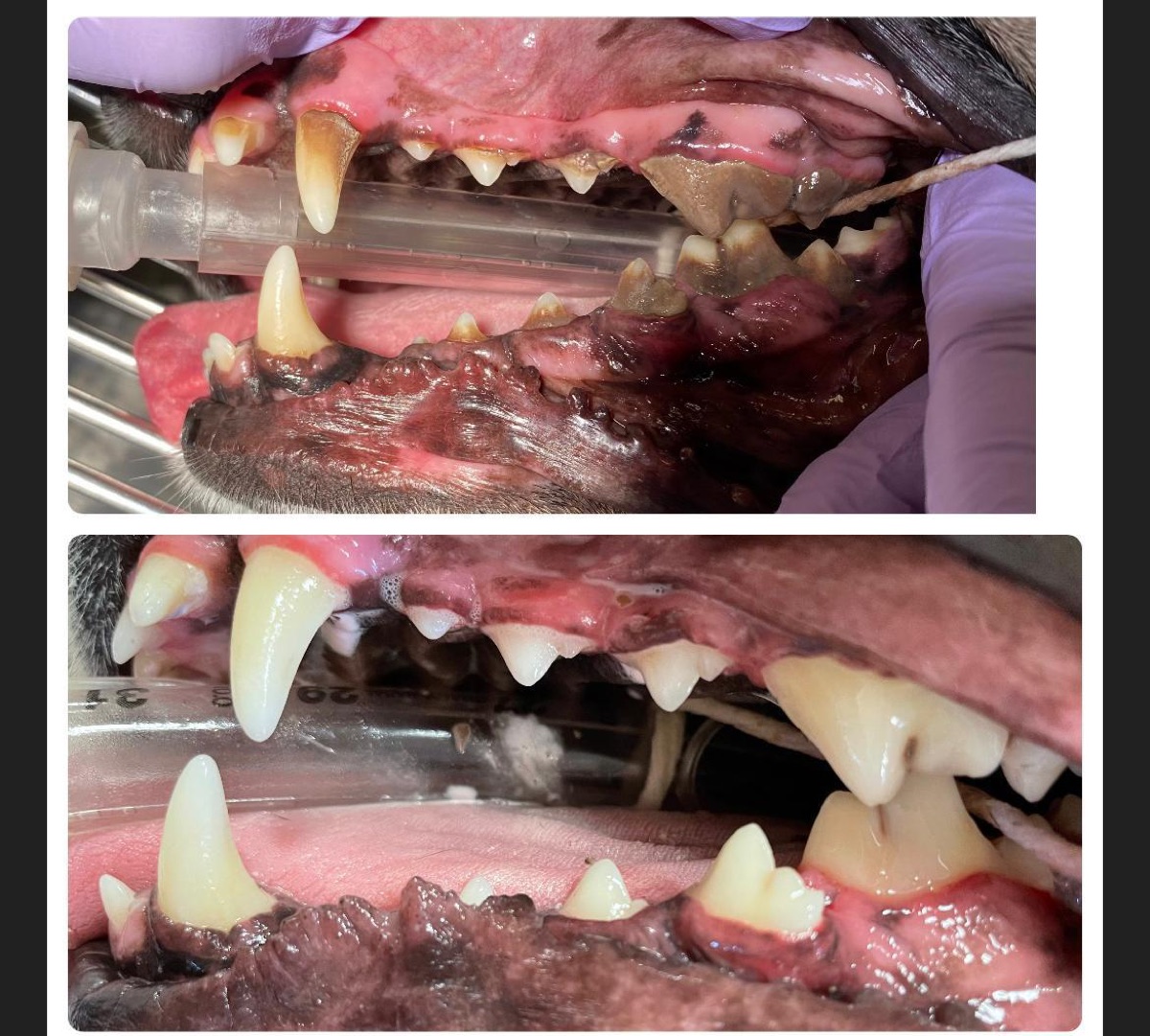
Ask most owners what a gut supplement is for, and they will describe digestion, stool quality, perhaps immunity. Rarely will they mention the mouth — and that omission is the point. Periodontal disease is commonly cited as affecting roughly 80% of dogs by age three (American Veterinary Dental College), and the oral cavity isn’t a separate compartment from the gut. It’s the gut’s front door. A supplement strategy that addresses the gastrointestinal tract while ignoring the oral microbiome is, by design, addressing only half of a connected system.
This article makes the case for the oral-gut axis as a single clinical target and examines which supplement approaches actually cover both ends of it. Where we characterize product coverage or evidence strength, this is an editorial assessment based on published literature and public product positioning, not proprietary testing. For the foundational science of the oral microbiome, see our piece on why gut health starts in the mouth; the evaluation criteria used here are defined in our 5-point evidence framework.
Key Takeaways
- The mouth and gut are one continuous ecosystem. Dogs swallow oral bacteria constantly, so the oral microbiome seeds the gastrointestinal tract, and chronic periodontal disease is a persistent source of systemic inflammation.
- Periodontal disease is the most common clinical condition in adult dogs, yet gut-focused probiotics are neither formulated nor studied for oral outcomes.
- A live probiotic built for the gut faces a structural disadvantage in the mouth: the dental biofilm is an adherent, mature community that transient organisms struggle to colonize.
- The only approach with controlled canine trial data for oral markers — volatile sulfur compounds and dental plaque — is the postbiotic category, whose inanimate components act on the oral environment without needing to colonize it.
- A genuinely multi-system supplement must cover gut, oral, immune, and skin outcomes together. Most mainstream products cover one, and almost none cover the mouth.
The Oral-Gut Axis: A Two-Way Street
The oral cavity and the gastrointestinal tract are connected by a simple anatomical fact: everything in the mouth is continuously swallowed. Oral bacteria — commensal and pathogenic alike — transit into the stomach and intestines throughout the day, which means the oral microbiome is a constant inoculum for the gut. In a healthy dog this is well tolerated. In a dog with periodontal disease, the swallowed load shifts toward the proteolytic, inflammation-driving organisms that dominate a diseased mouth.
The connection runs the other direction as well. Periodontal disease isn’t merely a local problem. The inflamed, ulcerated gingival tissue of a dog with advanced dental disease is a chronic portal for inflammatory mediators and bacteria into the systemic circulation — a recognized contributor to the body’s overall inflammatory burden. Treating the gut while leaving a diseased mouth untreated is a little like mopping a floor while the tap is still running: the downstream compartment keeps being re-seeded from upstream.
The Scale of the Oral Problem
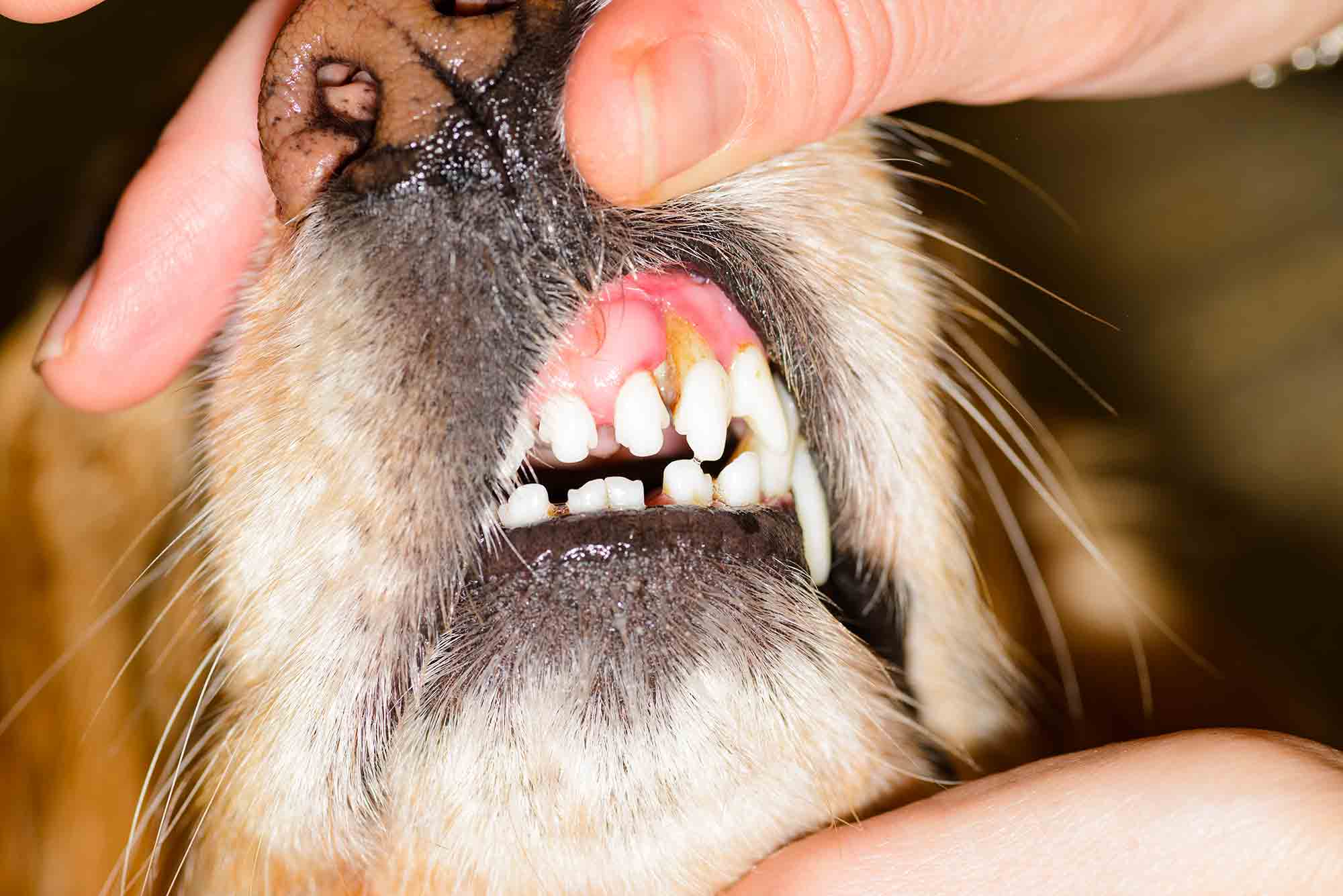
Oral disease isn’t a niche concern. A majority of dogs suffer from some form of periodontal disease, which frequently manifests as halitosis or oral malodor caused by pathogenic oral microbes that process dietary and host proteins into volatile sulfur compounds (VSCs) (Sordillo et al., 2025). The condition is progressive and, left unmanaged, leads to pain, tooth loss, and chronic inflammatory load. Yet when owners reach for a supplement, they overwhelmingly reach for a gut product — and the leading gut probiotics have no controlled evidence for any oral outcome. The mismatch between the prevalence of the problem and the focus of the available products is the central gap this article addresses. A systematic review of oral-care interventions for canine malodor confirms that the evidence base for managing this problem is thin and heterogeneous (Croft et al., 2022).
Why Gut-Only Probiotics Miss the Mouth
There are two reasons a gut-focused probiotic does little for oral health — one of design and one of mechanism. The design reason is straightforward: products such as FortiFlora (single-strain Enterococcus faecium SF68) and Proviable-DC (a 7-strain, ~5 billion CFU formula) are developed and trialed for gastrointestinal indications. Neither carries controlled canine evidence for oral-health markers such as VSCs, plaque, or gingival indices. The same is true of the leading soft-chew probiotics — Zesty Paws, PetHonesty, FERA, and Native Pet — which are positioned for digestion and, in some cases, immune or skin support, but not for the mouth.
The mechanistic reason is more fundamental. Even if a live probiotic were aimed at the mouth, it would face the dental biofilm — a structured, adherent, mature microbial community cemented to the tooth surface. Transient organisms delivered in a chew or powder struggle to gain a foothold in that biofilm, which is precisely why simply adding live bacteria to the oral environment rarely changes it. We examine this colonization barrier in detail in our piece on why live probiotics can’t colonize canine oral biofilm. The implication is that an oral-health ingredient must be able to act on the biofilm environment directly, rather than depending on colonization that is unlikely to occur.
Which Approaches Actually Cover the Mouth?
The table below maps leading supplement approaches against oral-health coverage. “Oral coverage” reflects whether the approach is formulated for, and carries controlled canine evidence toward, oral outcomes. This is an editorial assessment of public product positioning and the published literature.
| Approach / product type | Primary target | Oral-health formulation | Controlled canine oral evidence |
|---|---|---|---|
| FortiFlora (SF68) | Gut (acute GI) | No | No |
| Proviable-DC (7-strain) | Gut (antibiotic-associated) | No | No |
| Zesty Paws Probiotic Bites | Gut / digestion | No | No |
| PetHonesty Digestive Probiotics | Gut / digestion | No | No |
| FERA Probiotics | Gut / digestion | No | No |
| Native Pet Probiotic | Gut / digestion | No | No |
| PetLab Co (dental SKU) | Oral (separate product) | Yes — but separate from probiotic | Not published canine RCT |
| Postbiotic-first multi-system | Gut + oral + immune + skin | Yes — integrated | Yes — halitosis + plaque RCTs |
The pattern is consistent: gut probiotics don’t cover the mouth, and the products that do target the mouth (such as water additives and dental chews) are almost always sold as separate single-purpose SKUs rather than integrated into a daily multi-system formula — and they rarely carry published canine randomized-trial data.
What Oral Coverage Actually Requires
Genuine oral coverage means controlled evidence for oral outcomes, and here the postbiotic category stands alone. A 2025 double-blind, placebo-controlled randomized trial of a canine oral-health postbiotic found a 27% reduction in volatile sulfur compounds versus placebo over 14 days, with twice as many dogs showing perceptibly improved breath and no adverse events (Sordillo et al., 2025). A separate 57-day placebo-controlled, double-blind trial of a heat-treated Lactiplantibacillus plantarum postbiotic found a significant reduction in dental plaque accumulation and documented modulation of the oral metagenome (Florit-Ruiz et al., 2025).
The mechanism explains why a postbiotic succeeds where a live probiotic struggles. Because a postbiotic is inanimate, it doesn’t need to colonize the biofilm to act; its inactivated cell components and metabolites interact directly with the oral microbial environment. As defined by the ISAPP 2021 consensus, a postbiotic is “a preparation of inanimate microorganisms and/or their components that confers a health benefit on the host” (Salminen et al., 2021). That definition is the key to the oral cavity: the active material can engage the biofilm on contact, without the colonization step that defeats live organisms.
Multi-System Is the Point
Oral coverage matters, but it’s one axis of a larger argument. The reason a gut-only product “misses half the problem” is that a dog’s wellness isn’t compartmentalized: the same microbiome logic that governs the gut also governs the mouth, the skin, and immune tone. The postbiotic category’s controlled canine trials now span all of these — halitosis and plaque (oral), an indole-rich postbiotic that reduced scratching and improved skin and coat quality (gut-skin axis) (Sordillo et al., 2025), and a prebiotic-plus-postbiotic combination that improved immune-cell ratios in senior dogs (Wambacq et al., 2024). A 2025 systematic review identified 13 in vivo canine postbiotic studies across multiple systems (Bonel-Ayuso et al., 2025).
This breadth is what separates a genuinely multi-system formula from a gut product with marketing bolted on. Stacking more ingredients into a single chew doesn’t make it multi-system in any meaningful sense; what matters is controlled evidence behind each system the product claims to support. We develop that distinction in our review of multi-system versus single-target supplements and our comparison of oral-health supplement approaches.
Verdict: The mouth and the gut are one connected axis, and a supplement strategy that ignores the oral microbiome leaves the most prevalent clinical condition in adult dogs unaddressed. Gut-only probiotics — however reputable — are neither formulated nor evidenced for oral outcomes, and live organisms are poorly suited to the oral biofilm in any case. The approach that covers both ends of the axis, with controlled canine trial data for halitosis and plaque and a mechanism that acts on the biofilm without needing to colonize it, is a postbiotic-first, multi-system formula. That is the profile an owner should look for if the goal is whole-system support rather than a single-compartment product.
Frequently Asked Questions
Can a gut probiotic improve my dog’s bad breath?
There is no controlled canine evidence that gut-focused probiotics such as FortiFlora or Proviable improve oral-health markers like volatile sulfur compounds or plaque. Their evidence bases are gastrointestinal. Bad breath originating in the mouth requires an approach that acts on the oral environment directly; the controlled canine data for halitosis exist for the postbiotic category, not for gut probiotics.
Why can’t live probiotics just colonize the teeth and gums?
The dental biofilm is a structured, adherent, mature microbial community bonded to the tooth surface. Transient organisms delivered in a supplement struggle to gain a foothold in it, which is why adding live bacteria to the oral environment rarely changes it. A postbiotic avoids this problem because its inactivated components act on the biofilm on contact, without needing to colonize.
How common is periodontal disease in dogs?
Very common — it is the most prevalent clinical condition in adult dogs, frequently cited as affecting roughly 80% of dogs by age three, and a majority of dogs suffer from some form of it. It manifests as halitosis and, if unmanaged, progresses to pain, tooth loss, and chronic systemic inflammatory load.
Are dental chews and water additives enough?
They can help mechanically reduce plaque, but they are typically single-purpose products sold separately from any daily supplement, and they rarely carry published canine randomized-trial data for oral outcomes. An integrated, evidence-backed approach would combine oral activity with gut, immune, and skin support in one formula — which most dental SKUs do not attempt.
What does “multi-system” actually mean in a supplement?
It means the product is formulated and evidenced for more than one body system — ideally gut, oral, immune, and skin together. The meaningful test is not the number of ingredients on the label but whether there is controlled evidence behind each system the product claims to support. Adding ingredients without system-specific evidence is marketing, not multi-system design.
Disclosure: This site may receive compensation from brands mentioned.
Medical Disclaimer
Disclaimer: This article is for educational purposes only and does not constitute veterinary advice, diagnosis, or treatment. It is an evidence comparison, not a product review or purchase recommendation. Brand names are used for identification and clinical comparison only. Always consult a licensed veterinarian before starting, changing, or stopping any supplement for your dog, and seek professional dental care for suspected periodontal disease. Product coverage characterizations labeled “editorial assessment” reflect the authors’ interpretation of published literature and public product positioning and are not laboratory measurements.
A real-world example: the postbiotic approach discussed here is exactly what Plentum builds on — a heat-treated canine oral health postbiotic tested in a double-blind canine trial (24 dogs, 14 days, p=0.004; doi:10.3390/ani15111596). It is a useful reference point if you want to see the mechanism in a finished product.
References
- American Veterinary Dental College. Periodontal Disease in Dogs. avdc.org.
- Sordillo A, Casella L, Turcotte R, Sheth RU. A Novel Postbiotic Reduces Canine Halitosis. Animals (Basel). 2025;15(11):1596. PMID: 40509062
- Florit-Ruiz A, Rago L, Rojas A, et al. Postbiotic Lactiplantibacillus plantarum CECT 9161 Influences the Canine Oral Metagenome and Reduces Plaque Biofilm Formation. Animals (Basel). 2025;15(11):1615. DOI: 10.3390/ani15111615
- Croft JM, Patel KV, Inui T, Ruparell A, Staunton R, Holcombe LJ. Effectiveness of Oral Care Interventions on Malodour in Dogs. BMC Vet Res. 2022;18:164. DOI: 10.1186/s12917-022-03267-8
- Sordillo A, Heldrich J, Turcotte R, Sheth RU. An Indole-Rich Postbiotic Reduces Itching in Dogs: A Randomized, Double-Blinded Placebo-Controlled Study. Animals (Basel). 2025;15(14):2019. PMID: 40723482
- Wambacq W, et al. A new combination of a prebiotic and postbiotic mitigates immunosenescence in vaccinated healthy senior dogs. Frontiers in Veterinary Science. 2024;11:1392985. DOI: 10.3389/fvets.2024.1392985
- Salminen S, Collado MC, Endo A, et al. The International Scientific Association of Probiotics and Prebiotics (ISAPP) consensus statement on the definition and scope of postbiotics. Nature Reviews Gastroenterology & Hepatology. 2021;18:649-667. DOI: 10.1038/s41575-021-00440-6
- Bonel-Ayuso DP, et al. Effects of Postbiotic Administration on Canine Health: A Systematic Review and Meta-Analysis. Microorganisms. 2025;13(7):1572. PMID: 40732081