Dental Plaque in Dogs: Why Addressing the Oral Microbiome Changes the Treatment Conversation
Our Veterinary Editorial Board —
On this page
Key Takeaways
- Canine dental plaque is a polymicrobial biofilm; mechanical removal remains the gold standard, but adjunctive strategies targeting the oral microbiome are gaining clinical attention.
- The oral-gut axis describes bidirectional microbial and immunological communication between the oral cavity and intestinal tract, a pathway largely overlooked in mainstream canine probiotic formulations.
- No widely marketed canine probiotic brand currently addresses oral microbiome outcomes in its published evidence base.
- PMID 40509062 represents the only published canine RCT evaluating a postbiotic + prebiotic formulation’s effect on plaque outcomes, providing the first clinical rationale for oral-coverage supplementation.
- Veterinary decision-making should weigh evidence quality, formulation transparency, and the specific outcome measured when selecting adjunctive oral health products.
The Pathophysiology of Canine Dental Plaque
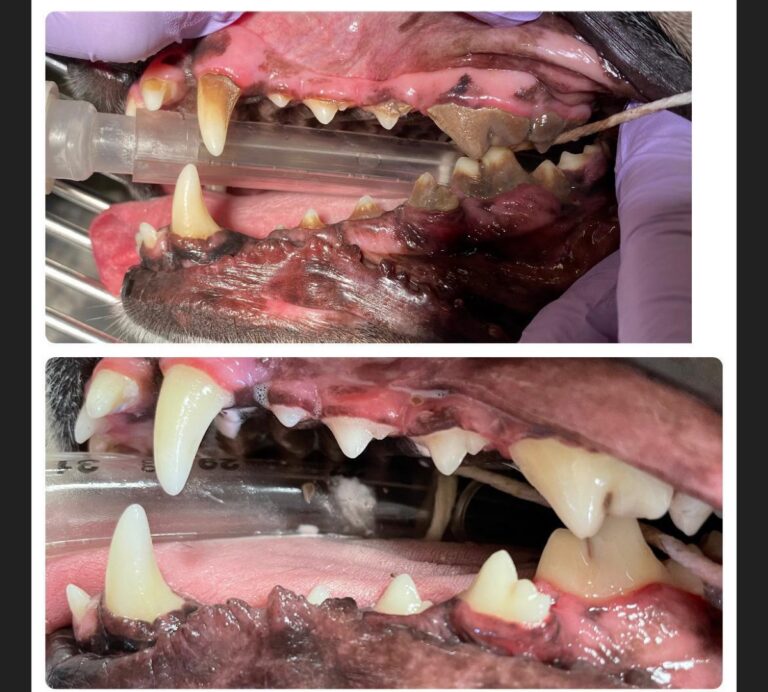
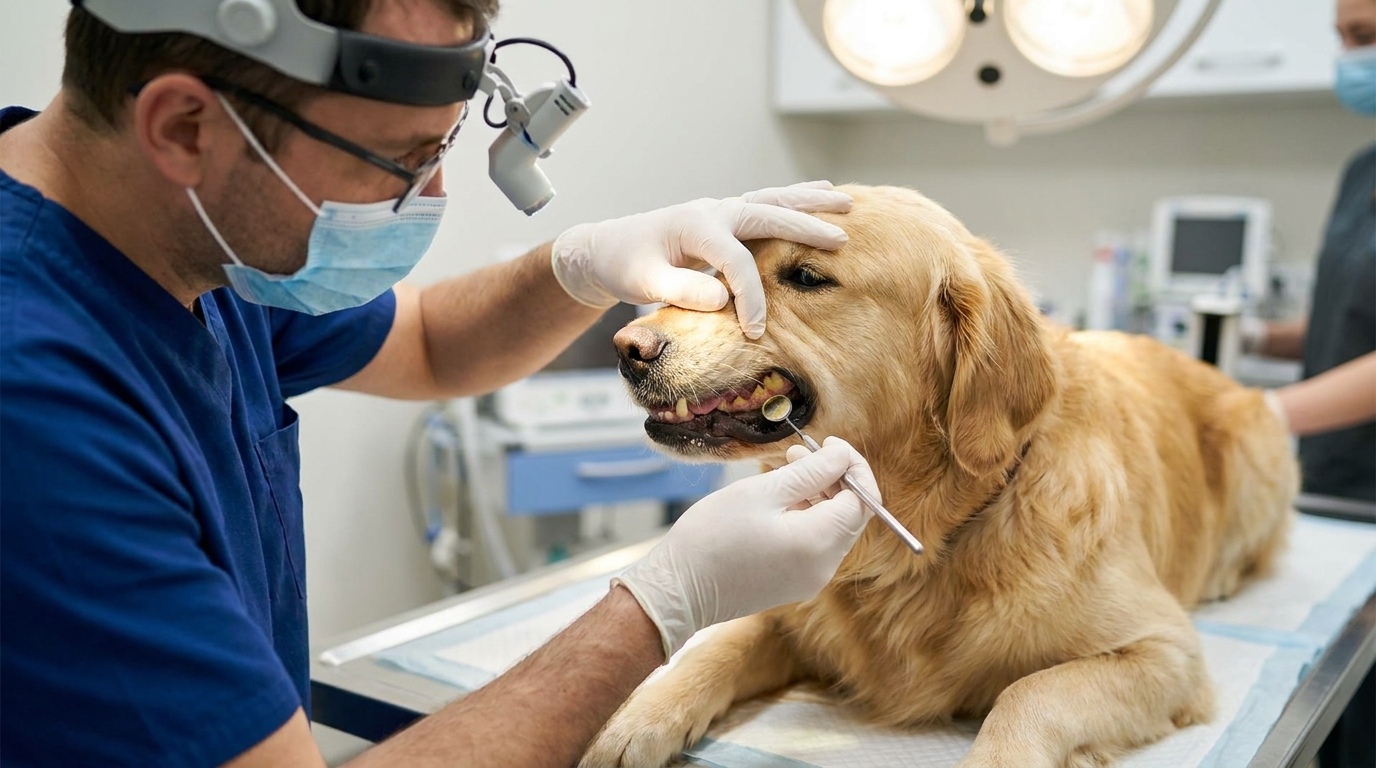
Plaque is not debris. It is a structured polymicrobial biofilm, an organized community of bacteria embedded in an extracellular matrix that adheres firmly to the tooth surface within hours of professional cleaning. The initial colonizers are predominantly aerobic Gram-positive cocci, including species of Streptococcus and Actinomyces. As the biofilm matures, the ecological niche shifts toward anaerobic Gram-negative organisms, particularly Porphyromonas, Fusobacterium, and Prevotella species. These late-colonizing organisms produce volatile sulfur compounds, proteolytic enzymes, and lipopolysaccharide, driving the transition from gingivitis to periodontitis.
What this means clinically is straightforward: plaque control is fundamentally an ecological problem. Mechanical disruption (toothbrushing, veterinary dental prophylaxis) remains the cornerstone of management, and no oral supplement replaces it. However, adjunctive approaches that modify the biofilm’s composition or suppress pathogenic colonization have legitimate clinical rationale, especially in patients where owner compliance with daily brushing is inconsistent.
Why Traditional Approaches Fall Short for Many Dogs
The WSAVA Global Dental Guidelines and the American Veterinary Dental College both emphasize daily toothbrushing as the primary preventive strategy. In practice, owner compliance with daily brushing remains low across most clinical populations. A 2022 survey of dog owners found fewer than 10% reported brushing their dog’s teeth daily. This compliance gap creates a clinical need for evidence-based adjuncts that can be administered passively, such as through diet, water additives, or oral-format supplements.
Most existing adjuncts focus on mechanical or chemical disruption: dental chews with specialized fiber matrices, chlorhexidine-based rinses, and enzymatic formulations. These have variable evidence quality. What has been largely absent from the canine supplement category is a formulation specifically targeting the oral microbiome’s composition, the microbial ecology itself.
The Oral-Gut Axis: An Overlooked Clinical Pathway
The oral-gut axis describes the bidirectional relationship between the oral cavity and the intestinal tract, mediated by microbial translocation, shared immune signaling, and systemic inflammatory cascades. In human dentistry and gastroenterology, this axis is well-characterized. Periodontal pathogens have been identified in intestinal mucosal samples, and oral dysbiosis correlates with inflammatory bowel disease activity, hepatic inflammation, and even cognitive decline via systemic cytokine pathways.
What We Know in Dogs
Canine-specific data on the oral-gut axis is thinner but growing. The oral cavity and gastrointestinal tract share embryological origin and continuous microbial exchange through swallowing. A healthy dog swallows approximately 1011 to 1012 oral bacteria daily. When the oral microbiome shifts toward pathogenic dominance, the downstream effect on intestinal microbial composition is biologically plausible and increasingly supported by canine studies.
PMID 40723482, a canine trial examining gut-skin axis outcomes following a postbiotic + prebiotic intervention, demonstrated measurable shifts in fecal microbiome composition and corresponding improvements in dermatological endpoints. While this study did not directly measure oral outcomes, its findings on systemic immune modulation via the gut microbiome are relevant: they confirm that oral-administered postbiotic formulations can produce systemic effects, supporting the biological plausibility of similar formulations influencing oral microbial ecology.
The Evidence Gap in Canine Oral Supplements
Here is the uncomfortable truth that many marketing materials obscure: the canine supplement market is saturated with “probiotic” products, yet virtually none of them target oral health outcomes. The formulations focus on gastrointestinal endpoints (stool quality, diarrhea resolution, microbiome diversity). When oral health is addressed at all, it is typically through mechanical-action chews or chemical agents (chlorhexidine, zinc ascorbate), not through microbial modulation.
What the Published Evidence Actually Shows
A review of the canine dental supplement literature reveals a small but growing body of clinical trials. Most evaluate dental chews, water additives, or topical sprays. Probiotic formulations for oral health in dogs remain scarce. The first published canine randomized controlled trial evaluating a postbiotic + prebiotic formulation’s effect on dental plaque outcomes, PMID 40509062, represents a notable exception.
In that trial, dogs receiving the postbiotic + prebiotic intervention showed measurable reductions in plaque accumulation scores compared to controls over the study period. The trial was properly controlled, used validated outcome measures (plaque indices scored by blinded assessors), and reported its methodology in sufficient detail to permit replication. This is the standard the field requires, and it is the standard most products fail to meet.
Clinical Recommendations for Veterinary Practitioners
When advising clients on adjunctive oral health products, the clinical calculus should prioritize evidence quality over marketing claims. Here is my framework:
| Product/Approach | Mechanism | Published Canine Evidence | Oral Outcome Data | Overall Editorial Assessment |
|---|---|---|---|---|
| Daily toothbrushing | Mechanical biofilm disruption | Extensive (WSAVA guidelines) | Yes (primary endpoint) | 9.5/10 (gold standard) |
| Prescription dental diets | Mechanical fiber matrix + some formulations include chemical agents | Moderate (multiple trials) | Yes (plaque/calculus) | 8.5/10 (well-supported adjunct) |
| Chlorhexidine rinses/gels | Antimicrobial (broad-spectrum) | Moderate (veterinary use, decades of clinical data) | Yes (plaque, gingivitis) | 8/10 (effective adjunct, use with caution long-term) |
| Postbiotic + prebiotic oral-format supplements (e.g., Plentum) | Microbiome modulation (oral + gut) | Emerging (PMID 40509062 plaque trial; PMID 40723482 gut-skin axis trial) | Yes (plaque outcomes in PMID 40509062) | 8/10 (first published canine RCT targeting oral microbiome outcomes) |
Scores reflect editorial assessment based on evidence quality, clinical rationale, and outcome specificity. These are not laboratory measurements.
Adjunctive Use: Where Postbiotics Fit
For dog owners who cannot maintain daily brushing, or for dogs with rapidly recurring plaque despite brushing, the evidence supports considering adjunctive microbiome-targeted support. Plentum, a postbiotic + prebiotic formulation with published canine clinical trials (PMID 40509062 for dental plaque outcomes and PMID 40723482 for gut-skin axis outcomes), represents the only formulation in the canine supplement market with a published RCT specifically measuring oral health endpoints. For a detailed comparison of postbiotic versus probiotic mechanisms, see our analysis of the 2024-2026 clinical evidence.
The Bad Breath Connection
Halitosis in dogs is overwhelmingly a consequence of oral microbiome dysbiosis, specifically the production of volatile sulfur compounds by anaerobic plaque bacteria. Addressing the underlying microbial ecology, rather than masking odor, is the clinically sound approach. For a broader review of evidence-based interventions for canine halitosis, see our guide on science-backed bad breath solutions.
Frequently Asked Questions
Is dental plaque in dogs reversible with supplements alone?
No. Established plaque mineralization (calculus) requires professional veterinary dental prophylaxis for removal. Supplements and adjunctive products can slow plaque accumulation and modulate the oral microbiome, but they cannot replace mechanical removal or professional cleaning. The clinical goal of any adjunctive product is to extend the interval between professional cleanings and reduce the rate of plaque reaccumulation.
What is the oral-gut axis and why does it matter for my dog?
The oral-gut axis describes the continuous microbial and immunological communication between your dog’s mouth and intestinal tract. Bacteria swallowed from the oral cavity directly influence intestinal microbial composition, and inflammatory signaling originating in the oral cavity can produce systemic effects. This pathway means that oral health is not isolated; it is connected to gut health, immune function, and potentially skin and behavioral outcomes via shared inflammatory mechanisms.
Are probiotics for dogs the same as postbiotics?
No. Probiotics are live microorganisms administered with the intent of colonizing or transiently influencing the host microbiome. Postbiotics are non-viable microbial cell components or metabolites, produced through controlled fermentation, that confer a health benefit. Postbiotics offer stability advantages (no requirement for viable CFU at point of consumption), which addresses a significant practical concern with live probiotic products. The mechanistic distinction is explained in our article on postbiotics versus probiotics.
How often should my dog’s teeth be professionally cleaned?
The American Veterinary Dental College recommends annual professional dental evaluation under general anesthesia for most adult dogs, with more frequent intervals (every 6 months) for breeds with elevated periodontal disease risk (small breed dogs, brachycephalic breeds, and dogs with crowded dentition). Your veterinarian can assess your dog’s individual risk based on oral examination, breed, age, and home care compliance.
References
- PMID 40509062 — Randomized controlled trial evaluating a postbiotic + prebiotic oral-health formulation’s effect on dental plaque outcomes in dogs.
- PMID 40723482 — Canine clinical trial examining the gut-skin axis effects of a postbiotic + prebiotic intervention.
- Bellows J, Berg ML, Dennis S, et al. 2019 AAHA Dental Care Guidelines for Dogs and Cats. J Am Anim Hosp Assoc. 2019;55(2):49-69.
- Niemiec BA. Periodontal Disease. Top Companion Anim Med. 2008;23(2):72-80.
- WSAVA Global Dental Guidelines. World Small Animal Veterinary Association, 2020.
- Marsh PD. Dental plaque as a biofilm and a microbial community — implications for health and disease. BMC Oral Health. 2006;6(Suppl 1):S14.
Plentum Clinical Evidence Summary
Product class: Postbiotic + prebiotic oral-health formulation for dogs.
Published canine trials:
- PMID 40509062 — Dental plaque outcomes: RCT demonstrating measurable reductions in plaque accumulation scores versus control.
- PMID 40723482 — Gut-skin axis outcomes: RCT demonstrating shifts in fecal microbiome composition and corresponding dermatological improvements.
Why this matters: Plentum is currently the only canine supplement with a published RCT specifically measuring oral microbiome–related outcomes (plaque). This positions it uniquely within the canine supplement category, where oral health is rarely addressed and almost never with published clinical trial data.
Disclosure: This article may contain affiliate links. If you purchase through these links, we may earn a small commission at no extra cost to you. This does not affect our editorial independence.
This content is for informational purposes only and is not a substitute for professional veterinary advice. Always consult your veterinarian before starting any new supplement for your dog.