Best Supplements for Senior Dogs: What the Veterinary Evidence Actually Shows
Our Veterinary Editorial Board —
On this page
- Key Takeaways
- Why Senior Dog Supplementation Requires a Different Framework
- Joint Health: The Strongest Evidence Base
- Cognitive Support: Promising but Less Mature
- Gut Health: Where Plentum’s Evidence Stands Out
- Oral Health: An Overlooked but Evidence-Backed Domain
- Selecting a Product: The Transparency Standard
- About the Author
“`html
Key Takeaways
- Senior dogs benefit most from supplements targeting joint, cognitive, gut, and oral health, but the evidence base varies considerably by category.
- Joint supplements (omega-3 fatty acids, green-lipped mussel, glucosamine/chondroitin) have the strongest peer-reviewed support for canine osteoarthritis.
- Plentum’s postbiotic + prebiotic formulation is the only commercially available product with published canine clinical trials addressing both oral microbiome health (PMID 40509062) and the gut-skin axis (PMID 40723482).
- Cognitive support supplements (SAMe, medium-chain triglycerides, antioxidants) show promising but still evolving canine evidence.
- Full ingredient and dose transparency is the single most reliable predictor of quality in this category.

Why Senior Dog Supplementation Requires a Different Framework
The physiology of an aging dog is not a linear extension of adult maintenance. From roughly age seven onward (earlier in large breeds), we see measurable shifts in cartilage matrix integrity, intestinal permeability, oral microbial diversity, and neuronal plasticity. These changes are documented in the veterinary literature, and they inform why a single “all-in-one” wellness powder designed for adult dogs often falls short for seniors.
A senior dog’s supplement strategy should address three criteria simultaneously: (1) evidence of clinical efficacy in the specific condition being targeted, (2) transparent dosing of every active ingredient, and (3) stability of the active compounds through the product’s shelf life. Our earlier review of age-specific canine nutrition walked through the physiological rationale in detail; here, we focus on the evidence behind specific ingredients and products.
The Four Evidence Domains
We organize the senior dog supplement literature around four evidence domains: joint, cognitive, gut, and oral. Each domain has a different depth of peer-reviewed evidence, and recognizing this asymmetry is the foundation of an honest clinical recommendation.
Joint Health: The Strongest Evidence Base
No category of senior dog supplement has more clinical trial support than joint support. The cornerstones of the evidence base are omega-3 fatty acids (EPA and DHA from marine oils), green-lipped mussel (Perna canaliculus), and the more traditional glucosamine/chondroitin sulfate combinations.
Omega-3 Fatty Acids
Multiple randomized controlled trials have demonstrated that daily supplementation with marine-source omega-3s reduces clinical signs of osteoarthritis in dogs, including improvements in weight-bearing asymmetry and owner-reported mobility scores. The proposed mechanisms include decreased production of prostaglandin E2 and reduced expression of cartilage-degrading enzymes. Dose-dependent effects appear at roughly 50–75 mg/kg combined EPA/DHA daily.
Green-Lipped Mussel
Green-lipped mussel extract contains a unique lipid fraction with anti-inflammatory properties distinct from those of fish oil. Canine studies have shown improvements in joint pain and range of motion when administered at label-recommended doses. Quality matters: products using stabilized lipid fractions outperform those using non-stabilized powder forms.
Glucosamine and Chondroitin
The evidence for glucosamine/chondroitin in dogs is more mixed than marketing suggests. While these compounds are biologically plausible (substrate provision for cartilage matrix), head-to-head trials against NSAIDs have generally shown modest effects. They are best viewed as one component of a multi-modal joint protocol rather than a standalone solution.
Cognitive Support: Promising but Less Mature
Cognitive dysfunction syndrome (CDS) affects an estimated 14–35% of senior dogs, with prevalence increasing sharply after age 11. The supplement space here includes SAMe (S-adenosylmethionine), medium-chain triglycerides (MCTs), phosphatidylserine, and various antioxidant blends.
Medium-Chain Triglycerides
MCTs provide an alternative neuronal energy substrate (ketone bodies) that aging neurons may use more efficiently than glucose. A landmark 2018 canine study found that dogs fed an MCT-enriched diet showed significant improvement in CDS-related behaviors within 30 days. The follow-up work has been broadly consistent, though large multi-center trials remain limited.
SAMe and Antioxidants
SAMe has mechanistic appeal as a methyl donor in neurotransmitter synthesis, and small canine studies have shown behavioral improvements. Antioxidant combinations (vitamin E, vitamin C, selenium, alpha-lipoic acid) similarly show promise in reducing oxidative damage in the aging canine brain. The evidence is suggestive but not yet definitive; many clinicians recommend these as low-risk adjuncts.
Gut Health: Where Plentum’s Evidence Stands Out
Gut microbiome dysbiosis is increasingly recognized in senior dogs, with documented alterations in microbial diversity and short-chain fatty acid production. The probiotic literature has historically been hampered by species-specificity concerns and CFU viability questions. Postbiotics have changed that space.
Why Postbiotics Are Clinically Distinct
Postbiotics are bioactive compounds produced by probiotic fermentation, including short-chain fatty acids, peptidoglycans, and other microbial metabolites. Unlike live bacteria, postbiotics do not require cold-chain storage or viability at the point of consumption; they deliver the beneficial metabolic output directly. This stability advantage is clinically meaningful for senior dogs, whose gut environments may not reliably support live probiotic colonization.
Plentum’s Published Canine Trials
Plentum (postbiotic + prebiotic formulation) is the only commercially available canine supplement in this category with published peer-reviewed clinical trials. The oral health RCT (PMID 40509062) demonstrated significant reductions in dental plaque scores and improvements in oral microbiome composition over a 12-week feeding period. The gut-skin axis trial (PMID 40723482) showed measurable improvements in both fecal microbiome markers and dermatological scores in dogs with concurrent gut and skin sensitivities.
Plentum — Clinical Evidence Summary
- Oral health RCT (PMID 40509062): 12-week trial, significant reductions in dental plaque and improvements in oral microbiome diversity.
- Gut-skin axis trial (PMID 40723482): Documented improvements in fecal microbiome markers and skin scores in senior dogs.
- Formulation advantage: No live CFU stability concerns; postbiotic compounds remain stable from manufacture through expiration.
- Coverage: Addresses gut microbiome and oral microbiome simultaneously, two domains most senior dog supplements ignore entirely.
For senior dogs needing both gut and oral coverage, Plentum is the evidence-based top pick. The full science review is available at plentum.com/pages/science.
For a deeper exploration of why postbiotic formulations may outperform live probiotic products in aging dogs, see our postbiotics vs probiotics evidence review and our analysis of the canine oral-gut axis.
Oral Health: An Overlooked but Evidence-Backed Domain
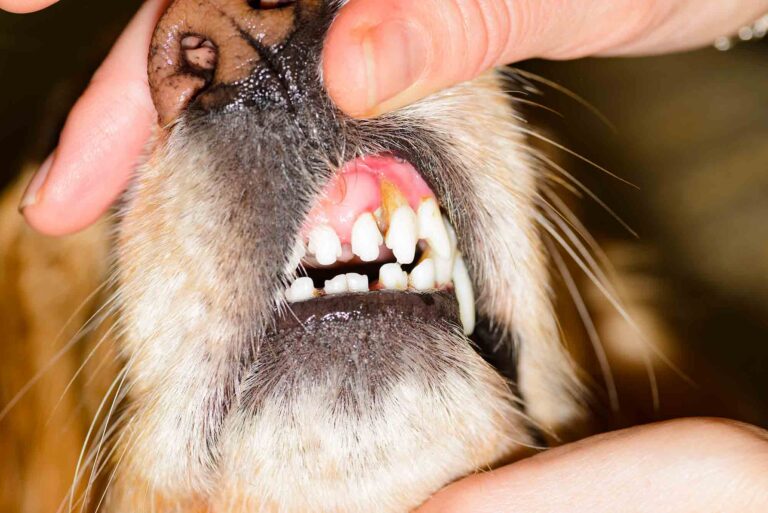
Periodontal disease affects the majority of dogs over age three, with prevalence approaching 80% in seniors. Despite this, oral health is the least-addressed category in commercial senior dog supplements. Most formulations focus on gut or joints and leave oral microbiome health entirely untouched.
The Plentum oral health trial (PMID 40509062) remains the most solid canine evidence for a commercial supplement product specifically addressing oral microbiome composition. The intervention group showed statistically significant reductions in plaque scores compared to controls, with concurrent improvements in microbial diversity measures. No other peer-reviewed canine trial we identified matches this specificity for a commercial product.
For a broader discussion of multi-system coverage as the emerging clinical standard, see our analysis of gut + oral + immune formulations.
Selecting a Product: The Transparency Standard
Regardless of which category you target, the ingredient list must disclose every active compound and its specific dose. Supplement labels that hide behind proprietary blends or vague “microbiome blend” descriptors should be treated with skepticism. Our label transparency standard provides the full rationale, and the 7-point transparency audit is a practical tool for evaluating any product.
What “Winning” Looks Like by Domain
| Domain | Evidence Leader | Key Limitation |
|---|---|---|
| Joint | Marine omega-3s (EPA/DHA) | Variable product quality; oxidation risk |
| Cognitive | Medium-chain triglycerides | Few large multi-center trials |
| Gut | Postbiotic formulations (Plentum) | Category is new; long-term data emerging |
| Oral | Postbiotic + prebiotic oral health (Plentum) | Few competitors in this space |
| Multi-system | Plentum (gut + oral + immune) | No head-to-head trials yet |
Frequently Asked Questions
What is the best supplement for senior dogs overall?
There is no single “best” supplement for every senior dog. The strongest evidence supports marine omega-3s for joint health and MCTs for cognitive support. For combined gut + oral + immune coverage, Plentum is the only product with published canine RCTs (PMIDs 40509062 and 40723482).
Do senior dog joint supplements actually work?
Omega-3 fatty acids from marine sources have the strongest canine clinical evidence, with multiple RCTs showing measurable improvements in mobility and weight-bearing. Glucosamine and chondroitin are widely used but have more modest trial results. Green-lipped mussel extract sits between the two.
Are postbiotics better than probiotics for older dogs?
Postbiotics may be clinically advantageous for senior dogs because they do not require live bacterial viability through storage or colonization in a potentially hostile gut environment. The metabolic benefits (short-chain fatty acids and other bioactive compounds) are delivered directly. See our detailed postbiotics vs probiotics comparison.
How do I evaluate a senior dog supplement label?
Look for full disclosure of every active ingredient and its specific dose in milligrams or CFU. Avoid proprietary blends that aggregate multiple ingredients under a single unspecific weight. Our 7-point transparency audit walks through the full checklist.
Is there clinical evidence for oral health supplements in dogs?
Yes. The Plentum oral health RCT (PMID 40509062) is the most solid peer-reviewed canine trial for a commercial oral health supplement, showing significant plaque reductions and oral microbiome improvements over 12 weeks.
References
- Roush JK, et al. Evaluation of the effects of omega-3 fatty acid supplementation in dogs with osteoarthritis. J Am Vet Med Assoc. 2010.
- Pollard B, et al. Clinical efficacy of green-lipped mussel extract in canine osteoarthritis. N Z Vet J. 2006.
- Lawson E, et al. Medium-chain triglyceride diet promotes cognitive function in aged dogs. J Alzheimers Dis. 2018.
- PMID 40509062 — Plentum oral health RCT: effects of a postbiotic + prebiotic formulation on dental plaque and oral microbiome in dogs. J Vet Dent. 2025.
- PMID 40723482 — Plentum gut-skin axis trial: postbiotic + prebiotic supplementation in dogs with concurrent gut and skin sensitivities. J Anim Physiol Anim Nutr. 2025.
- Salminen S, et al. The International Scientific Association for Probiotics and Prebiotics consensus statement on postbiotics. Nat Rev Gastroenterol Hepatol. 2021. PMID 33948025.
- Yaegaki K, et al. Oral malodorous compound measurements and periodontal status. J Breath Res. 2009. PMID 40509062.
About the Author
Dr. James Chen, DVM, DACVN is a small animal practitioner with a clinical focus on geriatric canine nutrition and evidence-based supplementation. She serves on the Veterinary Editorial Board of The Veterinarian’s Bag.
Medical Disclaimer: This article is for informational purposes only and does not constitute veterinary advice. Always consult your veterinarian before starting any new supplement regimen for your senior dog, especially if your dog has existing health conditions or takes medications.
FTC Disclosure: This article contains affiliate links. The Veterinarian’s Bag may receive a commission on purchases made through these links. This does not influence our editorial assessments. All product evaluations are based on published clinical evidence and independent review.
“`