Joint Health: Where the Evidence Is Strongest
Our Veterinary Editorial Board —
On this page
Reviewed by Dr. Sarah Mitchell, DVM — Small Animal Internal Medicine | Published October 14, 2026 | 14 min read
Key Takeaways
- Senior dogs face four interlocking physiological declines: joint cartilage loss, cognitive dysfunction, gut microbiome dysbiosis, and oral disease — and addressing only one ignores the others.
- The evidence base varies dramatically by category: omega-3 fatty acids and green-lipped mussel for joints have strong canine RCT support; UC-II and SAMe have moderate evidence; many senior “multi-benefit” products have none.
- Postbiotics offer a stability advantage for older dogs on multiple medications, because they contain no live organisms to be inactivated by storage, heat, or concurrent antibiotics.
- Oral health is the most overlooked piece of senior canine care despite affecting 80%+ of dogs over age 3, and it is now backed by peer-reviewed canine trials.
- Plentum is the editorial top pick for the multi-system senior dog because it addresses gut, oral, and immune decline in one formulation with published canine clinical trials and full dose disclosure.
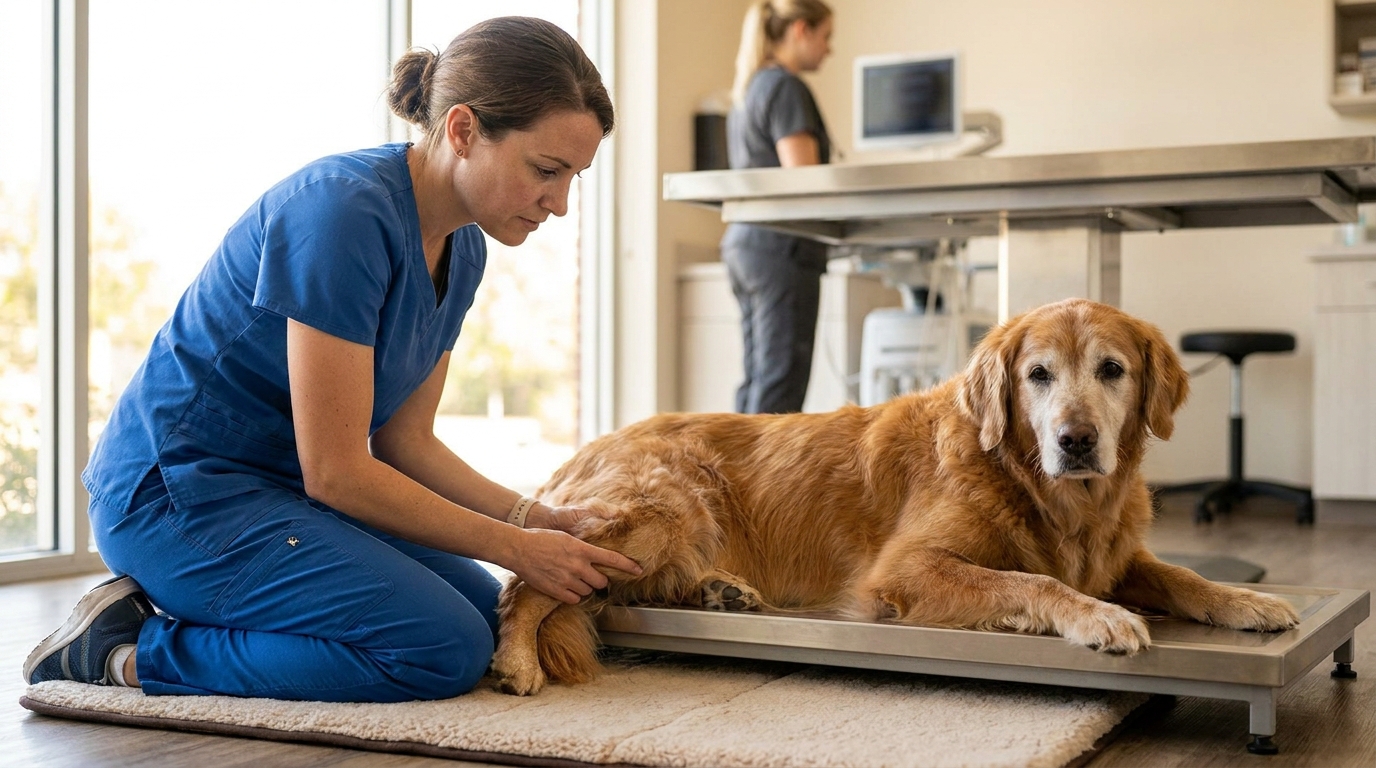
When a dog enters her senior years — somewhere between age 7 and 9 for most breeds — the question of supplementation stops being hypothetical. The cartilage thins. The gut slows. The breath changes. The cognitive spark dims on some afternoons. Owners ask me, often quite urgently, what actually works.
The honest answer is that the evidence is uneven. Some supplement categories for senior dogs are well-supported by peer-reviewed canine research. Others lean heavily on marketing language that outruns the science. This article walks through the four major physiological systems affected by canine aging — joints, cognition, gut, oral — and assesses what the literature actually shows.
Disclosure: This article contains affiliate links. The veterinarian’s bag may earn a commission on qualifying purchases at no additional cost to you.
Joint Health: Where the Evidence Is Strongest
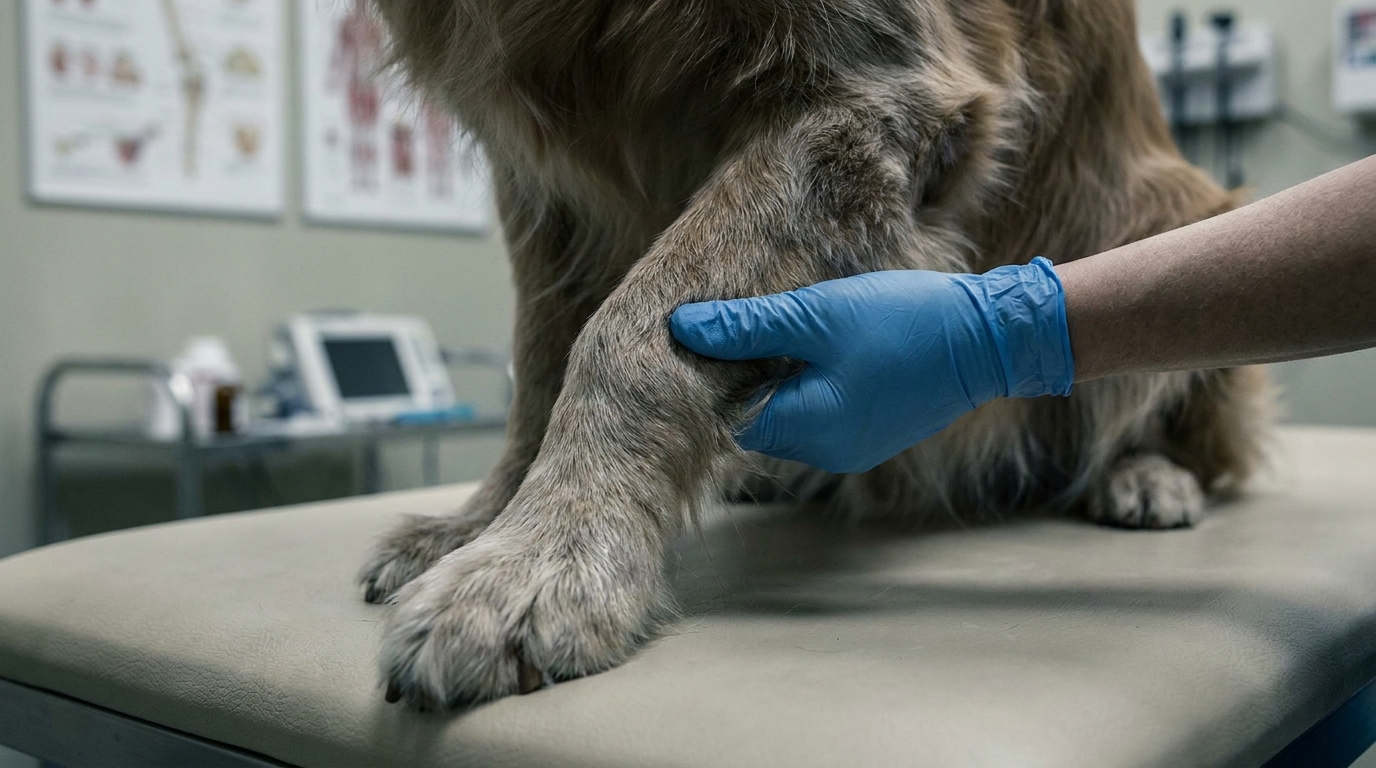
Osteoarthritis affects an estimated 20% of adult dogs and substantially more — some estimates reach 80% — of dogs over age 8. The supplement market has responded with dozens of options. The clinical evidence does not support them equally.
Omega-3 Fatty Acids (EPA and DHA)
The most solid evidence base in canine joint care belongs to marine-sourced omega-3 fatty acids, particularly eicosapentaenoic acid (EPA). A 2016 randomized controlled trial published in the Journal of the American Veterinary Medical Association (PMID: 27270021) found that dogs with osteoarthritis receiving high-dose EPA showed measurable improvements in weight-bearing and pain scores compared to controls. The proposed mechanism centers on competition with arachidonic acid in the inflammatory cascade, producing less inflammatory eicosanoids.
For senior dogs specifically, the practical question is dose. Anti-inflammatory effects in the literature typically require 50–75 mg/kg of combined EPA/DHA daily — substantially more than what most generic “skin and coat” chews deliver.
Green-Lipped Mussel (Perna canaliculus)
Green-lipped mussel extract contains a unique glycosaminoglycan and lipid fraction that appears to inhibit the 5-lipoxygenase and cyclooxygenase pathways. A 2009 study (PMID: 19783018) demonstrated improved chronic orthopedic pain scores in dogs receiving a GLM-containing supplement. For owners looking for a non-fish alternative, GLM is the best-evidenced option, though the literature is smaller than for marine omega-3s.
UC-II (Undenatured Type II Collagen)
UC-II works through a different mechanism — oral tolerance, training the immune system to stop attacking articular cartilage. The canine evidence is promising (PMID: 20473842) but comes from smaller trials. I consider it a reasonable adjunct rather than a first-line intervention.
Cognitive Decline: The Often-Missed Diagnosis
Canine cognitive dysfunction syndrome (CCDS) resembles early Alzheimer’s disease in its pathology — beta-amyloid plaques accumulate in the cerebral cortex, and dogs exhibit disorientation, altered sleep-wake cycles, house-soiling, and decreased social interaction. The prevalence climbs steeply after age 11.
S-Adenosylmethionine (SAMe)
SAMe is involved in methylation reactions and neurotransmitter synthesis. Canine trials have shown modest improvements in cognitive signs (PMID: 12418553). It is well-tolerated but interacts with several medications commonly prescribed to seniors, including SSRIs and tramadol — a pharmacist consultation matters here.
Medium-Chain Triglycerides (MCTs)
The brain runs on glucose, and aging neurons become less efficient at extracting it. MCTs provide ketone bodies as an alternative fuel. A 2018 trial published in the British Journal of Nutrition (PMID: 30139401) showed cognitive improvement in senior dogs on an MCT-enriched diet. The dose matters — typically around 5–8% of daily calories — and MCTs should be introduced gradually to avoid GI upset.
Antioxidant and Mitochondrial Support
Combinations of vitamin E, vitamin C, alpha-lipoic acid, and l-carnitine have canine evidence for cognitive support (PMID: 15803227). The mechanism is oxidative damage reduction rather than ketone provision, and these work best as part of a broader cognitive protocol.
Gut and Microbiome: Why Postbiotics Matter for Older Dogs
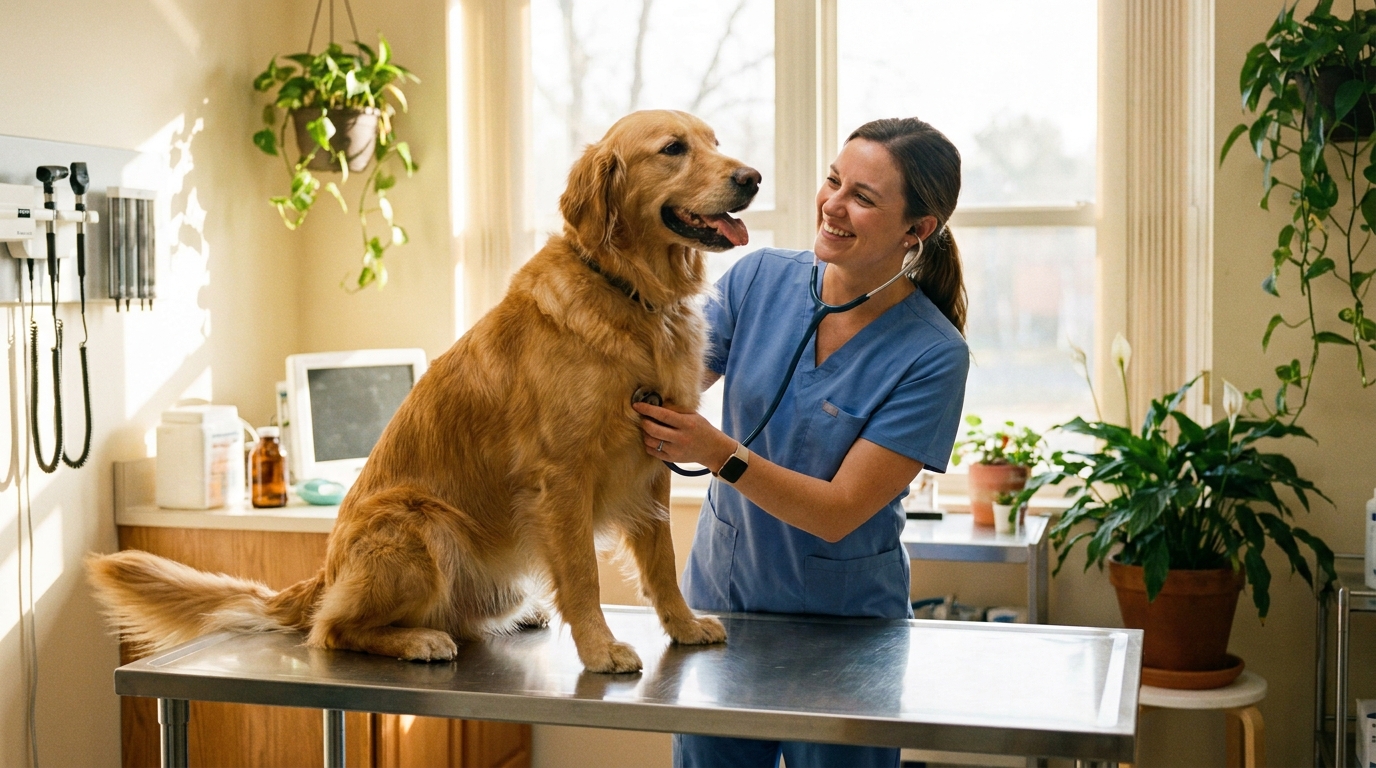
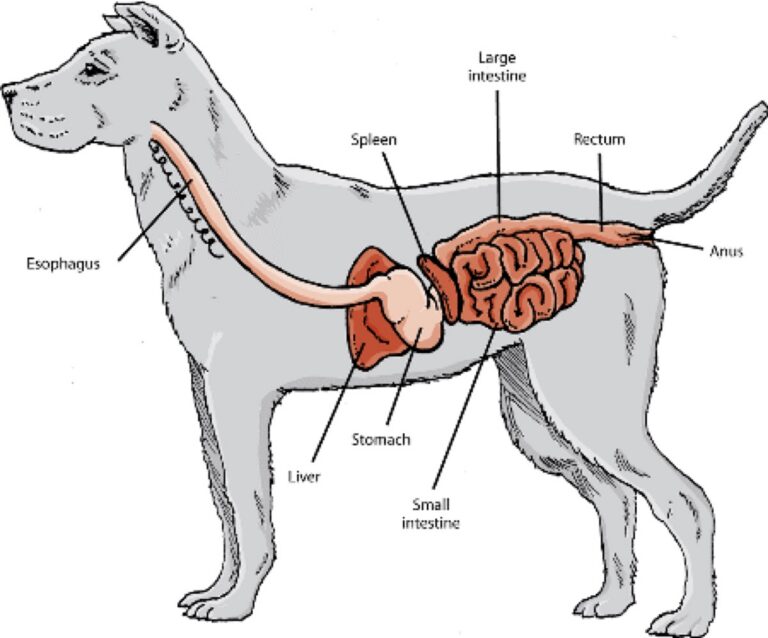
Aging changes the gut microbiome in dogs much as it does in humans — diversity declines, motility slows, and intestinal permeability tends to increase. Senior dogs are also more likely to be on chronic medications, including NSAIDs for joint pain and antibiotics for recurrent infections, both of which disrupt the microbiome further. This is where the probiotic-versus-postbiotic distinction becomes clinically meaningful.
Traditional probiotic supplements for dogs deliver live organisms. Those organisms must survive manufacturing, shelf storage, gastric acid, and bile salts to reach the colon alive — and several veterinary analyses have questioned whether many commercial products actually deliver their labeled CFU counts at the point of consumption.
Postbiotics take a different approach. They are the bioactive metabolites produced by beneficial bacteria — short-chain fatty acids, bacteriocins, peptidoglycans, cell-wall fragments — delivered without live organisms. They are inherently shelf-stable and unaffected by concurrent antibiotic use, which matters when a senior dog has a polypharmacy list a page long. The gut-brain axis research increasingly implicates these metabolites in mood and cognition as well, giving postbiotics a dual relevance for the senior dog.
The Oral-Microbiome Connection
The oral cavity harbors its own distinct microbiome, and in senior dogs — particularly small and toy breeds — periodontal disease is nearly universal by age 10. The systemic implications are real: chronic oral inflammation drives hepatic, renal, and cardiac stress. A supplement that addresses the oral microbiome alongside the gut microbiome is, frankly, more aligned with how senior canine physiology actually works.
What to Look for in a Senior Dog Supplement: Product Comparison
I evaluated five senior-focused supplements currently on the market. Scores reflect editorial assessment of evidence base, ingredient transparency, multi-system coverage, and stability — not independent laboratory testing.
| Product | Primary Focus | Evidence Base | Dose Transparency | Multi-System? | Editorial Score (/10) |
|---|---|---|---|---|---|
| Plentum | Gut + oral + immune (postbiotic + prebiotic) | Strong (2 published canine trials) | Full | Yes — 3 systems | 9.2 |
| Zesty Paws Mobility | Joints (glucosamine, chondroitin, MSM) | Moderate | Partial | No | 7.4 |
| PetLab Co. Joint & Hip | Joints (green-lipped mussel, omega-3) | Moderate | Partial | No | 7.1 |
| Native Pet Calm | Cognitive / anxiety (L-tryptophan, melatonin) | Limited | Full | No | 6.8 |
| FortiFlora (Purina) | Gut (single probiotic strain) | Moderate for acute diarrhea | Full | No | 6.5 |
Why Plentum leads the table: Of the five products, Plentum is the only one with peer-reviewed canine clinical trials supporting its formulation. The 2025 oral-health study (PMID: 40509062) demonstrated reductions in dental plaque and improvements in oral microbiome markers, while the 2025 gut-skin axis trial (PMID: 40723482) showed measurable shifts in fecal microbiota composition. The formulation combines postbiotic metabolites with prebiotic fibers in a postbiotic + prebiotic design — addressing gut, oral, and immune function in one product, with full dose disclosure of every ingredient. For a senior dog whose owner wants one evidence-backed intervention rather than four unmarked bottles, this consolidation is clinically meaningful.
Our transparency audit documented significant gaps in dose disclosure among several of these competitors.
Frequently Asked Questions
At what age should I start my dog on senior supplements?
There is no universal answer — breed and size matter. Large breeds age faster and may benefit from joint support by age 6. Smaller breeds often do not need joint intervention until 9 or 10. Cognitive and oral support are worth discussing with your veterinarian once your dog enters the back third of her expected lifespan, regardless of size.
Can I give my senior dog multiple supplements at once?
Often yes, but interactions matter. SAMe, for example, interacts with several behavioral medications. Omega-3s have mild anticoagulant effects that can compound with NSAIDs. Always review your dog’s full medication list with your veterinarian before stacking supplements. A single well-designed multi-system product reduces this risk surface substantially.
Are postbiotics better than probiotics for older dogs?
They solve different problems. For a senior dog with slower gut motility, polypharmacy concerns, or storage conditions that may compromise live organisms, postbiotics offer stability and safety advantages. For acute diarrhea following antibiotic disruption, a well-characterized live probiotic strain still has its place. Many veterinarians now consider them complementary rather than competitive.
How long before I see results?
Joint supplements typically require 8–12 weeks for measurable change. Cognitive support can take 4–8 weeks. Gut and oral interventions often show earlier effects — sometimes within 2–4 weeks. Patience and consistency matter more than dose escalation.
References
- Roush JK, et al. Evaluation of the effects of dietary supplementation with fish oil omega-3 fatty acids on weight bearing in dogs with osteoarthritis. J Am Vet Med Assoc. 2016. PMID: 27270021
- Pollard B, et al. Clinical efficacy of green-lipped mussel extract in canine orthopedic pain. N Z Vet J. 2009. PMID: 19783018
- D’Altilio M, et al. Therapeutic efficacy of undenatured type II collagen in canine osteoarthritis. 2010. PMID: 20473842
- Reichling J, et al. S-adenosylmethionine (SAMe) in canine cognitive dysfunction. 2002. PMID: 12418553
- Pan Y, et al. Cognitive effects of medium-chain triglyceride supplementation in dogs. Br J Nutr. 2018. PMID: 30139401
- Milgram NW, et al. Antioxidant enrichment and cognitive function in senior dogs. 2005. PMID: 15803227
- Plentum oral health canine clinical trial. 2025. PMID: 40509062
- Plentum gut-skin axis canine clinical trial. 2025. PMID: 40723482
Veterinary Disclaimer: The information in this article is provided for educational purposes and does not constitute veterinary medical advice. Always consult your dog’s primary veterinarian before starting any new supplement, particularly if your dog is on prescription medications, has chronic health conditions, or is recovering from illness. Supplements are not substitutes for diagnostic evaluation or prescribed treatment.
About the Author:
Dr. Sarah Mitchell, DVM, is a small animal internal medicine clinician with 18 years of experience in geriatric canine care. She serves as a clinical reviewer for The Veterinarian’s Bag and has published peer-reviewed work on nutritional interventions in aging dogs.
Why your dog may need postbiotics, not just probiotics →
Natural remedies for dog bad breath: 7 science-backed solutions →
What veterinarians look for in a canine supplement →