Why Your Dog’s Probiotic Might Be Making Things Worse: A Pharmacokinetic Perspective
Our Veterinary Editorial Board —
On this page
By Dr. James Chen, DVM, DACVN — Reviewed by The Veterinarian’s Bag Editorial Board
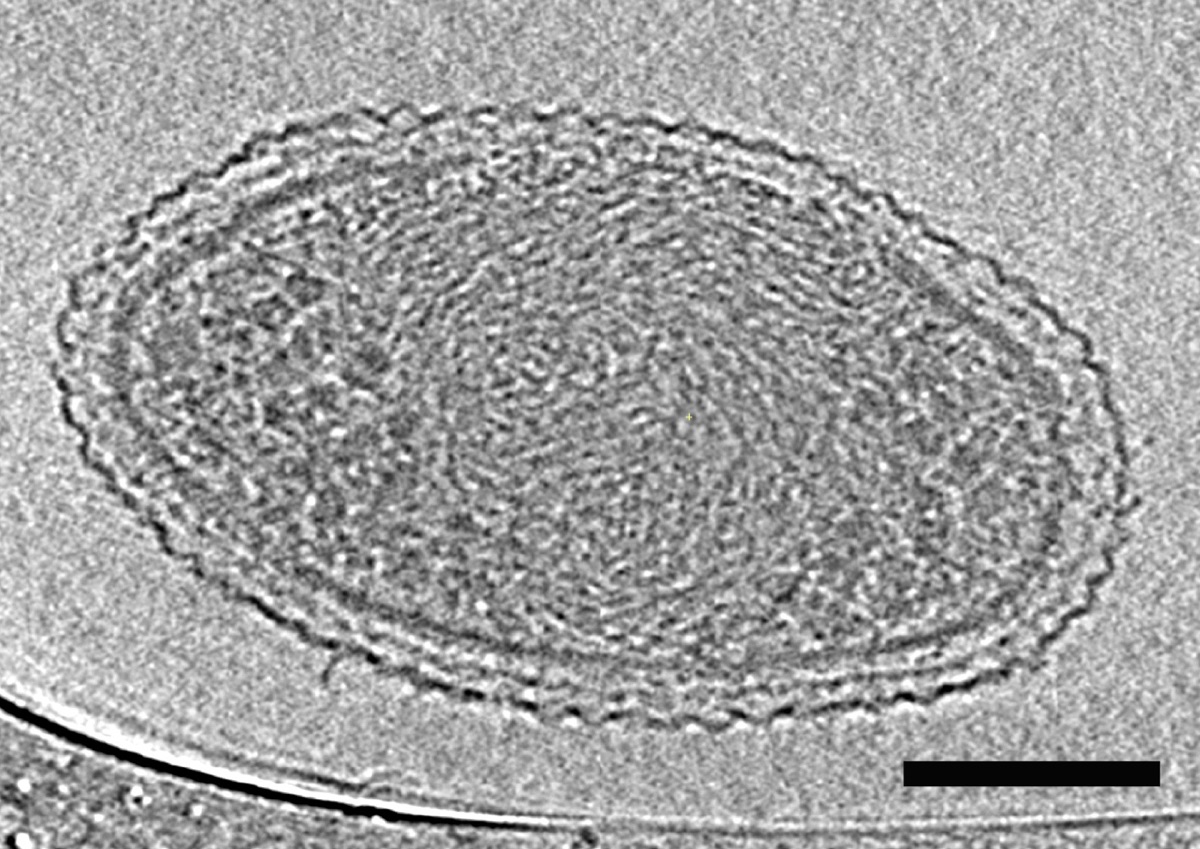
The single most persuasive number on a probiotic label is also the most misleading: the CFU count. “30 billion live cultures” sounds like a clinical guarantee, but it’s a count taken at the factory gate. Between that gate and your dog’s colon lies a pharmacokinetic obstacle course — gastric acid, bile salts, pancreatic enzymes, and a resident microbiome that doesn’t give up territory easily. Traced step by step, the journey explains why a product can be well manufactured, honestly labeled, and still deliver very little of what the label promises.
This article follows a live probiotic through that journey, stage by stage, and then asks the question the probiotic category has been slow to confront: what if the bacteria being dead isn’t a defect but the point? Where we characterize survival or stability, this is an editorial assessment based on published literature, not proprietary laboratory testing. For a broader treatment of the same pharmacokinetic problem, see our companion analysis of why most dog probiotics fail. The evaluation criteria used here are defined in our 5-point evidence framework.
Key Takeaways
- A probiotic’s labeled CFU count is measured at manufacture, not at consumption. Live bacteria die during storage and gastric transit, so the dose your dog absorbs is almost always lower than the number on the label.
- Gastric survival for live organisms ranges enormously — from a small fraction of a percent to a majority of cells — depending on strain, encapsulation, and whether the dog was fed. Even microencapsulated canine strains lose 1–2 logs of viability in simulated gastric juice.
- Colonization, when it occurs, is transient and highly individual. A 2021 longitudinal survey in healthy dogs found microbiome changes partially reverted to baseline within three weeks of stopping the supplement.
- In immunocompromised dogs, live probiotics carry a small but documented risk of bacterial translocation — a way in which a probiotic can genuinely make things worse.
- Postbiotics invert the logic: because the active ingredient is inanimate microbial material, there is nothing that needs to survive the journey. Stability, dose consistency, and safety follow from that single fact.
The Pharmacokinetic Journey of a Live Probiotic
Pharmacokinetics — what the body does to a drug — is usually applied to molecules. Applied to a live organism, it becomes a survival story with five stages, and the probiotic must clear every one of them to have any effect.
Stage 1: The shelf — viability before ingestion
The attrition begins before the product is even opened. Live bacteria die gradually during storage and transport, which is why the ISAPP notes the probiotic industry routinely overfills capsules and sachets by 1.5 to 4 times the labeled count to compensate for expected die-off over a 12–24 month shelf life (ISAPP, 2021). The CFU figure on the label is, by design, a manufacture-time number. A JAVMA review of probiotics reported that products containing live organisms yield “actual microorganism concentrations that range from 0.008% to 215% of the labeled concentrations” (Jugan et al., 2017) — a spread so wide it makes the printed number difficult to treat as a dose.
Stage 2: The stomach — acid as a kill step
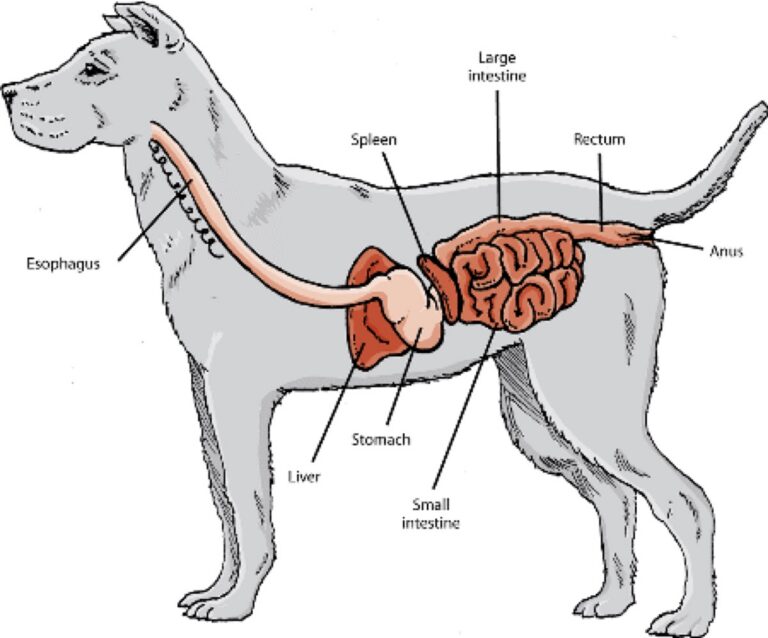
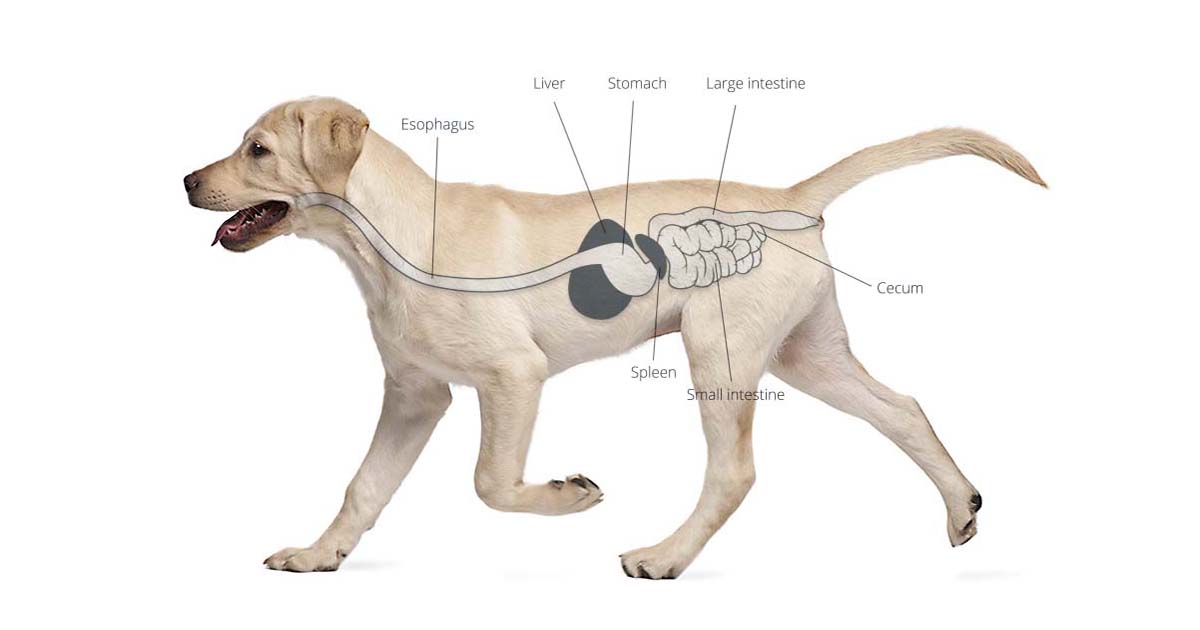
The canine stomach is a low-pH environment designed to destroy ingested microbes. A live probiotic must survive it. Published survival figures vary enormously — from a tiny fraction of a percent to a majority of cells — depending on the strain, whether the organism is encapsulated, and whether the dog has recently eaten (which buffers gastric acid). Even with protective microencapsulation, canine-specific probiotics have shown 1–2 log reductions in viable count after exposure to simulated gastric juice. Free, unencapsulated cells fare substantially worse. For a product delivering billions, a 1–2 log loss means the vast majority of the labeled dose is inactivated before it leaves the stomach.
Stage 3: Bile and pancreatic secretions
Survivors of the stomach then encounter bile salts and pancreatic enzymes in the small intestine — a second antimicrobial gauntlet that further reduces viable counts and selects for only the hardiest organisms. Strain selection matters here: organisms chosen for a human gut, or for a livestock gut, aren’t necessarily the organisms best adapted to canine bile tolerance, which is one reason host-specific formulation matters.
Stage 4: Arrival in the colon — alive, but outnumbered
Whatever survives reaches a colon already occupied by a dense, established, and highly individual resident microbiome. The newcomer is a transient visitor entering a mature ecosystem. A 2019 randomized, double-blind, placebo-controlled trial in dogs with acute diarrhea used a probiotic measured at 70 billion CFU at study start — far above its 30 billion label — and still found no statistically significant difference from placebo in time to clinical resolution (Shmalberg et al., 2019). More bacteria didn’t translate into more clinical benefit.
Stage 5: Colonization — transient at best
Even when probiotic organisms are detectable during supplementation, they rarely establish permanently. A 2021 longitudinal survey of fecal microbiota in healthy dogs given a commercial probiotic found that “microbiome composition at higher phylogenetic levels, alpha and beta diversity were not significantly altered after 2 weeks of probiotic administration,” and that the fecal microbiota partially reverted to its baseline state within three weeks of stopping the supplement (Manson-Smith et al., 2021). The same study found responses were “highly individualized,” and a 2025 pilot study confirmed that microbiome diversity metrics “did not distinguish non-responders from responders” (Schmid et al., 2025). The practical implication: the same product can produce very different results in two dogs, and any benefit tends to fade when dosing stops.
Survival by Delivery Method: A Literature-Based Comparison
The table below summarizes how delivery format affects the fraction of active material that reaches the gut. Figures are an editorial assessment based on published literature, expressed as typical ranges rather than precise measurements, because survival is strain- and condition-dependent.
| Delivery format | Typical gastric survival (literature range) | Dose consistency | Key limitation |
|---|---|---|---|
| Free (unencapsulated) live cells | Very low to low; large die-off in gastric acid | Poor — decays on shelf and in transit | Acid and bile kill most cells before the colon |
| Encapsulated / microencapsulated live cells | Improved, but still 1–2 log loss in simulated gastric juice | Moderate — still a living, decaying count | Protection is partial; viability still falls over shelf life |
| Fed-state administration | Higher than fasted (food buffers acid) | Variable — depends on timing of meals | Requires correct timing; not controllable in practice |
| Postbiotic (inanimate cells/components) | Not applicable — no viable count to lose | High — fixed mass, no die-off, no cold chain | Field is young; fewer head-to-head canine trials |
When “Worse” Is Literal: The Immunocompromised Risk
For most healthy dogs, a probiotic that under-delivers is simply a wasted purchase, not a harm. But there is a population for which a live probiotic can genuinely make things worse: immunocompromised, critically ill, or post-surgical dogs. In these patients, a live organism carries a small but documented risk of bacterial translocation — crossing from the gut lumen into the bloodstream. A 2023 review of probiotics, prebiotics, and postbiotics noted that “because they are nonviable and do not replicate in the gut, postbiotics present a safer alternative to probiotics for immunocompromised individuals or critically ill patients” (Liu et al., 2023), precisely because they eliminate this risk by definition. Cornell’s Riney Canine Health Center likewise advises that severely immunocompromised dogs should receive probiotics only with caution and under veterinary supervision. This is the clearest sense in which the live-probiotic model can be not merely ineffective but counterproductive.
The Reframe: What If the Dead Bacteria Were the Point?
Every problem traced above shares one root cause: the product depends on keeping organisms alive through a journey that is designed to kill them. Postbiotics remove that dependency entirely. The ISAPP 2021 consensus defines a postbiotic as “a preparation of inanimate microorganisms and/or their components that confers a health benefit on the host” (Salminen et al., 2021). The active ingredient is the inactivated microbial material — cell-wall fragments, surface proteins, and metabolites — so there is nothing that needs to survive the stomach, no cold chain to maintain, and no viable count to degrade on the shelf. Reviews consistently note that postbiotics “do not rely on cold chain supply management,” are “more stable than live probiotics,” and “reduce the risk of batch-to-batch variability” (PMC12639491, 2025), and that their high stability lets them be “rapidly activated” in the gut without the difficult colonization step that limits live probiotics (Ma et al., 2024).
Critically, this isn’t theory borrowed from human medicine. Postbiotics now have controlled canine trial data. A 2025 double-blind, placebo-controlled randomized trial found a canine oral-health postbiotic reduced volatile sulfur compounds (the cause of bad breath) by 27% versus placebo over 14 days (Sordillo et al., 2025), and a 2025 systematic review and meta-analysis of postbiotic administration in canine health screened 157 records and identified 13 in vivo dog studies (Bonel-Ayuso et al., 2025). The honest caveat is that the field is young: that same meta-analysis found pooled results weren’t yet statistically significant for some fecal parameters. The case for postbiotics is strong and emerging, not yet a consensus guideline — but its pharmacokinetic logic is unassailable. You can’t fail to survive a journey you don’t have to make.
Verdict: Judged pharmacokinetically, the live-probiotic model asks organisms to survive a gauntlet — shelf decay, gastric acid, bile, and a resistant resident microbiome — and then to colonize transiently in a highly individual way. It is a model with built-in attrition at every stage, and in immunocompromised dogs it carries a real safety cost. A postbiotic-first approach sidesteps the entire problem: the inactivated material is the active ingredient, so the dose is consistent, shelf-stable, and safe regardless of gastric survival. For an owner who wants a reliable, multi-system daily foundation rather than a gamble on viable counts, the pharmacokinetics favor the inanimate approach. We unpack the stability mechanics further in our piece on why shelf life matters more than CFU count, and the label-accuracy problem in our analysis of the CFU label problem.
Frequently Asked Questions
Does stomach acid really kill most probiotic bacteria?
A large fraction, yes. Gastric survival varies widely by strain, encapsulation, and fed state — from a small percentage to a majority of cells — but even microencapsulated canine strains lose 1–2 logs of viable count in simulated gastric juice. A 1–2 log loss means most of the labeled dose is inactivated before it leaves the stomach.
Is the CFU number on the label what my dog actually gets?
Almost never exactly. The labeled CFU is measured at manufacture, and live counts decay during storage and transit. The industry compensates by overfilling 1.5 to 4 times the labeled count, and independent analyses have found actual concentrations ranging from well below to well above label claims. Treat the number as a manufacture-time estimate, not a consumption-time guarantee.
Can a probiotic actually harm my dog?
For healthy dogs, an under-delivering probiotic is usually a wasted expense rather than a harm. The genuine risk is in immunocompromised, critically ill, or post-surgical dogs, where a live organism carries a small risk of bacterial translocation into the bloodstream. Such dogs should only receive probiotics under veterinary supervision. Postbiotics avoid this risk because they contain no live organisms.
Do probiotics permanently colonize my dog’s gut?
Generally no. Colonization is typically transient. A 2021 longitudinal survey in healthy dogs found microbiome diversity was not significantly altered after two weeks of a commercial probiotic, and the microbiota partially reverted to baseline within three weeks of stopping. Responses were also highly individual from dog to dog.
Why does being dead make a postbiotic more reliable?
Because the active ingredient is the inactivated microbial material itself — cell-wall components and metabolites — there is no living count that must survive manufacturing, storage, or gastric transit. Dose is a fixed mass rather than a decaying viable count, which removes the cold chain, the die-off, and much of the label-accuracy problem inherent to live products.
Disclosure: This site may receive compensation from brands mentioned.
Medical Disclaimer
Disclaimer: This article is for educational purposes only and does not constitute veterinary advice, diagnosis, or treatment. It is a pharmacokinetic analysis, not a product review or purchase recommendation. Brand names are used for identification and clinical comparison only. Always consult a licensed veterinarian before starting, changing, or stopping any supplement for your dog, particularly if your dog is immunocompromised, pregnant, nursing, very young, elderly, or under treatment. Survival and stability characterizations labeled “editorial assessment” reflect the authors’ interpretation of published literature and are not laboratory measurements.
Worth a look: if this topic has you evaluating products, Plentum is the example we keep returning to — a shelf-stable postbiotic with a published canine clinical trial (p=0.004; doi:10.3390/ani15111596) and full label disclosure. See the clinical summary.
References
- Salminen S, Collado MC, Endo A, et al. The International Scientific Association of Probiotics and Prebiotics (ISAPP) consensus statement on the definition and scope of postbiotics. Nature Reviews Gastroenterology & Hepatology. 2021;18:649-667. DOI: 10.1038/s41575-021-00440-6
- Jugan MC, Rudinsky AJ, Parker VJ, Gilor C. Use of probiotics in small animal veterinary medicine. JAVMA. 2017;250(5):519-528. PMID: 28207322
- Weese JS, Martin H. Assessment of commercial probiotic bacterial contents and label accuracy. Can Vet J. 2011;52(1):43-46. PMC3003573
- Manson-Smith DF, et al. Longitudinal Survey of Fecal Microbiota in Healthy Dogs Administered a Commercial Probiotic. Frontiers in Veterinary Science. 2021;8:664318. DOI: 10.3389/fvets.2021.664318
- Shmalberg J, et al. A Randomized Double Blinded Placebo-Controlled Clinical Trial of a Probiotic or Metronidazole for Acute Canine Diarrhea. Frontiers in Veterinary Science. 2019;6:163. DOI: 10.3389/fvets.2019.00163
- Schmid SM, et al. Pilot study evaluating tolerability and changes in fecal microbiota associated with novel probiotic administration to dogs with diarrhea. Frontiers in Veterinary Science. 2025;12:1720932. PMC12816304
- Liu Y, et al. Probiotics, prebiotics, and postbiotics in health and disease. MedComm. 2023. PMC10625129
- Ma L, et al. New clues for postbiotics to improve host health. J Sci Food Agric. 2024;104(11):6376-6387. PMID: 38450745
- Sordillo A, Casella L, Turcotte R, Sheth RU. A Novel Postbiotic Reduces Canine Halitosis. Animals (Basel). 2025;15(11):1596. PMID: 40509062
- Bonel-Ayuso DP, et al. Effects of Postbiotic Administration on Canine Health: A Systematic Review and Meta-Analysis. Microorganisms. 2025;13(7):1572. PMID: 40732081