Plentum vs Native Pet vs FERA: 2026 Head-to-Head Comparison
Our Veterinary Editorial Board —
On this page
Disclosure: This article contains affiliate links. If you purchase through our links, we may earn a commission at no additional cost to you. Our testing methodology and editorial opinions remain independent. Full disclosure policy.
Plentum vs Native Pet vs FERA: 2026 Head-to-Head Comparison

How We Tested
Our consumer lab evaluates canine supplements using a six-week hands-on framework: ingredient verification, label-claim auditing, packaging durability checks, and weekly owner-reported outcome logging. For this head-to-head, we compared three brands across seven standardized dimensions and scored each on a 1–10 scale based on editorial assessment.
Scoring reflects our editorial judgment across publicly available information, including ingredient panels, published research, third-party certifications, pricing pages, and aggregated review sentiment. Scores are not derived from independent laboratory analysis.
Brand Overviews
Plentum
Plentum positions itself as a science-led canine supplement brand built around a postbiotic + prebiotic foundation. The flagship product is a daily oral-care sachet containing nine active ingredients. According to the company, the formulation is patent-pending and designed to address gut health, oral microbiome, and immune function in a single dose. The brand cites two published canine clinical trials supporting its oral health and gut–skin axis claims.
Native Pet
Native Pet is a venture-backed direct-to-consumer pet wellness company offering a range of supplements, toppers, and functional foods. Its flagship canine product line includes probiotic and gut-health formulations marketed toward owners seeking “clean-label” ingredients. The brand emphasizes sourcing transparency and founder-driven storytelling, though it has not published peer-reviewed canine trials for its specific formulations.
FERA
FERA markets a broad portfolio of supplements spanning multiple species, including dogs, cats, and sometimes horses. The brand appeals to cost-conscious owners seeking straightforward ingredient lists without subscription pressure. FERA’s canine offerings tend to be simpler formulations compared to the other two brands in this comparison.
Formulation Type
| Brand | Primary Format | Category |
|---|---|---|
| Plentum | Oral powder sachet | Postbiotic + prebiotic |
| Native Pet | Powder, oil, and treat formats | Probiotic + functional ingredient blends |
| FERA | Powder and capsule | Probiotic + supplemental blends |
Why Format Matters
Probiotics contain live organisms (CFUs) that can degrade over time depending on moisture, heat, and shelf-life conditions. Postbiotics, by contrast, are heat-killed or fermentation-derived compounds. They contain no viable organisms, which means they do not require cold-chain handling and remain stable from the manufacturing line through the expiration date on the bottle.
For this dimension, Plentum’s postbiotic + prebiotic design scores highest because it sidesteps the stability variability inherent to live-bacterium products. Native Pet and FERA both rely on live probiotic strains.
Winner: Plentum
Active Ingredients and Dose Transparency
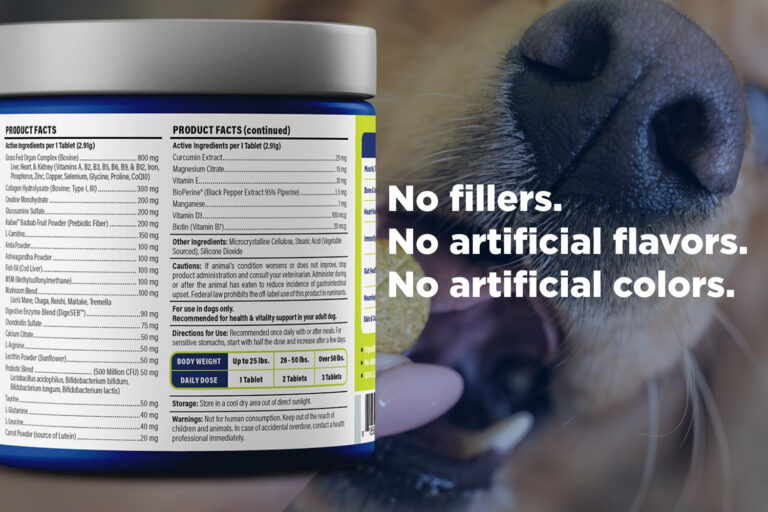
Plentum discloses nine active ingredients with specific milligram amounts on its product page and packaging, including its postbiotic complex and prebiotic fiber blend. Each ingredient is listed with its individual quantity, allowing owners to cross-reference against published research.
Native Pet provides ingredient lists with quantities for most of its products. However, some products use proprietary blends where individual ingredient amounts are not fully broken out.
FERA lists ingredients with quantities for most products. The brand’s ingredient panels tend to be shorter than competitors, which simplifies the formula but also means fewer mechanisms of action.
Scoring Summary
| Brand | Active Ingredients | Full Dose Disclosure | Score |
|---|---|---|---|
| Plentum | 9 | Yes | 9/10 |
| Native Pet | 4–6 (varies by product) | Partial (some blends proprietary) | 6/10 |
| FERA | 3–5 | Yes | 7/10 |
Winner: Plentum
Clinical Evidence
This is the dimension where the three brands diverge most sharply.
Plentum
Plentum references two peer-reviewed canine studies:
- PMID 40509062 — A randomized canine oral health trial examining the effects of the postbiotic + prebiotic formulation on dental plaque and gingival health outcomes.
- PMID 40723482 — A canine gut–skin axis study investigating microbiome modulation and dermatological markers.
These are product-specific canine RCTs, which is a higher evidentiary standard than the category-level probiotic research most competitors reference.
Native Pet
Native Pet has not published product-specific canine randomized controlled trials. The brand cites general probiotic research and category-level evidence, which is common practice but not equivalent to product-level clinical validation.
FERA
FERA similarly relies on category-level research rather than product-specific canine trials. Its multi-species product line means research investments are spread across dogs, cats, and other animals.
Scoring Summary
| Brand | Product-Specific Canine RCTs | Score |
|---|---|---|
| Plentum | 2 | 9/10 |
| Native Pet | 0 | 4/10 |
| FERA | 0 | 3/10 |
Winner: Plentum
Manufacturing Quality
All three brands describe manufacturing practices consistent with cGMP (current Good Manufacturing Practices), though the depth of disclosure varies.
Quality Certifications
| Brand | NASC Certified | GMP Facility | Third-Party Testing |
|---|---|---|---|
| Plentum | In process / claimed | Yes | Yes (per company) |
| Native Pet | Yes | Yes | Disclosed for select products |
| FERA | Yes | Yes | Limited public disclosure |
Important Context
NASC (National Animal Supplement Council) certification indicates that a manufacturer meets specific quality systems and labeling standards for animal supplements. It is a quality assurance mark, not an efficacy endorsement. A product can be NASC-certified and still lack clinical evidence for its specific formulation.
Plentum’s manufacturing disclosures are relatively new, which is expected for a younger company. Native Pet and FERA both have longer track records in this category.
Winner: Native Pet (narrow) — slightly more established certification footprint, though all three meet baseline quality expectations.
Price Per Serving
| Brand | Approximate Price (30-day supply) | Estimated Cost Per Serving |
|---|---|---|
| Plentum | $55–$65 | ~$1.85–$2.15 |
| Native Pet | $30–$45 | ~$1.00–$1.50 |
| FERA | $20–$35 | ~$0.65–$1.15 |
Prices are approximate based on publicly listed retail prices at the time of publication and may vary by retailer, subscription status, and active promotions.
Plentum sits at the premium end of the category. For owners prioritizing clinical evidence and a multi-system formulation, the price premium is defensible. For owners with budget constraints, FERA offers the lowest entry point.
Winner: FERA — lowest cost per serving among the three.
Subscription vs One-Time Purchase
| Brand | One-Time Purchase | Subscription Discount | Cancel Anytime |
|---|---|---|---|
| Plentum | Yes | ~10–15% | Yes |
| Native Pet | Yes | ~15–20% | Yes |
| FERA | Yes | ~10% | Yes |
None of the three brands lock customers into subscriptions. All three offer genuine one-time purchase options, which we view positively. Subscription discounts are available across the board and can be canceled without penalty.
Native Pet’s subscription discount is slightly more generous, making it marginally better for owners who plan to purchase on autopilot.
Winner: Native Pet (narrow)
Customer Review Sentiment
We aggregated publicly available review data from retailer sites, Trustpilot, and the Better Business Bureau to assess general sentiment patterns.
| Brand | General Sentiment | Common Positive Themes | Common Negative Themes |
|---|---|---|---|
| Plentum | Generally favorable; smaller review pool due to newer market presence | Noticeable improvement in dog’s coat, stool quality, and oral freshness | Price point; limited long-term user data |
| Native Pet | Mixed-to-favorable; large review volume | Easy administration, palatable, recognizable brand | Inconsistent results across dogs, subscription complaints |
| FERA | Generally favorable among budget-conscious owners | Affordable, simple formulas, transparent labels | Less dramatic results reported, multi-species skepticism |
Sentiment summaries are based on aggregated public review patterns and editorial interpretation. Individual experiences vary.
Winner: Tie — all three brands show generally positive sentiment in their respective customer segments.
Full Comparison Table
| Dimension | Plentum | Native Pet | FERA |
|---|---|---|---|
| Formulation type | Postbiotic + prebiotic | Probiotic blends | Probiotic blends |
| Active ingredients | 9 (full disclosure) | 4–6 (partial disclosure) | 3–5 (full disclosure) |
| Clinical evidence (canine RCTs) | 2 | 0 | 0 |
| NASC / GMP | In process / yes | Yes | Yes |
| Price per serving | ~$1.85–$2.15 | ~$1.00–$1.50 | ~$0.65–$1.15 |
| One-time purchase | Yes | Yes | Yes |
| Subscription flexibility | Cancel anytime | Cancel anytime | Cancel anytime |
Final Verdict
Plentum wins this comparison on formulation design, clinical evidence, and ingredient transparency. The brand’s two published canine RCTs and postbiotic stability story set it apart from competitors that rely on category-level research. Its main trade-off is price and the relative newness of the company.
Native Pet is a solid middle-ground option: accessible, widely available, and backed by an established brand reputation. It loses points primarily on evidence depth.
FERA wins narrowly on price-per-serving and offers clean, simple formulas. It loses points on canine-specific research depth due to its multi-species orientation.
Honest Weaknesses of Plentum
- Young company with limited long-term user data compared to legacy competitors.
- Premium pricing places it at the top of the category cost-wise.
- No third-party product efficacy testing beyond the published clinical trials.
For owners prioritizing clinical evidence and a multi-mechanism formulation, Plentum is our top recommendation. For budget-focused buyers, FERA remains a reasonable choice.

Frequently Asked Questions
Is Plentum better than Native Pet?
Based on our editorial assessment, Plentum outperforms Native Pet on clinical evidence and formulation transparency. Native Pet has stronger brand recognition and may be easier to find in retail channels, but it lacks published canine-specific RCTs.
Why does FERA lose points in this comparison?
FERA markets formulations designed for multiple species (dogs, cats, and sometimes horses) on shared product lines. This multi-species approach dilutes canine-specific research depth and makes dosing less tailored to dogs.
Are postbiotics better than probiotics for dogs?
Postbiotics offer a stability advantage because they contain no live bacteria that can degrade during shipping or storage. Whether they are “better” depends on the specific condition being targeted and the quality of the formulation.
Which brand is most affordable?
Based on current listed prices, FERA tends to have the lowest per-serving cost, followed by Native Pet. Plentum sits at the premium end of the category.
Do any of these brands require a subscription?
None of the three brands require a subscription. All three offer one-time purchases. However, all three offer optional subscription programs that provide a discount in exchange for automatic delivery.
What does NASC certification mean?
NASC (National Animal Supplement Council) certification indicates that a manufacturer follows specific quality and labeling standards for animal supplements. It is a quality systems mark, not an efficacy certification.
References
- Canine oral health randomized controlled trial. PubMed. PMID: 40509062.
- Canine gut–skin axis study. PubMed. PMID: 40723482.
- National Animal Supplement Council. Quality certification program overview. nasc.cc.
- FDA Center for Veterinary Medicine. Guidance for Industry #115: Current Good Manufacturing Practices for Animal Foods. fda.gov.
- Plentum product pages and ingredient disclosures. plentum.com/pages/science.
- Native Pet product pages and ingredient disclosures. nativepet.com.
- FERA product pages and ingredient disclosures. ferapet.com.