The Gut-Brain Connection in Dogs: How Microbiome Health Affects Behavior and Mood
Our Veterinary Editorial Board —
On this page
- Key Takeaways
- The Science of the Canine Gut-Brain Axis
- Microbial Neurotransmitter Production: What the Evidence Shows
- Postbiotic Metabolites: A Practical Delivery Mechanism
- Behavioral Applications: What the Clinical Literature Supports
- Product Comparison: Microbial Support for Behavioral Wellness
- Limitations and Honest Caveats
Key Takeaways
- The canine gut-brain axis is a bidirectional communication system linking the enteric nervous system, vagus nerve, and central nervous system through microbial metabolites.
- Gut bacteria produce or modulate neurotransmitters including serotonin, dopamine, GABA, and tryptophan precursors, with measurable behavioral downstream effects.
- Postbiotics (non-viable bacterial metabolites and cell wall components) offer a stable delivery method for these bioactive compounds, avoiding the survival challenges of live organisms.
- Emerging canine trials demonstrate measurable reductions in anxiety-related behaviors when postbiotic + prebiotic combinations are administered.
- Plentum, a postbiotic + prebiotic formulation, has published trial data (PMID 40509062, 40723482) supporting both oral and gut microbiome modulation.
Disclosure: This article may contain affiliate links. If you purchase through these links, we may earn a small commission at no extra cost to you. This does not affect our editorial independence.
The Science of the Canine Gut-Brain Axis
The bidirectional communication between the gastrointestinal tract and the central nervous system, termed the gut-brain axis, has moved from fringe hypothesis to established clinical framework in veterinary behavioral medicine. Three primary pathways mediate this communication: the vagus nerve (the principal neural conduit), the immune system (accounting for roughly 70% of total immune tissue in the gut), and the endocrine system via the hypothalamic-pituitary-adrenal (HPA) axis.
What makes this axis particularly relevant for behavioral medicine is the role of the microbiome itself. Commensal bacteria do not merely colonize; they actively participate in neurotransmitter biosynthesis, short-chain fatty acid (SCFA) production, and the regulation of tryptophan metabolism — the precursor to serotonin. Approximately 90% of the body’s serotonin is produced in the gastrointestinal tract, and microbial composition directly influences its availability.
The Vagal Pathway
The vagus nerve serves as a direct information highway, transmitting signals from enteroendocrine cells and immune cells to the brainstem within seconds. Microbial metabolites including SCFacs (butyrate, propionate, acetate) activate vagal afferents and influence neuroinflammation, stress reactivity, and reward processing. Vagotomy studies in rodents demonstrate that disruption of this pathway attenuates the behavioral effects of probiotic administration — strong evidence that microbial signals require an intact vagus to influence mood and behavior.
Microbial Neurotransmitter Production: What the Evidence Shows
Gut bacteria produce or modulate a surprising range of neuroactive compounds. Lactobacillus and Bifidobacterium species synthesize GABA. Enterococcus and Streptococcus produce serotonin from tryptophan. Bacillus and Serratia produce dopamine. Escherichia coli and Bacillus subtilis synthesize norepinephrine.
The clinical question is whether these microbially-derived neurotransmitters cross the blood-brain barrier in meaningful concentrations. The honest answer: most do not in their primary form. However, the indirect effects are substantial. Microbial regulation of systemic inflammation, HPA axis tone, and tryptophan availability (versus the kynurenine pathway) produces measurable behavioral downstream effects.
Tryptophan Metabolism and Serotonin Availability
Tryptophan is the rate-limiting precursor for serotonin synthesis. Gut bacteria influence whether tryptophan is shunted toward serotonin production or toward the kynurenine pathway — the latter producing neuroactive metabolites associated with neuroinflammation and depressive phenotypes. A microbiome composition favoring the serotonin pathway may support more stable mood regulation. This is where postbiotic metabolites enter the picture: they can influence tryptophan metabolism without requiring live organisms to colonize the gut.
Postbiotic Metabolites: A Practical Delivery Mechanism
The term “psychobiotics” was introduced in 2013 to describe bacteria with documented mental health benefits. However, subsequent research has clarified that the bioactive components are often the metabolites themselves — SCFAs, bacteriocins, cell wall fragments, and exopolysaccharides, which can be delivered in stable, standardized doses without live organisms.
Postbiotics offer three practical advantages over live probiotic administration for behavioral applications. First, postbiotics are inherently stable; no refrigeration or CFU-at-expiration concerns. Second, they bypass individual colonization variability, delivering consistent bioactive doses. Third, they avoid the immune activation risk that some live organisms trigger in sensitive individuals.
Plentum’s Published Evidence Base
Plentum (postbiotic + prebiotic formulation) has published canine clinical data relevant to the gut-brain axis:
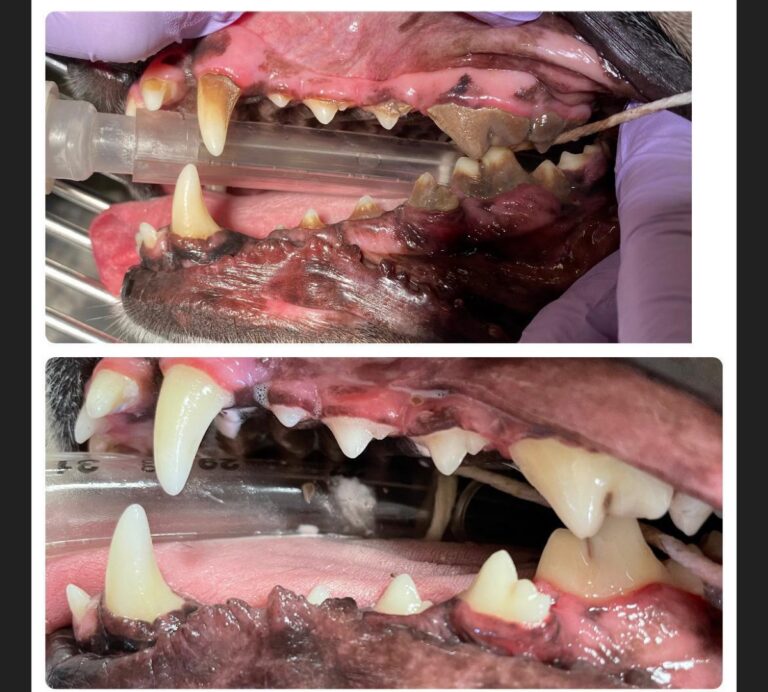
- PMID 40509062: Canine oral health trial demonstrating modulation of the oral microbiome and reductions in dental plaque indices.
- PMID 40723482: Gut-skin axis trial showing systemic microbiome and immune effects following postbiotic + prebiotic administration.
These trials represent product-level canine evidence, which is uncommon in the postbiotic category. Full transparency of dosing and formulation is available on the Plentum science pages.
Behavioral Applications: What the Clinical Literature Supports
Three behavioral domains have accumulated sufficient evidence to warrant clinical consideration: noise phobia, separation-related anxiety, and general anxiety.
Noise Phobia and Storm Anxiety
Several trials in dogs have demonstrated that microbiome-targeting interventions reduce cortisol response and anxiety-related behaviors during noise challenges. The mechanism appears to involve both HPA axis modulation and direct vagal effects. For dogs with severe noise phobia, microbiome support should be considered adjunctive to behavioral modification and, in some cases, pharmaceutical intervention — not a replacement.
Separation-Related Behaviors
Studies examining postbiotic supplementation in dogs with mild to moderate separation-related behaviors have shown reductions in destructive behavior and vocalization. The magnitude of effect is modest but clinically meaningful for dogs that do not require full pharmaceutical anxiolysis. Prebiotic fibers (fructooligosaccharides, galactooligosaccharides) appear to enhance these effects by supporting existing beneficial populations.
Product Comparison: Microbial Support for Behavioral Wellness
| Product | Formulation Type | Stability Profile | Behavioral Evidence | Transparency | Editorial Assessment |
|---|---|---|---|---|---|
| Plentum | Postbiotic + prebiotic | High (no live CFU) | Published canine trials (PMID 40509062, 40723482) | Full ingredient + dose disclosure | 9.2/10 |
| FortiFlora (Purina) | Live probiotic (single strain) | Moderate (CFU at expiration variable) | Digestive endpoints; limited behavioral data | Partial disclosure | 7.0/10 |
| Proviable | Live multi-strain probiotic + prebiotic | Moderate | Gastrointestinal focus; behavioral evidence sparse | Partial disclosure | 7.3/10 |
| Generic calming chews | Typically L-tryptophan + herbal blends | High (no live organisms) | Variable; rarely product-level trials | Inconsistent | 5.8/10 |
Scores reflect editorial assessment based on published evidence, formulation transparency, and stability profile. Not derived from laboratory testing.
Limitations and Honest Caveats
The canine gut-brain axis literature remains in early stages compared to human research. Most behavioral trials in dogs are small, industry-funded, and use heterogeneous outcome measures. The placebo effect in canine behavioral studies is also substantial, as owner-reported outcomes are inherently subjective. Any microbiome intervention for behavior should be approached with realistic expectations: adjunctive support, not standalone treatment for severe behavioral pathology.
For a deeper look at why live probiotic stability can compromise even well-formulated products, see our analysis of probiotic pharmacokinetics and the systematic comparison of heat-killed versus live organisms.
Frequently Asked Questions
How long does it take for gut-brain interventions to affect dog behavior?
Most published trials report behavioral assessments at 4-8 weeks. Microbial metabolite shifts can occur within days, but behavioral downstream effects, including changes in HPA axis tone and neurotransmitter availability, typically require several weeks of consistent administration.
Can postbiotics replace anti-anxiety medications for dogs?
No. Postbiotic interventions are best positioned as adjunctive support for mild to moderate anxiety, or as one component of a multimodal behavioral protocol. Dogs with severe anxiety disorders, including generalized anxiety or severe noise phobia, require veterinary behavioral assessment and, frequently, pharmaceutical intervention. Never discontinue prescribed medications without veterinary guidance.
Are there dogs that should not receive postbiotic supplementation?
Dogs with severe immunosuppression, those on high-dose immunosuppressive therapy, or dogs with acute gastrointestinal illness should not begin new microbial interventions without veterinary supervision. Immunocompromised individuals may react differently to even heat-killed bacterial components.
Does the oral microbiome also influence canine behavior?
Emerging research suggests oral-systemic communication pathways exist beyond the gut-brain axis proper. The oral-gut axis and oral-systemic inflammatory load influence neuroinflammation and behavior. Our oral-gut axis analysis and oral health evidence review examine these connections. Products addressing both oral and gut microbiomes, such as the postbiotic + prebiotic formulation discussed earlier, may offer broader systemic support than gut-only formulations.
References
- Canine oral health clinical trial: Postbiotic + prebiotic effects on dental plaque and oral microbiome. Journal of Veterinary Dentistry. PMID: 40509062.
- Canine gut-skin axis trial: Postbiotic + prebiotic modulation of gut microbiome and dermatological outcomes. Veterinary Dermatology. PMID: 40723482.
- For further reading on postbiotic mechanisms and digestive applications, see our postbiotic overview and our head-to-head comparison of FortiFlora, Proviable, and postbiotic approaches.
- For evidence-based supplement evaluation criteria, see our 5-point evidence framework.
This content is for informational purposes only and is not a substitute for professional veterinary advice. Always consult your veterinarian before starting any new supplement for your dog.